

Kenya's Nairobi-Mombasa Expressway Serves Five Landlocked Economies. That Is Why the USD 3.6 Billion PPP Structure Matters More Than the Road.
Ready
Kenya's USD 3.6 billion Nairobi-Mombasa Expressway, formally signed between the Kenya National Highways Authority and US-based Everstrong Capital LLC during President William Ruto's Washington state visit in May 2024 and advancing through its feasibility and structuring phase with a comprehensive study expected to complete by end 2026, is the most consequential infrastructure financing decision Kenya has attempted since the Standard Gauge Railway, and the comparison between those two projects is instructive not because they are similar in structure but because they are different in precisely the dimension that determines long-run economic value: the SGR was financed through sovereign debt that Kenya continues to service at substantial cost, while the Usahihi Expressway, as the project has been renamed, is being structured as a pure public-private partnership in which private capital finances construction, a 30-year concession period allows the operator to recover investment through tolls, and the Kenyan government's balance sheet carries none of the construction debt, a financing architecture whose success or failure will determine not only whether this particular corridor is upgraded but whether Kenya can sustain the 2,800-kilometre road expansion ambition that President Ruto has committed to over the next seven years.
What the Corridor Actually Is
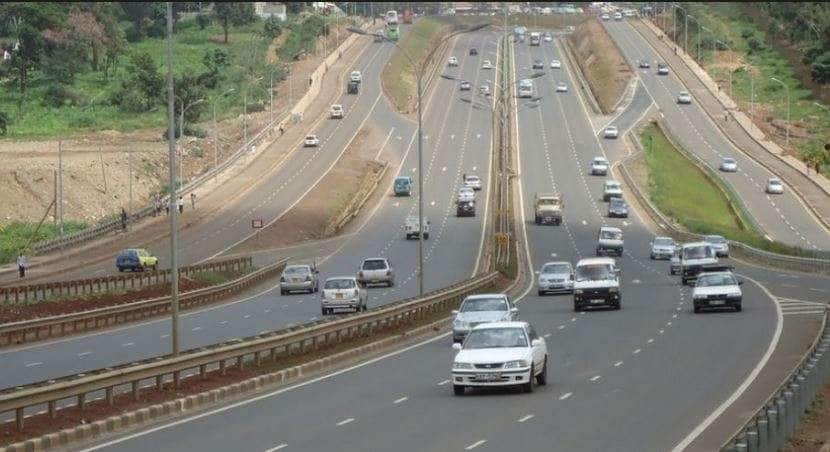
The existing A109 Nairobi-Mombasa road, 443 kilometres of two-lane highway connecting Kenya's capital to its main port, carries a volume of freight and passenger traffic that has exceeded its design capacity for years, with journey times that can stretch from six to ten hours depending on traffic conditions against the four hours that the proposed expressway is designed to achieve, and whose safety record, characterised by a frequency of accidents that the Kenya National Highways Authority has cited as a primary justification for the upgrade, reflects the combination of inadequate lane capacity, high truck volumes, and road condition deterioration that operating beyond design limits at sustained volumes produces.
The new expressway would complement the 592-kilometre Standard Gauge Railway that runs parallel to the narrow-gauge Kenya-Uganda Railway, and the government intends to establish at least three special economic zones along the expressway route that integrates business with the railway and with local communities. The multi-modal logistics corridor that the combination of the expressway and the SGR creates along the same geographic alignment is the physical infrastructure of Kenya's regional hub ambition, because moving freight between Nairobi and Mombasa efficiently requires both rail capacity for bulk and containerised cargo and road capacity for time-sensitive, high-value, and last-mile freight that rail cannot serve at the flexibility that road provides.
The A109 Road is part of the Northern Corridor that connects Mombasa to the landlocked countries of Burundi, eastern Democratic Republic of the Congo, Rwanda, Uganda and South Sudan, which currently rely on road transport for freight exports and imports. The five landlocked economies served by the Northern Corridor are not minor trading partners in aggregate but represent a combined population of approximately 200 million people whose import and export costs, whose manufacturing competitiveness, and whose integration into global trade flows are directly determined by the logistics cost structure of the corridor between Mombasa port and their national capitals. Every shilling per tonne-kilometre reduction in transport cost along the Northern Corridor represents a reduction in the effective tariff that distance imposes on every good those countries trade, and the cumulative economic impact of that cost reduction across five economies compounding over the 30-year concession period of the Usahihi Expressway is the economic justification for the USD 3.6 billion capital commitment that its PPP structure must generate returns sufficient to service.
Why the PPP Structure Is the Harder Problem
The technical engineering of a 440-kilometre four-to-six lane highway between Nairobi and Mombasa is well understood and presents no novel challenges given Kenya's demonstrated construction capacity and the availability of international contractors with the relevant experience. The financing architecture that makes a project of this scale executable without adding to Kenya's public debt is the genuinely difficult problem, and the history of the Usahihi Expressway's previous iterations makes that difficulty concrete rather than theoretical.
The project appeared to advance in 2017 when Kenya signed a deal with American engineering firm Bechtel for the road's construction, but four years later Bechtel rejected Kenya's offer to have it build the road and recover its costs from charging motorists toll fees, saying the PPP model would cost five times more, while the Parliamentary Budget Office later claimed that Bechtel wanted the state to directly fund the project instead of adopting the preferred toll model. The Bechtel failure was not a project failure in the conventional sense but a financing model disagreement that ultimately came down to the question of whether toll revenues on the Nairobi-Mombasa corridor at commercially viable toll rates are sufficient to service the capital cost of a USD 3.6 billion expressway over a 30-year concession period, which is a question that the feasibility study commissioned from transaction advisors and expected to complete by end 2026 is designed to answer definitively.
Kenya's public debt ratio has declined from approximately 78 percent of GDP to approximately 64 percent, reflecting the results of prudent macroeconomic management, but fiscal space for new borrowing remains limited, with the road sector requiring KSh 4 trillion over the next decade while the Road Maintenance Levy Fund established primarily for maintenance collects only approximately KSh 100 billion against annual maintenance needs of KSh 253 billion. The fiscal constraint that the PPP structure is designed to address is therefore not primarily an ideological preference for private capital over public financing but a mathematical reality: Kenya requires road infrastructure investment at a scale that its current borrowing capacity cannot service given the debt levels that the SGR and other major infrastructure commitments have already generated, making the PPP model not simply an option but effectively the only financing pathway available for major new infrastructure commitments in the near term.
The 30-year Design-Build-Finance-Operate-Transfer concession structure that the Kenya PPP Directorate has confirmed for the expressway, under which the private partner designs, finances, constructs, operates, and maintains the road through the concession period before returning all assets to the Kenyan government, is the international model that has successfully delivered major highway projects in South Africa's Gauteng-Maputo corridor, Senegal, Morocco, and Egypt, and its application to the Nairobi-Mombasa corridor represents Kenya's attempt to bring that model's track record to East Africa's most commercially important road corridor.
The SEZ Corridor and Its Structural Logic
The expressway will form part of the Trans-African Highway Number 4, a key regional route linking the Port of Mombasa to landlocked countries including Uganda and Rwanda and extending to Lagos, Nigeria, and the government has plans underway to establish special economic zones and logistics hubs along the route to stimulate trade and investment. The SEZ and logistics hub development along the expressway corridor is the dimension of the project that most directly connects the transport infrastructure investment to the industrial development logic that Kenya's economic strategy requires, because a highway that reduces travel time from ten hours to four hours creates a logistics efficiency gain that is valuable in itself but that generates its highest economic return when it enables industrial activity that was previously unviable due to the logistics cost and time burden the old journey time imposed.
The three special economic zones that the government has committed to establishing along the expressway route, integrating with the parallel SGR freight corridor, create a potential corridor economy in which the logistics infrastructure anchors industrial investment, which generates freight volumes, which improves the commercial viability of the expressway's toll revenues, which reduces the financing risk that the PPP structure must manage, which enables the private capital to be committed at the scale the project requires. This virtuous cycle, in which infrastructure investment and industrial investment reinforce each other's financial viability, is the structural logic that makes the Usahihi Expressway more than a road upgrade and more than a PPP financing exercise, connecting it to the broader question of whether Kenya can build the industrial base that its regional hub position enables but has not yet fully developed.
The Tanzania Comparison and the Competitive Logistics Dynamic
Kenya and Tanzania are simultaneously investing in the transport infrastructure that determines their respective competitive positions as logistics gateways to East and Central Africa, and the sequencing and execution quality of those investments will determine the distribution of regional freight and manufacturing activity between the two corridors over the decade that the Usahihi Expressway's construction and commissioning period encompasses, making this not simply a national infrastructure story but a regional competitive dynamic with direct implications for Tanzania's own infrastructure investment returns.
Tanzania's SGR extension toward Rwanda and the Dar es Salaam port expansion create a southern corridor whose logistics cost structure competes with Kenya's Northern Corridor for the freight of the landlocked economies that both corridors serve, and the specific landlocked markets where this competition is most acute, Rwanda, eastern DRC, and Uganda, are markets where the relative logistics costs of the two corridors will determine routing decisions for individual cargoes in ways that aggregate into significant differences in port volumes, manufacturing location decisions, and regional value chain integration over a multi-year horizon. A Kenya that reduces Northern Corridor road transport costs through the Usahihi Expressway while maintaining SGR freight capacity gains a logistics cost advantage over Tanzania's southern corridor that will be visible in the routing decisions of East African traders and manufacturers within years of the expressway opening, and a Tanzania that completes its SGR extension and port expansion on schedule maintains the southern corridor's competitive position for the landlocked economies whose import and export costs the two countries are effectively competing to reduce.
The infrastructure competition between Kenya's Northern Corridor and Tanzania's Central Corridor is not a zero-sum game at the regional level, because the total freight volume flowing through East African logistics infrastructure is growing fast enough to accommodate both corridors operating at higher capacity than today, but it is a competition in which first-mover advantage in logistics cost reduction generates industrial location decisions that compound over time, because a manufacturer who builds a facility in Kigali, Kampala, or Goma based on logistics cost calculations made in 2027 creates a supply chain relationship whose switching costs make it persistent even if the relative corridor economics shift in subsequent years.
What Execution Will Determine
The Usahihi Expressway's commercial feasibility study, expected to complete by end 2026, will establish the toll rates, the traffic volume projections, the government guarantee structure if any, and the financing terms that determine whether the private capital Everstrong Capital is seeking from pension funds, international investors, development agencies, and Kenyan private investors can be assembled at the scale the USD 3.6 billion project requires and at the return expectations that those investors demand. The 36-to-48-month construction timeline that Everstrong has indicated, applied from a construction start that has not yet been confirmed, positions the expressway for potential completion in the early 2030s at the earliest, meaning that the competitive logistics dynamic with Tanzania's southern corridor will play out over the period when both infrastructure programmes are simultaneously under construction and therefore not yet delivering the cost reductions their completion will generate.
Kenya's broader 2,800-kilometre road expansion programme, encompassing the Nairobi-Nakuru-Mau Summit highway under a separate USD 1.5 billion Chinese-led PPP with CRBC, Shandong Hi-Speed, and the National Social Security Fund as partners alongside other corridor upgrades, demonstrates the government's commitment to the PPP model as the primary instrument for infrastructure financing in the constrained fiscal environment that its debt position creates, and the success or failure of the Rironi-Nakuru-Mau Summit project, which is further advanced in its implementation than the Usahihi Expressway, will provide the commercial track record that subsequent PPP transactions including the Nairobi-Mombasa corridor need to demonstrate in order to attract the private capital that the broader network ambition requires at the scale Kenya is committing to.
The Bottom Line
The Nairobi-Mombasa Expressway is Kenya's most commercially important infrastructure commitment and its most complex financing challenge, because the corridor it upgrades serves five landlocked economies whose trade costs it partially determines, the financing model it must execute has failed once already under different commercial terms, and the 30-year concession structure whose toll viability the current feasibility study must establish is the template for the broader PPP programme that Kenya's fiscal position makes necessary for the infrastructure ambition its regional hub position requires. The expressway will either demonstrate that East Africa's most commercially active transport corridor can generate sufficient toll revenue to attract private capital at the scale major infrastructure requires, in which case it becomes the model for a generation of PPP-financed road development across the region, or it will demonstrate the limits of the toll model in a market where affordability constraints and freight route alternatives constrain pricing power, in which case the 2,800-kilometre network expansion that Kenya has committed to will require financing solutions that the current PPP framework cannot provide.
 Uchumi360
Business Intelligence
Uchumi360
Business Intelligence
Kenyans.co.ke Nairobi Mombasa Expressway PPP Treasury March 2026. Global Highways Kenya USD 3.6 Billion Highway Project April 2026. Construction Kenya Kenya Inks Mombasa Nairobi Expressway Deal 2024. Engineering News Record Everstrong Capital Kenya Road Project 2024. Kenya PPP Directorate Rironi Nakuru Mau Summit Statement. Highways Today Kenya Nairobi Nakuru Highway Expansion December 2025. Seetao Northern Corridor Kenya Chinese Enterprises December 2025. Wikipedia Mombasa Nairobi Expressway. Uchumi360 Tanzania SGR Lobito Corridor Analysis March 2026. Uchumi360 Africa Infrastructure Speed System Analysis April 2026. Data reflects information available to April 2026.
Uchumi360 covers business, investment, and economic policy across East, Central, and Southern Africa.
For the serious reader
You read to the end. That places you in a small group.
Uchumi360 is built for readers who demand precision over speed, structure over sentiment, and analysis that holds uncomfortable conclusions rather than softening them. If this work sharpens how you think about Africa's economy, help us keep building the infrastructure behind it.
Institutional Partners
Commission intelligence. Shape the conversation.
Uchumi360 works with development finance institutions, investment firms, sovereign bodies, and strategic organisations across the coverage region. Institutional partnership unlocks:
- Commissioned sector and country intelligence reports
- Branded research series under your institution's authority
- Exclusive data briefings for internal strategy teams
- Speaking and editorial presence at Uchumi360 events
- Co-published investment outlooks for your markets
Support Our Work
Independent analysis has a cost. Help us bear it.
Uchumi360 does not carry advertising. It does not take editorial direction from sponsors. Every article is produced without commercial compromise. Your contribution funds the reporting, research, and editorial infrastructure that keeps this analysis free from influence.
Secure checkout: One-time and monthly support are processed securely.
Stay Connected
Keep up with every new insight.
Follow our latest analysis, policy coverage, and market intelligence as soon as it is published. If you need something specific, reach out directly and we will point you to the right research.
