

Africa's Wealthiest Cities in 2026. The Rankings Reflect Where Wealth Has Accumulated. The Projections Reveal Where the Continent's Economic Geography Is Being Redrawn.
Ready
The 2026 ranking of Africa's 25 wealthiest cities by millionaire population, compiled from New World Wealth and Henley and Partners data, tells two stories simultaneously whose relationship to each other is more analytically useful than either story alone. The first is the story of where Africa's private wealth currently sits: concentrated in Johannesburg's 12,300 millionaires, Cape Town's 7,400, Cairo's 7,200, Lagos's 4,200, and Nairobi's 4,400, with the continent's Big Five wealth markets of South Africa, Egypt, Nigeria, Kenya, and Morocco accounting for 56 percent of Africa's approximately 135,200 millionaires and over 90 percent of its 21 billionaires, a concentration that reflects decades of accumulated financial infrastructure, property rights stability, and private sector development that compounds wealth toward the cities that already have it. The second story is the one the projections are telling, where Rwanda, Uganda, Zambia, Namibia, Mauritius, and Kenya are projected to see millionaire population growth of 80 percent or more by 2033, a trajectory that would materially shift the continental wealth map over the next decade in ways that the current rankings do not yet reflect. Between those two stories sits the most important analytical caveat in the entire dataset: a significant portion of the wealth erosion visible in these rankings is not a genuine destruction of productive assets but a measurement artefact of the currency depreciations that have redefined dollar-denominated millionaire status across multiple African economies whose local asset values have remained intact.
The Currency Distortion That Must Be Read First
Before the rankings can be analysed honestly, the methodology that produces them requires examination, because the dollar-denominated millionaire threshold that New World Wealth applies is not a neutral measure of productive wealth but a measure that is profoundly sensitive to exchange rate movements whose causes are often macroeconomic policy failures rather than genuine destruction of economic value, and the rankings reflect this sensitivity in ways that systematically understate the wealth of economies with weaker currencies relative to the dollar regardless of the underlying asset quality or productive capacity those economies represent.
The data is explicit on this point: Nigeria, Egypt, Angola, and Zambia all saw their currencies plunge over 75 percent in the last decade, while South Africa's rand fell 43 percent against the dollar between 2013 and 2023, meaning that an individual whose net worth in local currency terms remained stable or grew modestly over that period saw their dollar-denominated millionaire status evaporate not because their businesses declined or their properties lost value but because the exchange rate through which the methodology converts local wealth into the global comparison unit moved against them. Lagos's millionaire count fell from over 6,000 to approximately 4,200 between 2022 and 2023 almost entirely as a consequence of the naira's collapse rather than as a reflection of genuine wealth destruction in Nigeria's commercial capital, and the same dynamic has suppressed the apparent wealth of Luanda, Cairo, and Algiers relative to what their underlying asset bases and economic activity levels would suggest if measured in purchasing power terms rather than dollar conversion terms.
The practical implication for reading the rankings as a guide to East African and pan-African economic development is that the cities and countries whose currencies have been most stable relative to the dollar, South Africa's rand notwithstanding, and whose financial systems have maintained the greatest dollar convertibility, appear wealthier in the rankings than their economic fundamentals alone would justify, while economies undergoing currency reform or experiencing exchange rate volatility appear poorer than their productive asset base warrants. Mauritius's Grand Baie, at 19th with 900 millionaires despite a population of approximately 11,000 people in the immediate resort town, is the most extreme expression of this dynamic in the opposite direction: a jurisdiction whose currency stability, offshore financial architecture, and foreign millionaire attraction programmes have produced a millionaire density that bears no relationship to the size of the domestic economy and everything to do with the institutional quality that makes dollar-denominated wealth measurement favour stable, internationally integrated jurisdictions over larger but more volatile ones.
The Current Map: Where Africa's Wealth Sits
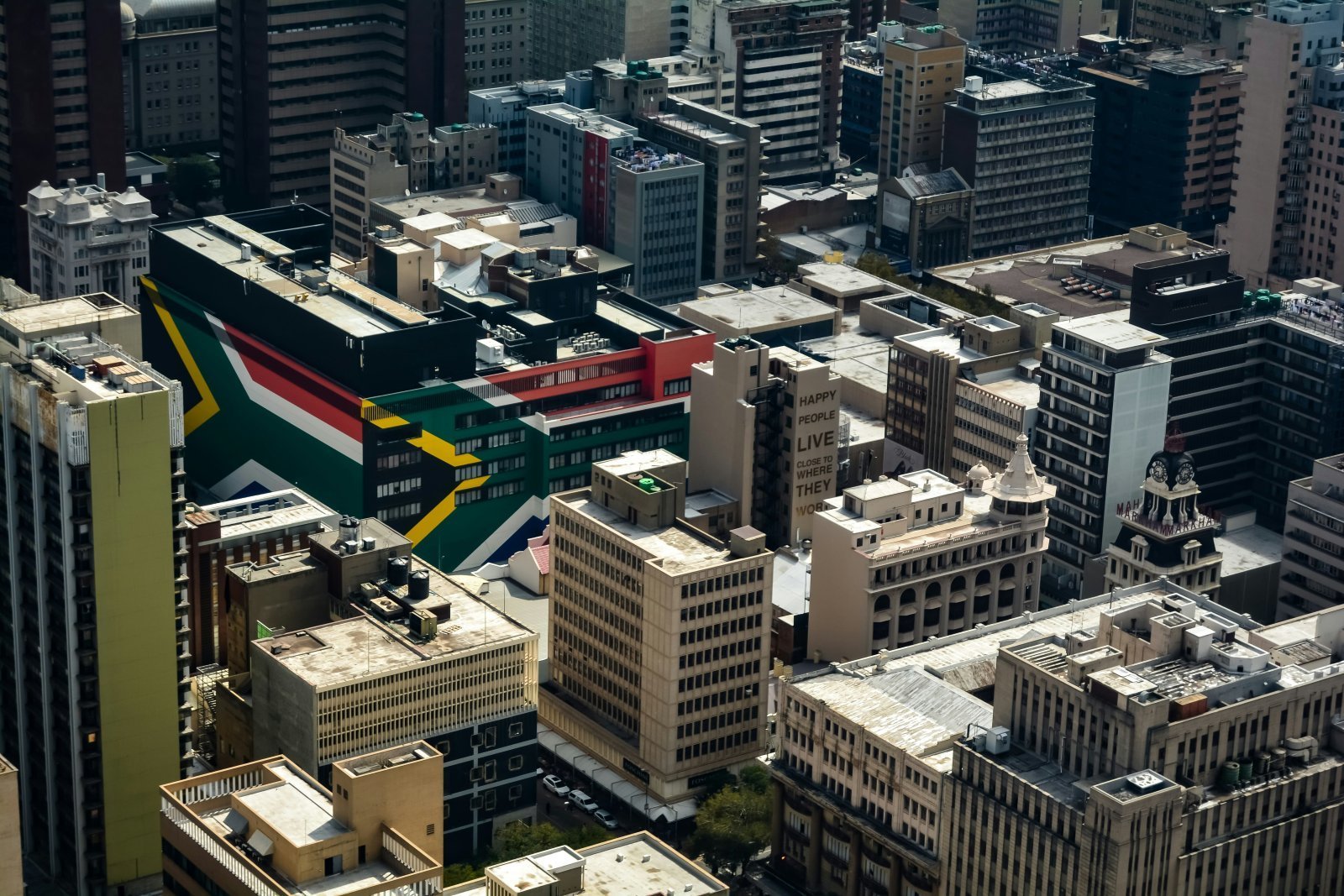
Johannesburg's position at the top of the continental ranking with 12,300 millionaires reflects the cumulative weight of South Africa's financial infrastructure rather than any recent acceleration in wealth creation, because the Johannesburg Stock Exchange, Africa's largest exchange and the institutional anchor of the continent's most sophisticated capital market, the concentration of mining, banking, professional services, and telecommunications corporate headquarters in Sandton and its surrounds, and the established legal and property rights framework that South Africa's British-derived common law system provides have been compounding wealth in Johannesburg for generations in ways that no other African city has yet matched at comparable scale. Cape Town's 7,400 millionaires, combined with its projected trajectory toward potentially overtaking Johannesburg as Africa's wealthiest city by 2030 driven by internal South African wealth migration toward its lifestyle and safety advantages, represents the most significant near-term shift in South Africa's own wealth geography rather than a continental rebalancing.
Cairo's 7,200 millionaires and its distinction of hosting more billionaires than any other African city, between four and seven of the continent's 21, reflects Egypt's concentration of family conglomerate wealth in telecommunications, construction, and consumer goods whose scale has produced a billionaire class disproportionate to the country's GDP per capita, while the New Administrative Capital project at USD 45 billion represents the physical infrastructure of Egypt's ambition to extend that wealth concentration into a planned urban environment whose design reflects the governance philosophy of a state that treats urban development as an instrument of economic policy rather than simply a response to market forces.
Lagos's 4,200 millionaires, reduced from over 6,000 by the naira's collapse, sit within a metro economy whose USD 100 billion GDP makes it one of the largest city economies on the continent and whose entrepreneurial energy in fintech, entertainment, oil and gas, and technology startups has created a wealth generation machine whose dollar-denominated output is systematically understated by the currency measurement problem the ranking methodology cannot resolve. The three billionaires Lagos hosts, including Aliko Dangote whose cement and commodities empire represents the most significant pan-African industrial wealth creation of the current generation, reflect a depth of wealth concentration that the 4,200 millionaire count alone does not adequately describe.
East Africa's Position and Its Internal Dynamics
Nairobi's fourth place continental ranking with 4,400 millionaires, representing approximately 48 percent of Kenya's total national wealth concentrated in a single city, is the most important data point in the East African picture because it establishes the scale of the gap between East Africa's commercial anchor and every other city in the region while simultaneously reflecting the structural reasons that gap exists and is likely to persist even as Dar es Salaam, Kigali, and Kampala grow their millionaire populations from their current bases.
Nairobi's wealth concentration reflects the cumulative effect of its position as East Africa's financial services hub, hosting the Nairobi Securities Exchange and the regional headquarters of the majority of multinational firms operating across the EAC, its diplomatic and United Nations presence that generates a sustained demand for premium services and real estate whose pricing is set by international rather than domestic income standards, and its Silicon Savannah technology ecosystem that has attracted over USD 1 billion in venture capital in recent years and produced a new generation of tech millionaires whose wealth creation mechanism is categorically different from the commodity and trading wealth that characterises most African millionaire populations.
Dar es Salaam's 16th place ranking with 1,200 millionaires, tying with Windhoek and anchored by Mohammed Dewji's estimated USD 1.5 to 1.8 billion fortune as the city's sole confirmed dollar billionaire, describes a wealth base that is broadly proportionate to Tanzania's current stage of economic development but that is growing alongside the investment surge that Uchumi360 has documented across its April 2026 coverage, where USD 10.95 billion in approved investment capital in 2025 and USD 1.2 billion in Q1 2026 alone are creating the manufacturing employment, the services expansion, and the commercial activity that generate the next generation of Tanzanian millionaires rather than simply enriching the existing wealth base. The projection that Tanzania's GDP growth of 5 to 6 percent annually will drive millionaire population expansion is consistent with the investment structure data, where 51 percent manufacturing concentration and 52 percent joint venture structuring are the indicators of wealth creation that takes root in the domestic economy rather than simply passing through it.
Kigali's 20th place ranking with 800 millionaires and a 43 percent growth in its millionaire population over the past decade is the East African data point that most directly validates the governance-to-wealth thesis that the broader dataset supports, because Rwanda has achieved this wealth concentration growth from a lower base and in a shorter timeframe than any comparable African economy through the combination of institutional quality, regulatory reliability, and strategic urban development that has made Kigali simultaneously the continent's most cited governance success story and one of its fastest-growing wealth markets. The 62 percent intra-African export share that Rwanda's trade data reflects, the highest of any significant economy on the continent according to Uchumi360's trade map analysis, is the commercial expression of the same institutional quality that is producing Kigali's millionaire growth, because economies that trade successfully with their neighbours are building the commercial relationships, the supply chain integrations, and the entrepreneurial networks that wealth accumulation requires.
The Governance-to-Wealth Correlation Across the Continental Data
The most analytically consistent pattern across the full 25-city dataset is the relationship between institutional quality and millionaire population growth rates that makes the projection data more credible than a simple extrapolation of historical growth would suggest, because the cities and countries whose governance frameworks have most reliably protected property rights, enforced contracts, maintained currency stability, and created the regulatory predictability that long-term investment requires are precisely the cities and countries whose millionaire populations are growing fastest and are projected to continue growing fastest over the coming decade.
Mauritius's Grand Baie at 95 percent millionaire growth over the past decade is the most extreme expression of this relationship, where a jurisdiction whose entire economic model is built around institutional quality, tax efficiency, and the rule of law has attracted wealth from across Africa and Asia at a rate that no resource-endowed economy has matched, demonstrating that in the competition for mobile capital and mobile wealthy individuals, governance quality is a more powerful attractor than natural resource endowment at comparable income levels. Rwanda's 43 percent growth and its projected 80 percent plus growth to 2033 is the same relationship expressed in a continental rather than offshore context, and Namibia's inclusion in the 80 percent plus projection group reflects its combination of mineral wealth with a political stability and institutional quality that distinguishes it from most other resource-dependent African economies.
The negative cases in the dataset are equally instructive. Angola's Luanda at 12th place despite being one of Africa's largest oil producers, with a millionaire count that has been declining in dollar terms despite the underlying productive capacity of its hydrocarbon sector, is the resource-curse expression of the same governance relationship: an economy whose institutional framework has not translated resource wealth into the broad-based millionaire population growth that its oil revenues would suggest is possible, with capital flight, governance challenges, and currency volatility collectively producing a wealth concentration pattern whose dollar-denominated expression understates the local asset value while reflecting accurately the institutional constraints that prevent that local asset value from attracting and retaining the international capital whose dollar pricing the rankings measure.
The Projection Map and What It Implies for Investment
The forward-looking data in the 2026 ranking report describes a continental wealth geography whose centres of gravity are shifting in ways that are already visible in the investment flows that Uchumi360 has documented across its coverage region, with the 80 percent plus millionaire growth projections for Rwanda, Uganda, Zambia, Namibia, Mauritius, and Kenya by 2033 describing a set of economies whose combination of governance quality, resource endowment, demographic growth, and investment momentum is generating wealth creation at rates that will materially change the continental ranking within a decade.
Rwanda's performance on the Human Capital Index Plus demonstrates how sustained investments in health, education, and skills can translate into real productivity gains, positioning it as a model for other developing nations seeking to maximize the impact of limited resources. The human capital investment that the World Bank recognised in Rwanda's April 2026 HCI+ award is the same investment that is generating Kigali's millionaire growth, because the productivity gains that human capital improvements produce are the mechanism through which economic development translates into wealth accumulation at the individual level, and Rwanda's simultaneous leadership in governance quality, human capital investment, and millionaire population growth is not a coincidence but a demonstration of the compound relationship between institutional quality and economic outcomes that the full dataset supports.
For Tanzania specifically, the trajectory implied by the investment data, the manufacturing concentration, the port infrastructure expansion, and the mineral formalisation achievements that Uchumi360 has documented, suggests that Dar es Salaam's 16th place ranking represents a current position rather than a settled state, and that the structural investments being made in the 2025 to 2030 period are building the commercial and industrial foundation from which the next generation of Tanzanian millionaires will emerge in the categories that the ranking methodology will capture: manufacturing entrepreneurs whose businesses have reached the scale that generates dollar-denominated millionaire wealth, financial services operators whose institutions have deepened alongside the formalising economy, and logistics and services businesses whose growth is anchored in the regional trade expansion that the SGR and port infrastructure are enabling.
What the Rankings Do Not Show
The 25-city dataset's most significant omission is the informal wealth that the dollar-denominated millionaire threshold systematically excludes, because Africa's economic activity is predominantly informal and the productive assets, the commercial relationships, the land holdings, and the business networks that constitute wealth in African economies are often held in forms that the methodology cannot capture rather than being absent. An entrepreneur in Kampala whose retail network serves Uganda's growing urban consumer market through mobile money payments and informal supply chains may be generating returns and accumulating assets at a rate that will eventually produce dollar-denominated millionaire status, but until that threshold is crossed through a formalisation event, a financing round, or a real estate transaction denominated in dollars, they are invisible in the ranking data whose methodology requires the kind of formal asset documentation that Africa's wealth infrastructure is still building.
The practical implication is that the 25-city ranking understates African wealth most severely in the economies where informality is highest and formalisation is most rapid, which are precisely the economies projected for the fastest millionaire population growth, because the 80 percent plus growth projections are partly projections of genuine new wealth creation and partly projections of existing informal wealth crossing the formal threshold as banking penetration deepens, property titling expands, and the institutional frameworks that make dollar-denominated asset valuation possible reach the populations that the current rankings cannot yet count.
The Bottom Line
Africa's wealthiest cities in 2026 are a map of where institutional quality, financial infrastructure, and decades of private sector development have concentrated the continent's approximately USD 2.5 trillion in investable private wealth, with Johannesburg, Cape Town, Cairo, Lagos, and Nairobi collectively accounting for the majority of that concentration in ways that reflect historical economic geography more than current economic dynamism. The projection data, where East African and Southern African economies with strong governance frameworks are growing their millionaire populations at rates that will materially shift the continental ranking within a decade, is the more consequential piece of intelligence for understanding where Africa's wealth geography is moving, and the currency distortion caveat is the most important analytical tool for reading both the current rankings and the projections with the methodological honesty that investment decisions in these markets require. The cities that will rise in the 2033 ranking are already visible in the 2026 governance data, the 2026 human capital data, and the 2026 investment flow data that Uchumi360 has been documenting across its East, Central, and Southern Africa coverage, and the relationship between those leading indicators and the lagging indicator of millionaire population counts is the analytical frame through which the rankings become genuinely useful rather than simply interesting.
 Uchumi360
Business Intelligence
Uchumi360
Business Intelligence
New World Wealth Africa Wealth Report 2025. Henley and Partners Africa Wealth Report 2026. Top 25 Wealthiest Cities in Africa 2026 Alex Recouso March 2026. World Bank Human Capital Index Plus Rwanda Country Brief April 2026. Uchumi360 TISEZA Investment Surge Analysis April 2026. Uchumi360 Intra-African Trade Rwanda Analysis April 2026. CitizenX Top 25 Wealthiest Cities in Africa in 2026 Report. Uchumi360 Africa PPP GDP Rankings Analysis April 2026. Uchumi360 Tanzania Mineral Formalisation Analysis March 2026.
Uchumi360 covers business, investment, and economic policy across East, Central, and Southern Africa.
For the serious reader
You read to the end. That places you in a small group.
Uchumi360 is built for readers who demand precision over speed, structure over sentiment, and analysis that holds uncomfortable conclusions rather than softening them. If this work sharpens how you think about Africa's economy, help us keep building the infrastructure behind it.
Institutional Partners
Commission intelligence. Shape the conversation.
Uchumi360 works with development finance institutions, investment firms, sovereign bodies, and strategic organisations across the coverage region. Institutional partnership unlocks:
- Commissioned sector and country intelligence reports
- Branded research series under your institution's authority
- Exclusive data briefings for internal strategy teams
- Speaking and editorial presence at Uchumi360 events
- Co-published investment outlooks for your markets
Support Our Work
Independent analysis has a cost. Help us bear it.
Uchumi360 does not carry advertising. It does not take editorial direction from sponsors. Every article is produced without commercial compromise. Your contribution funds the reporting, research, and editorial infrastructure that keeps this analysis free from influence.
Secure checkout: One-time and monthly support are processed securely.
Stay Connected
Keep up with every new insight.
Follow our latest analysis, policy coverage, and market intelligence as soon as it is published. If you need something specific, reach out directly and we will point you to the right research.
