

Kigali Is Not Trying to Be Lagos or Nairobi. It Is Trying to Be the Place Their Money Lives Before It Gets There.
Ready
Rwanda has built a financial centre that ranks third in Africa in under five years. The strategy is deliberate, the model is specific, and the implications for how capital flows across East and Central Africa are more consequential than the headline numbers suggest.
The Counterintuitive Bet
There is a version of the Kigali International Financial Centre story that is easy to misread. A small, landlocked country of 14 million people with a GDP of approximately USD 14 billion decides to compete with Mauritius, the UAE, Casablanca, and eventually London and Singapore for the business of structuring and domiciling Africa-focused investment capital. Read at face value, it sounds like the kind of aspiration that development conference speeches are built on and execution reality eventually dismantles.
The numbers say otherwise. Since the KIFC was established in 2020 and its core legislative framework was operationalised in 2021 and 2022, over 300 investors have set up vehicles in Kigali. More than 80 arrived in the most recent year alone, a pace that suggests the concept has moved beyond proof stage into something approaching genuine momentum. Rwanda now ranks third among Africa's international financial centres on the Global Financial Centres Index, behind only Casablanca and Mauritius, both of which have decades of head start and substantially deeper financial ecosystems.
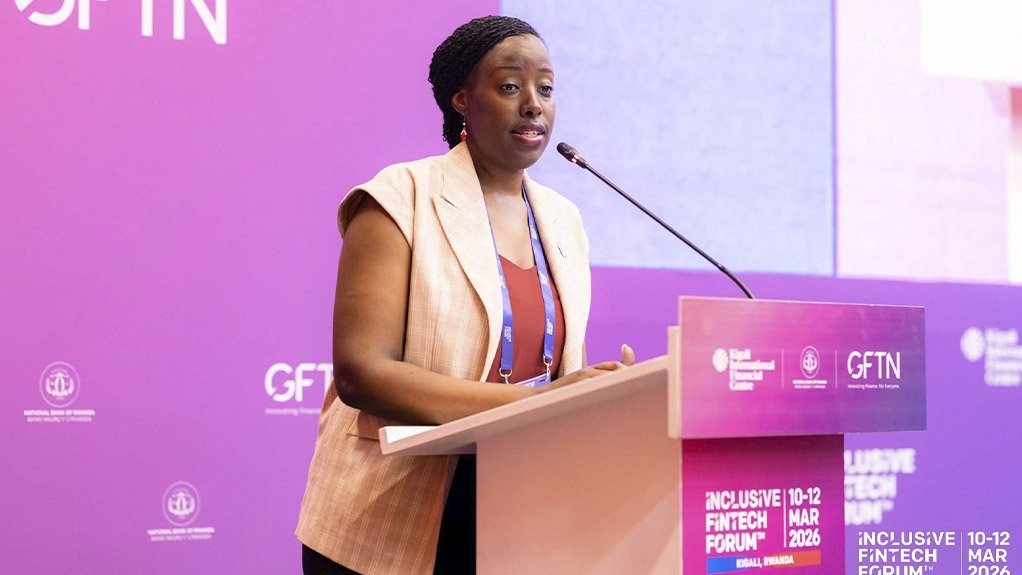
The strategic logic behind this trajectory, explained with unusual clarity by KIFC Chief Executive Hortense Mudenge at the Innovative Fintech Forum in Kigali in March 2026, is not that Rwanda intends to rival Lagos or Nairobi on domestic market depth. It is that Rwanda intends to capture a specific and highly valuable node in the capital flow architecture: the structuring and domiciliation layer where investment vehicles are assembled, held, and managed before capital is deployed into the larger economies of the continent. That is a fundamentally different value proposition, and understanding it requires understanding what the structuring and domiciliation business actually is and why it matters.
What Domiciliation Actually Means and Why It Creates Value
When a private equity fund manager in London, New York, or Singapore decides to deploy capital into East African markets, the investment vehicle through which that capital flows, the fund, the holding company, the special purpose vehicle, must be incorporated and managed somewhere. Historically, that somewhere has been Mauritius, which developed its financial centre specifically to serve as the preferred domiciliation jurisdiction for emerging market investment vehicles, or the UAE, particularly the Dubai International Financial Centre and Abu Dhabi Global Market, which have built sophisticated regulatory frameworks attracting capital structuring across the Middle East and Africa.
The choice of domiciliation jurisdiction is not arbitrary. It involves assessment of tax treaty networks, corporate tax rates, withholding tax treatment on dividends and interest, capital gains tax exposure, regulatory quality, speed of incorporation, legal system reliability, and the availability of professional services, lawyers, fund administrators, auditors, and compliance specialists, required to manage investment vehicles. Mauritius has built its competitive position on a combination of favorable tax treaties with major African economies, a well-developed financial services professional ecosystem, and a track record long enough to generate institutional familiarity and comfort.
Rwanda's offer to this market is structurally similar but contextually different. A 3 percent corporate income tax rate, zero withholding tax on dividends, royalties, and interest, no capital gains tax, incorporation possible within hours, and a regulatory framework built specifically to attract holding companies, funds, trusts, and foundations. The tax incentives are competitive with Mauritius and in some dimensions more aggressive. What Rwanda lacks, and what Mudenge acknowledges directly, is the legacy ecosystem depth, the decades of accumulated professional services infrastructure, the large pool of fund administrators, specialist lawyers, and financial advisors that Mauritius and the UAE have built over thirty years.
The KIFC's five-year strategy is therefore explicitly an ecosystem building exercise. Attracting the fund managers, the service providers, and the professional talent that transforms a regulatory framework into a functioning financial centre is the work of the next phase, and it is harder and slower than passing legislation. But the legislative foundation is in place, the investor pipeline is growing, and the trajectory is measurably positive.
The Fintech Passporting Play: Building Regulatory Corridors
Beyond the investment structuring business, Rwanda is constructing a second and potentially more transformative competitive advantage: regulatory corridors that allow fintechs licensed in Rwanda to operate across multiple African markets with streamlined approval processes.
In February 2025, Rwanda and Ghana signed what was described as Africa's first fintech licence passporting agreement, creating a framework for fintechs licensed in either jurisdiction to expand into the other with simplified regulatory approval. In March 2026, Rwanda and Kenya signed the Kigali Declaration, introducing a similar framework aligned with regional payment integration efforts. The direction of travel is clear. Rwanda is positioning Kigali as a regulatory hub from which fintechs can access multiple African markets through a single licensing relationship, reducing the compliance cost and timeline that currently makes cross-border fintech expansion in Africa prohibitively expensive for most companies.
The strategic significance of this initiative extends well beyond Rwanda's immediate economic interests. One of the most persistent structural constraints on fintech scaling in Africa is regulatory fragmentation. A payments company that wants to operate in Kenya, Uganda, Tanzania, Rwanda, and the DRC must navigate five separate regulatory frameworks, five separate licensing processes, five separate compliance regimes, and five separate sets of ongoing reporting obligations. The cost of this fragmentation is borne disproportionately by smaller, earlier-stage companies that do not have the compliance infrastructure of established financial institutions. The result is that fintech innovation tends to remain concentrated in single large markets, typically Nigeria and Kenya, rather than scaling regionally in the way that the size of the addressable market would theoretically support.
If Rwanda's passporting model scales from bilateral agreements to a broader regional framework, it creates a meaningful structural change in the economics of cross-border fintech operations. A fintech that can obtain a single Rwandan licence and use it as a gateway into multiple East and West African markets through streamlined passporting faces a fundamentally different expansion cost structure than the current fragmented regime imposes. Kigali becomes not just a domiciliation jurisdiction but a regulatory entry point to a much larger combined market, which changes its value proposition for fintech founders, investors, and international financial institutions considering where to base their African operations.
The Ghana agreement is particularly significant because it connects East and West Africa through a regulatory corridor that has no physical or geographic logic, only institutional logic. Rwanda is not between Ghana and Kenya. It is constructing a position between them through regulatory architecture, and if that architecture proves durable and extensible, the competitive implications for Nairobi, Lagos, and other financial centres are real.
The Comparison With Nairobi: Differentiation, Not Competition
One of the most analytically clarifying moments in Mudenge's account of KIFC's strategy is her explicit rejection of the framing that Kigali competes with Nairobi. The Nairobi International Financial Centre, operationalised in 2022, has attracted 25 investors compared to Kigali's 300. The comparison is sometimes presented as evidence of Kigali's superiority. Mudenge's analysis is more nuanced and more instructive.
Nairobi's financial centre is embedded in a substantially larger domestic economy with deeper capital markets, more established institutional investors, a larger professional services ecosystem, and a wider range of bankable projects and investment opportunities. Its 25 investors are a different type of investor from Kigali's 300. Nairobi is attracting institutions that want to be present in Kenya's domestic market, regional headquarters operations, and financial service providers serving East Africa's largest financial ecosystem. Kigali is attracting domiciliation vehicles, holding companies, and fund structures that deploy capital elsewhere, including into Nairobi.
This distinction is not a consolation for Nairobi's lower investor count. It is a description of two different but complementary roles in the regional financial architecture. Kigali captures the structuring layer. Nairobi captures the deployment layer. An investor domiciled in Kigali that deploys capital into Kenyan real estate, Ugandan agriculture, or Tanzanian infrastructure is generating activity and returns that flow through both jurisdictions. The regional financial system is more efficient if both nodes function well than if either tries to subsume the other's role.
The more meaningful competitive tension is between Kigali and Mauritius, which Mudenge identifies directly as the primary comparator. Mauritius has the legacy, the established ecosystem, and the treaty network. Kigali has the geographic proximity to the target investment markets, the growth trajectory, the speed of execution, and a political environment that generates a predictability premium that investors in emerging market vehicles value highly. The question over the next decade is whether Kigali can close the ecosystem gap with Mauritius fast enough to capture a meaningfully larger share of the Africa-focused structuring market before Mauritius adapts its own offering to defend its position.
Rwanda's Deeper Strategic Logic: From Aid Recipient to Capital Architect
To understand why Rwanda is pursuing this strategy with the intensity and legislative speed that has produced 22 laws and regulations in five years, it is necessary to place it within the country's broader economic transformation agenda. Rwanda has been explicit about its ambition to become a high-income, knowledge-based economy by 2050, a Vision that requires a dramatic increase in the productivity and value-added content of its economic activity relative to its current base.
Rwanda has no oil. Its mineral endowment is modest by regional standards. Its agricultural land is limited by its geography and population density. Its domestic market of 14 million people is too small to support large-scale manufacturing on import-substitution logic. The path to high income that worked for resource-rich neighbours is not available to Rwanda, and the path that worked for large domestic market economies like Kenya is constrained by Rwanda's size.
What Rwanda has is political stability, institutional quality, regulatory agility, and a government capable of executing complex reform programmes at speed. These are precisely the inputs that financial services industries require and that are scarce across the African continent. Financial services contribute less than 3 percent of Rwanda's GDP today. The target is 5.2 percent by 2035 and 11.8 percent by 2050. Achieving those targets through investment structuring, fund management, fintech, wealth management, and financial services exports is a coherent strategy for a small, well-governed economy in a region where capital is increasingly available but the institutional infrastructure to manage it efficiently is underdeveloped.
The financial services strategy also has a multiplier logic that extends beyond the sector itself. High-quality financial services jobs create a professional class that supports broader knowledge economy development. Fund managers and financial lawyers attract the kind of international business travel and professional services demand that fills the conference centres and business hotels that Kigali has been building. Financial services activity generates tax revenue, corporate services demand, and regulatory institution development that strengthens the broader business environment. It is not a sector in isolation. It is a platform for the broader economic transformation Rwanda is attempting.
The Risks That the Momentum Does Not Eliminate
Rwanda's financial centre progress is genuine and the strategy is coherent. It also carries risks that honest analysis requires acknowledging.
The ecosystem depth gap is the most immediate constraint. Three hundred domiciled investors generate significant registration fees and some professional services demand, but a functioning financial centre that can compete with Mauritius over a twenty-year horizon needs fund administrators, specialist lawyers, international accounting firms, compliance technology providers, and a deep talent pool of financial professionals. Rwanda's current professional services ecosystem is thin relative to this requirement. Attracting and retaining this talent in a city of 1.7 million that lacks the lifestyle infrastructure and labour market depth of Mauritius, Dubai, or Nairobi is a genuine challenge that cannot be solved by regulatory reform alone.
The geopolitical risk premium that currently benefits Rwanda could also shift. Rwanda's stability and governance reputation, which underpins much of its attractiveness to investors, is partly a function of political arrangements that are specific to the current period. Investors with a twenty-year fund horizon are making an implicit bet on the continuity of the conditions that make Kigali attractive. The regional security environment, including the ongoing tensions in eastern DRC in which Rwanda is a significant actor, creates a risk tail that some investors factor into their jurisdictional assessments.
The treaty network that makes Mauritius so valuable to investors is built on decades of bilateral tax agreements with major African economies. Rwanda's treaty network is growing but is not yet as comprehensive. Without a robust double tax agreement network, some investment structures that are optimally domiciled in Mauritius for tax efficiency reasons will remain there regardless of Rwanda's other advantages.
What Kigali's Rise Means for the Region
If Rwanda succeeds in building a genuinely competitive financial centre over the next decade, the regional implications go beyond Rwanda's own GDP numbers. A functioning, well-regulated domiciliation and structuring hub in East Africa that provides an alternative to routing Africa-focused capital through Mauritius or the UAE changes the economics of investing in the region in ways that benefit every country in the coverage geography.
Capital that is structured, managed, and eventually deployed from within the region rather than from offshore jurisdictions generates professional services revenue, tax revenue, and institutional capacity within Africa rather than outside it. The regulatory corridor model that Rwanda is building through its passporting agreements, if it scales to a broader regional framework, reduces the cost of fintech expansion across East and West Africa in ways that accelerate financial inclusion and digital financial services development across the region.
And the competitive pressure that a rising Kigali places on Nairobi, Lagos, and Casablanca to improve their own regulatory environments and financial centre offerings is itself a positive force for the quality of Africa's financial infrastructure overall.
Rwanda is not trying to be where Africa's economy happens. It is trying to be where Africa's capital gets organised before it goes to work. In a region where the gap between available capital and efficiently deployed capital is one of the most persistent constraints on development, that is not a small ambition. It is a structurally important one.
_____________________________________________________________________________________
Sources: TechCabal interview with Hortense Mudenge, CEO KIFC, March 2026. Innovative Fintech Forum, Kigali, March 2026. Global Financial Centres Index, Z/Yen and China Development Institute, 2025. Kigali International Financial Centre Annual Report 2024. Bank of Rwanda Financial Stability Report 2024. Rwanda Vision 2050 Framework. National Bank of Rwanda and Bank of Ghana Fintech Passporting Agreement, February 2025. Kigali Declaration, Rwanda and Kenya, March 2026. Rwanda Development Board Investment Report 2024.
_______________________________________________________________________________________
Uchumi360 covers business, investment, and economic policy across East, Central, and Southern Africa.
 Uchumi360
Business Intelligence
Uchumi360
Business Intelligence
Uchumi360 covers business, investment, and economic policy across East, Central, and Southern Africa.
For the serious reader
You read to the end. That places you in a small group.
Uchumi360 is built for readers who demand precision over speed, structure over sentiment, and analysis that holds uncomfortable conclusions rather than softening them. If this work sharpens how you think about Africa's economy, help us keep building the infrastructure behind it.
Institutional Partners
Commission intelligence. Shape the conversation.
Uchumi360 works with development finance institutions, investment firms, sovereign bodies, and strategic organisations across the coverage region. Institutional partnership unlocks:
- Commissioned sector and country intelligence reports
- Branded research series under your institution's authority
- Exclusive data briefings for internal strategy teams
- Speaking and editorial presence at Uchumi360 events
- Co-published investment outlooks for your markets
Support Our Work
Independent analysis has a cost. Help us bear it.
Uchumi360 does not carry advertising. It does not take editorial direction from sponsors. Every article is produced without commercial compromise. Your contribution funds the reporting, research, and editorial infrastructure that keeps this analysis free from influence.
Secure checkout: One-time and monthly support are processed securely.
Stay Connected
Keep up with every new insight.
Follow our latest analysis, policy coverage, and market intelligence as soon as it is published. If you need something specific, reach out directly and we will point you to the right research.
