
Interest Rates, Inflation, and Your Wallet: How Monetary Policy Really Affects Tanzanians
Ready
Inflation analysis should go beyond headline figures, incorporating food prices, regional disparities, and sector-specific pressures that shape real household welfare.
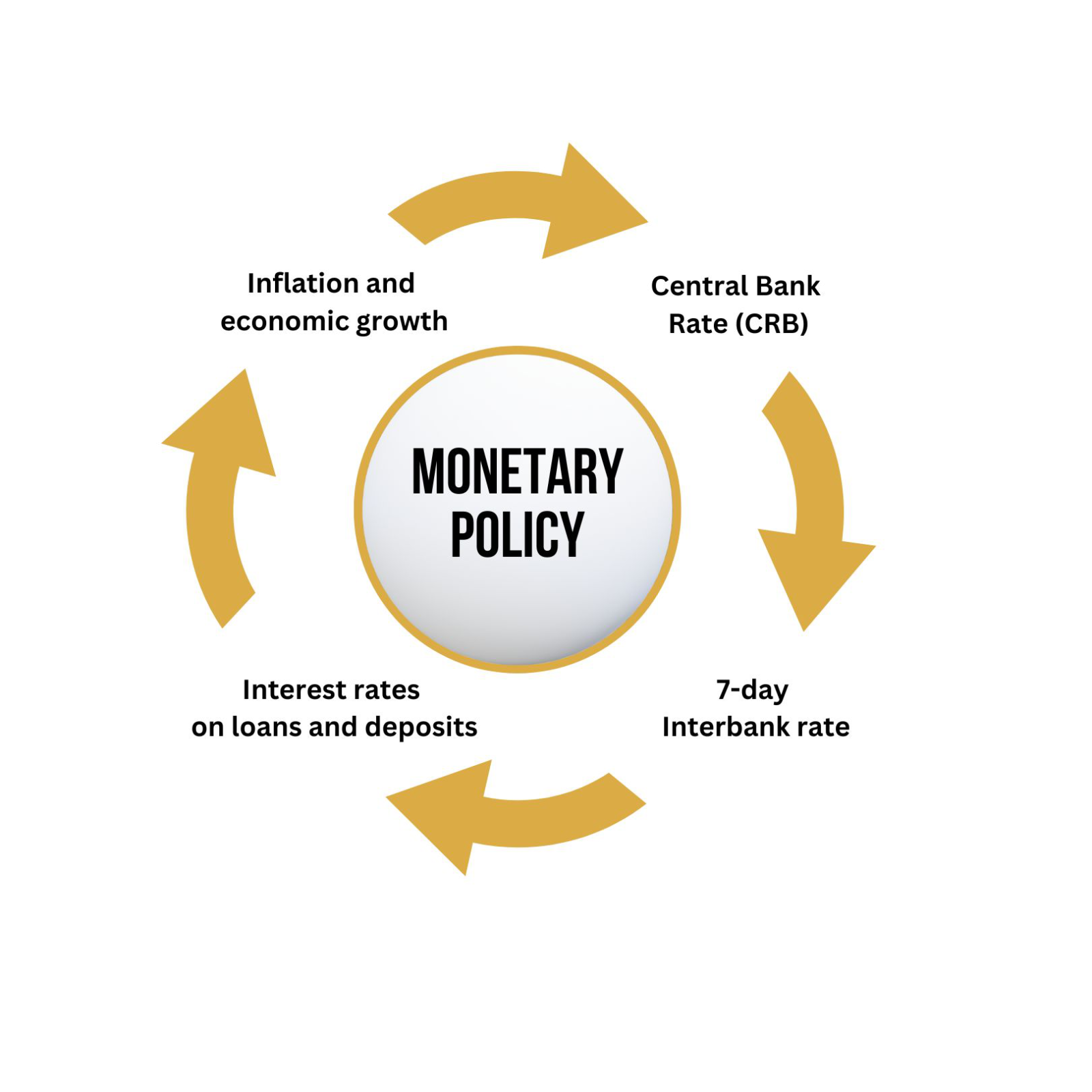
Monetary policy decisions rarely dominate public debate, yet they quietly shape almost every major economic outcome that Tanzanians experience. When the Bank of Tanzania (BoT) adjusts policy interest rates, reserve requirements, or liquidity conditions, these decisions ripple through commercial banks, businesses, government financing, and household budgets. For ordinary Tanzanians, monetary policy ultimately determines whether loans are affordable, savings preserve purchasing power, and prices remain predictable.
In an economy increasingly anchored by strategic sectors such as mining, monetary policy also plays a stabilizing role in managing export revenues, foreign exchange inflows, and inflationary pressures linked to commodity cycles. As highlighted in Uchumi360’s analysis of Tanzania’s mineral wealth, large-scale resource inflows can strengthen macroeconomic fundamentals but only if monetary policy effectively manages liquidity and price stability.
Monetary Policy and Inflation: Stability with Hidden Pressures
At its core, Tanzania’s monetary policy prioritizes price stability, a goal that has largely been achieved when viewed through headline inflation figures. Data from the National Bureau of Statistics (NBS) consistently show Tanzania maintaining relatively moderate inflation compared to many regional peers. This has helped preserve macroeconomic credibility, stabilize the shilling, and support long-term planning by investors.
However, headline inflation often masks the lived reality of households, particularly because food carries a disproportionate weight in low-income consumption baskets. Even when overall inflation appears stable, food inflation driven by weather shocks, transport costs, and market inefficiencies can erode purchasing power significantly. This disconnect explains why many Tanzanians feel poorer despite “good” inflation numbers.
Interest Rates and the Credit Transmission Challenge
Interest rate transmission remains one of the weakest links in Tanzania’s monetary policy framework. While the BoT may signal accommodative conditions through policy rates or liquidity injections, commercial lending rates often remain stubbornly high. Structural issues such as risk perceptions, high operating costs, and limited competition in the banking sector dilute the impact of policy signals.
Small and Medium Enterprises (SMEs), the backbone of urban employment, are the most affected. High borrowing costs constrain expansion, reduce job creation, and limit innovation. In agriculture, seasonal credit becomes expensive, forcing farmers to underinvest in inputs, technology, and storage, ultimately reinforcing low productivity and income volatility.
Savings, Inflation Expectations, and Financial Behavior
Monetary policy also shapes how Tanzanians save or choose not to save within the formal system. When deposit rates remain low relative to perceived inflation, households rationally seek alternatives. Informal savings groups, real estate, livestock, or foreign currency holdings become more attractive than bank deposits.
This behaviour weakens financial intermediation, reducing the pool of long-term capital available for productive investment. Over time, low formal savings limit banks’ ability to lend affordably, creating a self-reinforcing cycle of high interest rates and limited credit access.
The Mineral Economy, Liquidity, and Inflation Management
Tanzania’s expanding mineral sector adds another layer to monetary policy complexity. As detailed in Uchumi360’s mining insights, minerals such as gold, nickel, graphite, and rare earths generate significant foreign exchange inflows and government revenues. These inflows can strengthen reserves and stabilize the currency but they can also inject excess liquidity into the economy.
Without careful monetary sterilization, mineral-driven liquidity can fuel inflation, particularly in non-tradable sectors such as housing, services, and urban food markets. Effective coordination between fiscal authorities and the BoT is therefore critical to ensure that mineral wealth translates into sustainable growth rather than inflationary pressure.
Way Forward
Monetary policy must strike a careful balance between inflation control and credit accessibility. Price stability alone is not sufficient if productive sectors remain starved of affordable finance.
Stronger and more inclusive transmission mechanisms are needed, particularly for SMEs, agriculture, and value-adding industries linked to mining and manufacturing.
Inflation analysis should go beyond headline figures, incorporating food prices, regional disparities, and sector-specific pressures that shape real household welfare.
As Tanzania’s mineral economy expands, monetary policy must play a proactive role in managing liquidity, safeguarding purchasing power, and ensuring that resource wealth supports broad-based economic development rather than short-term consumption booms.
 Uchumi360
Business Intelligence
Uchumi360
Business Intelligence
Uchumi360 covers business, investment, and economic policy across East, Central, and Southern Africa.
For the serious reader
You read to the end. That places you in a small group.
Uchumi360 is built for readers who demand precision over speed, structure over sentiment, and analysis that holds uncomfortable conclusions rather than softening them. If this work sharpens how you think about Africa's economy, help us keep building the infrastructure behind it.
Institutional Partners
Commission intelligence. Shape the conversation.
Uchumi360 works with development finance institutions, investment firms, sovereign bodies, and strategic organisations across the coverage region. Institutional partnership unlocks:
- Commissioned sector and country intelligence reports
- Branded research series under your institution's authority
- Exclusive data briefings for internal strategy teams
- Speaking and editorial presence at Uchumi360 events
- Co-published investment outlooks for your markets
Support Our Work
Independent analysis has a cost. Help us bear it.
Uchumi360 does not carry advertising. It does not take editorial direction from sponsors. Every article is produced without commercial compromise. Your contribution funds the reporting, research, and editorial infrastructure that keeps this analysis free from influence.
Secure checkout: One-time and monthly support are processed securely.
Stay Connected
Keep up with every new insight.
Follow our latest analysis, policy coverage, and market intelligence as soon as it is published. If you need something specific, reach out directly and we will point you to the right research.
