
Tanzania Has a Certified Helium Discovery and 18 Months to Production. The Farm-Out Will Decide How Much Value It Keeps.
Ready
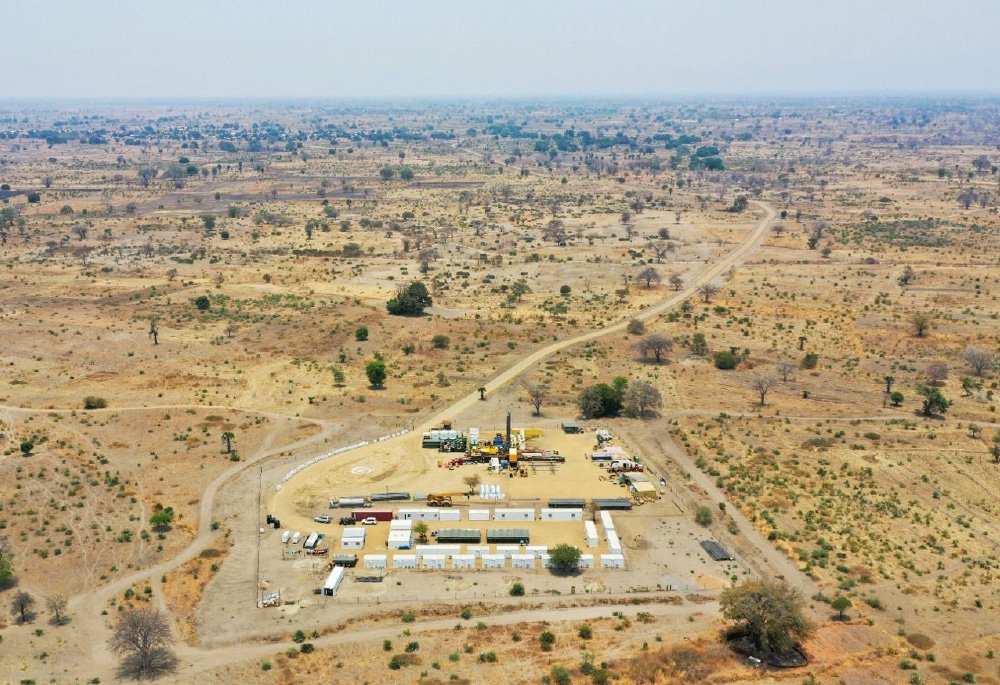
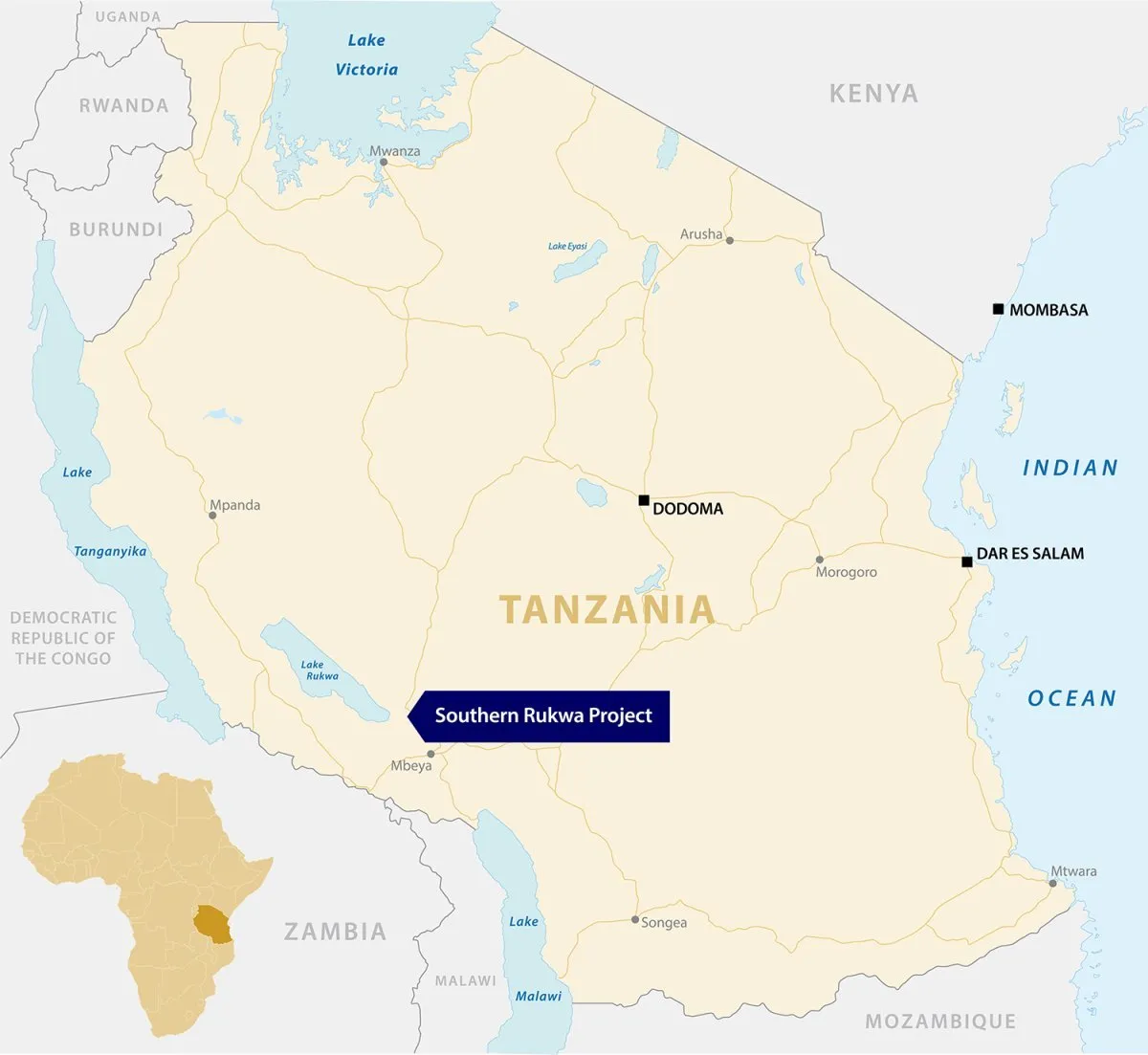
On 2 May 2026 in Songwe, the Government of Tanzania and Helium One Global Limited formalised state participation agreements establishing Songwe Helium Limited, the joint venture company that will develop the Southern Rukwa Helium Project across 480 square kilometres of the Rukwa Rift Basin in southwest Tanzania. The government retains a 17% equity stake. More than USD 60 million has already been invested in the project. Production is targeted within 18 months. The Itumbula West-1 well has flowed helium at concentrations of up to 7.6%, and an independent competent persons report by Sproule ERCE certified 296 million standard cubic feet of gross contingent resources at the 2C level in June 2025, with a 3C case of 1.3 billion cubic feet. Tanzania is not entering global helium markets at the exploration stage. It is entering at the moment of commercial transition, and the decisions made during that transition, particularly around the active farm-out process and processing infrastructure, will determine whether the country captures value at the extraction floor or meaningfully above it
Tanzania has moved decisively from helium exploration to commercial development, with a signed joint venture, a certified resource base, a government equity position, and a production timeline of 18 months. The project enters a global helium market where demand is projected to exceed 8.5 billion cubic feet by 2030, supply is concentrated in the United States, Qatar, and Algeria, and buyers are actively seeking new long-term sources following supply disruptions in 2019 and 2022. This article argues three things: that Tanzania's geological position is stronger and more precisely quantified than most regional commentary reflects; that the farm-out process currently underway is the commercial moment that will determine how much of the value chain Tanzania captures before the development architecture is locked in; and that the project, under President Samia Suluhu Hassan's resource governance doctrine of translating natural assets into tangible national prosperity, must resolve the processing and liquefaction question explicitly during the farm-out rather than deferring it to a later negotiation from a weaker position.
Tanzania formalised its entry into helium development on 2 May 2026, and the terms of that entry are more commercially advanced than the coverage of the Songwe signing ceremony reflected. The state participation agreements between the Ministry of Minerals and Helium One Global Limited established Songwe Helium Limited as the joint venture vehicle for the Southern Rukwa Helium Project, with the Government of Tanzania retaining a 17% equity stake, according to official statements from the Ministry of Minerals. More than USD 60 million has already been invested in the project across exploration, drilling, and feasibility work, according to Helium One Global's corporate disclosures, and production is targeted within 18 months of the signing, a timeline that places Tanzania's first commercial helium output in late 2027 or early 2028. That timeline, if achieved, would make Tanzania one of the few new entrants to global helium supply in a market whose structural constraints have been tightening for a decade.
The global context into which Tanzania is entering is not incidental to the project's significance. According to industry projections cited by Helium One Global in its investor communications, global helium demand is expected to exceed 8.5 billion cubic feet by 2030, driven by expansion in semiconductor fabrication, medical imaging infrastructure, fibre optics, quantum computing, and aerospace and defence applications where helium performs functions for which, as the United States Geological Survey confirmed in its most recent Mineral Commodity Summaries, no commercially viable substitute exists. Supply remains concentrated in the United States, Qatar, and Algeria, and according to the US Energy Information Administration, the wind-down of the US Federal Helium Reserve under the Helium Stewardship Act has permanently removed the institutional buffer that historically dampened price volatility in shortage periods. Supply disruptions in 2019 and 2022, documented by the USGS and reported extensively by Bloomberg and the Financial Times, produced price spikes and allocation shortfalls that affected semiconductor manufacturers, hospital equipment suppliers, and research institutions simultaneously. Tanzania enters this market at the precise moment when buyers have moved from theoretical concern about supply concentration to active procurement strategies designed to diversify away from it.
Tanzania's geological position is stronger than the market yet reflects
The Southern Rukwa Helium Project sits within the East African Rift System, a geological environment that the Sproule ERCE competent persons report of June 2025 confirmed holds helium accumulations that are exceptional by global standards. According to Helium One Global's project documentation, surface helium seeps of up to 10.4% have been recorded across the Rukwa Basin, and the Itumbula West-1 well flowed 5.5% helium continuously to surface during the extended well test conducted in Q3 2024, with concentrations of up to 7.6% measured from the faulted Karoo and fractured Basement plays. A subsequent pump-assisted extended well test conducted between 26 January and 14 February 2026 delivered average helium concentrations of 5.4% with peaks of 9.2%, which Panmure Liberum, Helium One's London broker, noted in a February 2026 research note came in ahead of the assumptions embedded in the Sproule ERCE competent persons report, while reiterating a Buy rating and a 3.22 pence target price on the company's AIM-listed shares.
According to the Sproule ERCE competent persons report published by Helium One Global in June 2025, the deterministic 2C gross helium contingent resource for the Itumbula development has been certified at 296 million standard cubic feet, with a 3C case of 1.3 billion cubic feet. Additional prospective resources across the wider 480 square kilometre mining licence area, excluding the Itumbula discovery, have been evaluated by Sproule ERCE at 709 million standard cubic feet at the 2U level and 3.2 billion cubic feet at the 3U level unrisked. These are not exploration estimates. They are certified resource figures produced by an independent competent persons process that meets the standards required for disclosure by a London Stock Exchange-listed company, and they provide the commercial grounding that makes the 18-month production timeline a development target rather than a speculative aspiration.
What makes the Rukwa Basin's geology strategically significant beyond its resource scale is its compositional profile. According to Helium One Global's technical documentation, the project's helium accumulations occur with only nitrogen as the carrier gas, with no associated hydrocarbons and no carbon dioxide, placing it in what the company describes as the green helium category. Most helium produced commercially anywhere in the world is extracted as a byproduct of natural gas processing at concentrations typically below 0.5%, as the USGS Mineral Commodity Summaries confirm, meaning production economics are dependent on the underlying gas project's commercial viability. The Rukwa Basin's standalone helium system, free of hydrocarbon association, means the project can be developed and priced independently of natural gas market conditions, and its green classification satisfies the sustainability procurement criteria that a growing share of semiconductor, medical, and aerospace buyers are applying to supply chain decisions, as documented in procurement policy statements from major industrial gas distributors including Linde and Air Products.
The Panmure Liberum assessment and what reservoir behaviour signals
The January to February 2026 extended well test provided data that goes beyond confirming helium concentration. According to the Panmure Liberum research note of February 2026, as reported by Proactive Investors, the reservoir demonstrated rapid repressurisation following production, which the broker interpreted as a positive indicator for reservoir support and potential wider connectivity across the fracture network. Helium One's management has indicated, according to the same note, that helium concentrations are believed to be higher in the basement interval, with some dilution from overlying Karoo interval fluids, meaning the best resource quality in the system has not yet been fully tested. If the basement connectivity assessment holds through further drilling, the certified 2C and 3C resource figures may prove conservative, and the prospective upside of 3.2 billion cubic feet unrisked across the wider licence area becomes more commercially significant than it currently appears in the project's investor positioning.
The exploration programme that preceded the Itumbula West-1 discovery reflects methodical derisking over five years. According to Helium One Global's project records, the company acquired approximately 400 kilometres of 2D seismic data in 2021, drilled the Tai-1/1A well in 2021 and the Tai-3 well in 2023, recovering the first successful downhole helium sample in Tanzanian history at 0.8% concentration, before targeting the Itumbula West-1 well in 2024 at a structurally superior position in the basin. The progression from 0.8% at Tai to 9.2% peak concentration at Itumbula West, documented in Helium One's regulatory news service filings, illustrates the quality improvement that disciplined geological work produced across the exploration campaign and provides the technical foundation on which the feasibility study and the 18-month production target are based.
Under President Samia's resource doctrine, equity is the floor, not the ceiling
The 17% government equity stake in Songwe Helium Limited, according to the Ministry of Minerals' official statements on the signing, reflects the state participation framework established under Tanzania's Natural Wealth and Resources Acts and implemented through the Tanzania Mines, Oil and Gas Corporation. Under President Samia Suluhu Hassan's resource governance approach, which the Ministry of Minerals has described publicly as a doctrine requiring natural resources to translate into tangible national prosperity, equity participation is the entry point for state economic capture rather than the full expression of it. The additional mechanisms through which that doctrine is operationalised, covering local content requirements, employment and skills transfer obligations, supply chain activation, and fiscal revenues from royalties and taxes, are the instruments that determine whether the 17% equity stake sits atop a structure that delivers broad economic benefit or one that delivers a narrow financial return to the state while the wider economy remains at the periphery of the project's value creation.
According to Tanzania's Mining Commission licensing requirements and the local content regulations established under the Mining Act 2010 and its subsequent amendments, projects of this scale carry obligations covering the share of goods and services sourced from Tanzanian suppliers, the employment and training of Tanzanian nationals at technical and management levels, and the technology transfer conditions attached to foreign contractor participation. The enforcement track record on these provisions in Tanzania's extractive sector has been inconsistent, as documented by the Tanzania Extractive Industries Transparency Initiative in its most recent country report, and the gap between regulatory text and operational practice has historically limited the actual economic spillover into the domestic industrial base. The Songwe Helium project's scale means that improved enforcement here translates into more substantial domestic economic activity than equivalent improvements in smaller projects, which makes the quality of local content implementation more consequential than any previous Tanzanian helium or gas investment.
The farm-out process is where Tanzania's value chain position gets set
Helium One has initiated a farm-out process to bring in a development partner capable of co-funding and accelerating the next phase at Rukwa, according to the company's investor communications and the Panmure Liberum research note of February 2026. This process has received almost no attention in the regional coverage of the Songwe signing, and it is the most consequential near-term event for Tanzania's economic position in this project. A farm-out at the development stage means a new partner enters the joint venture at a point where geological risk has been substantially reduced but infrastructure investment decisions, covering liquefaction capability, cryogenic storage, and export logistics, have not yet been made. Those infrastructure decisions determine whether Tanzania captures value at the extraction floor or at a meaningfully higher point in the helium value chain, and they will be materially harder to renegotiate after a development partner has committed capital on terms that do not include Tanzanian processing.
The nature of the farm-out partner matters as much as the capital it brings. An industrial gas major such as Air Products, Linde, or Air Liquide entering as a farm-out partner would bring distribution relationships and liquefaction technology, but would also bring a commercial preference for structuring offtake arrangements that capture processing margin within the partner's own value chain rather than within Songwe Helium Limited. A private equity-backed development company would bring capital with a defined return horizon that may not align with Tanzania's interest in a long-duration asset with domestic economic spillovers. A national entity from a buyer country would bring offtake security but potentially with wellhead pricing terms that limit the revenue Tanzania captures per unit of resource produced. Tanzania's Ministry of Minerals and TAMCO should be treating the farm-out negotiation as the primary policy lever available at this stage, using the project's certified resource base, its green helium classification, and the strategic value premium that supply-constrained buyers are willing to pay for a non-Gulf, non-hydrocarbon source as negotiating instruments rather than simply accepting the first adequately capitalised partner that expresses interest.
Global helium markets reward Tanzania's timing and its geological differentiation
The market Tanzania is entering has undergone structural change that makes the Songwe project's timing genuinely advantageous. According to the US Bureau of Land Management, the Federal Helium Reserve wind-down under the Helium Stewardship Act of 2013 has permanently removed the institutional supply buffer that historically stabilised global helium pricing. According to the US Energy Information Administration, Qatar's RasGas operations now dominate global long-term helium supply, introducing a geopolitical concentration risk that purchasing organisations in the United States, Europe, Japan, and South Korea formally incorporate into supply chain risk assessments following the commodity supply lessons of 2022. The resulting buyer behaviour, as reported by Bloomberg's commodities coverage and documented in procurement strategy updates from major industrial gas companies, has shifted from opportunistic spot purchasing toward active long-term supply diversification, with buyers willing to accept higher contracted prices in exchange for supplier base diversification that reduces their exposure to single-source disruption.
Tanzania's Rukwa Basin helium, occurring without hydrocarbon association and with no CO2 content, is positioned to satisfy the green procurement criteria that a growing share of that buyer base applies, according to sustainability procurement frameworks published by Linde and Air Products. Its location on the Indian Ocean coast places it outside the Strait of Hormuz shipping route that handles approximately 20% of global LNG trade, according to the US Energy Information Administration, reducing the geopolitical transit risk that Gulf-sourced helium carries for buyers in Asia and Europe. These characteristics give Songwe Helium Limited real commercial differentiation in the farm-out and offtake negotiations that are now underway, and Tanzania's negotiating position is stronger for having them than most current commentary on the project acknowledges.
The regional minerals policy precedent Tanzania is setting
The Songwe signing arrives as Tanzania's Ministry of Minerals simultaneously manages development conversations across lithium, graphite, nickel, and rare earth occurrences whose timelines are compressing as global demand from battery and technology manufacturing accelerates, according to Tanzania Investment Centre records of project approvals in the critical minerals category. Each of those projects will present Tanzania with the same fundamental value chain question that the helium project makes concrete, and the commercial framework established at Songwe, covering equity terms, local content obligations, processing requirements, and farm-out partner selection criteria, will influence the negotiating architecture applied to every significant critical minerals licence that follows it.
Rwanda's approach to its coltan and tin sectors, where the Rwanda Development Board has progressively implemented mandatory processing requirements that built domestic refining capability over more than a decade, as documented in the RDB Annual Report 2025, offers the most directly applicable regional precedent for embedding value chain requirements in licensing frameworks before development capital is committed. According to the RDB, Rwanda's manufacturing sector generates employment multipliers that extractive investment without processing requirements does not, precisely because processing creates backward linkages into local supply chains that raw material export does not. Tanzania's Ministry of Minerals should draw that lesson explicitly into the Songwe Helium framework and into every critical minerals licensing decision that follows it, treating the farm-out negotiation as the moment to establish the value chain standard rather than a later renegotiation whose leverage will be structurally weaker once sunk costs are committed.
President Samia's administration has stated, through the Ministry of Minerals and in official communications surrounding the Songwe signing, that this project represents Tanzania entering a critical global value chain at precisely the right moment. That framing is analytically correct. Global helium demand is growing, supply concentration is creating buyer urgency, Tanzania's geology is certified and commercially grounded, and the 18-month production timeline means first revenue is within the current political and planning cycle. What remains to be built is the commercial and institutional framework that ensures the value created by that combination accrues to Tanzania at a scale proportionate to the strategic importance of the asset. The signing established the equity position. The farm-out negotiation will establish everything else.
FAQ
What was agreed at the Songwe signing on 2 May 2026?
The Government of Tanzania and Helium One Global Limited signed state participation agreements establishing Songwe Helium Limited as the joint venture company for the Southern Rukwa Helium Project across 480 square kilometres of the Rukwa Rift Basin. The government retains a 17% equity stake. More than USD 60 million has already been invested, and production is targeted within 18 months, according to Ministry of Minerals statements and Helium One corporate disclosures.
Why is Tanzania's Rukwa Basin helium commercially significant?
The Itumbula West-1 well has flowed helium at concentrations of up to 7.6%, with a subsequent pump-assisted test recording peaks of 9.2%, both substantially above the global commercial norm for helium production from natural gas byproduct streams. Sproule ERCE certified 296 million standard cubic feet of gross contingent resources at the 2C level in June 2025, with a 3C case of 1.3 billion cubic feet. The helium occurs without hydrocarbon or CO2 association, qualifying it as green helium and positioning it favourably with buyers applying sustainability procurement criteria.
What is global helium demand projected to reach by 2030?
According to industry projections cited in Helium One Global's investor communications, global helium demand is expected to exceed 8.5 billion cubic feet by 2030, driven by semiconductor fabrication, medical imaging, fibre optics, quantum computing, and aerospace applications. This figure requires verification against the primary research source before publication.
What is the farm-out process and why does it matter for Tanzania?
Helium One has initiated a farm-out process to bring in a development partner to co-fund the next phase at Rukwa. The partner that enters will have significant influence over infrastructure decisions, specifically whether liquefaction occurs in Tanzania or elsewhere, that determine how much of the helium value chain Tanzania captures. Tanzania's Ministry of Minerals and TAMCO should be using the project's certified resource base, green helium classification, and supply diversification premium as negotiating instruments during this process.
How does this project reflect President Samia's resource governance doctrine? President Samia Suluhu Hassan's administration has articulated a doctrine requiring natural resources to translate into tangible national prosperity, implemented through equity participation, local content obligations, employment and skills transfer requirements, and infrastructure spillovers. The 17% government equity stake in Songwe Helium Limited is the entry point for that doctrine in this project. Whether it delivers broad economic benefit beyond the equity return depends on the local content enforcement and processing infrastructure decisions that follow the signing.
 Uchumi360
Business Intelligence
Uchumi360
Business Intelligence
Ministry of Minerals, United Republic of Tanzania, official statements on state participation agreement signing, Songwe, 2 May 2026, Helium One Global Limited, Southern Rukwa Project page and AIM regulatory news service filings, helium-one.com, Sproule ERCE, Itumbula West-1 Rukwa Basin Competent Persons Report, June 2025. Resource figures of 296 million standard cubic feet at 2C and 1.3 billion cubic feet at 3C are drawn from this report as cited on Helium One's project page. Full CPR available at helium-one.com, Panmure Liberum, research note on Helium One Global, February 2026, as reported by Proactive Investors, United States Geological Survey, Mineral Commodity Summaries: Helium, most recent edition. Global production concentration and substitutability data, US Energy Information Administration, Strait of Hormuz factsheet and Federal Helium Reserve programme updates. Transit volume and reserve wind-down data, Global helium demand projection of 8.5 billion cubic feet by 2030, Tanzania Extractive Industries Transparency Initiative, most recent country report, Local content enforcement track record.
Rwanda Development Board, RDB Annual Report 2025, TISEZA, critical minerals project approval records cited for pipeline of lithium, graphite, nickel, and rare earth projects.
Uchumi360 covers business, investment, and economic policy across East, Central, and Southern Africa.
For the serious reader
You read to the end. That places you in a small group.
Uchumi360 is built for readers who demand precision over speed, structure over sentiment, and analysis that holds uncomfortable conclusions rather than softening them. If this work sharpens how you think about Africa's economy, help us keep building the infrastructure behind it.
Institutional Partners
Commission intelligence. Shape the conversation.
Uchumi360 works with development finance institutions, investment firms, sovereign bodies, and strategic organisations across the coverage region. Institutional partnership unlocks:
- Commissioned sector and country intelligence reports
- Branded research series under your institution's authority
- Exclusive data briefings for internal strategy teams
- Speaking and editorial presence at Uchumi360 events
- Co-published investment outlooks for your markets
Support Our Work
Independent analysis has a cost. Help us bear it.
Uchumi360 does not carry advertising. It does not take editorial direction from sponsors. Every article is produced without commercial compromise. Your contribution funds the reporting, research, and editorial infrastructure that keeps this analysis free from influence.
Secure checkout: One-time and monthly support are processed securely.
Stay Connected
Keep up with every new insight.
Follow our latest analysis, policy coverage, and market intelligence as soon as it is published. If you need something specific, reach out directly and we will point you to the right research.
