
Maersk Is Adding USD 1,000 Per Container on China to East Africa Shipments From June 15. Every Trader in Kariakoo, Gikomba, and Kigali Will Feel It.
Ready
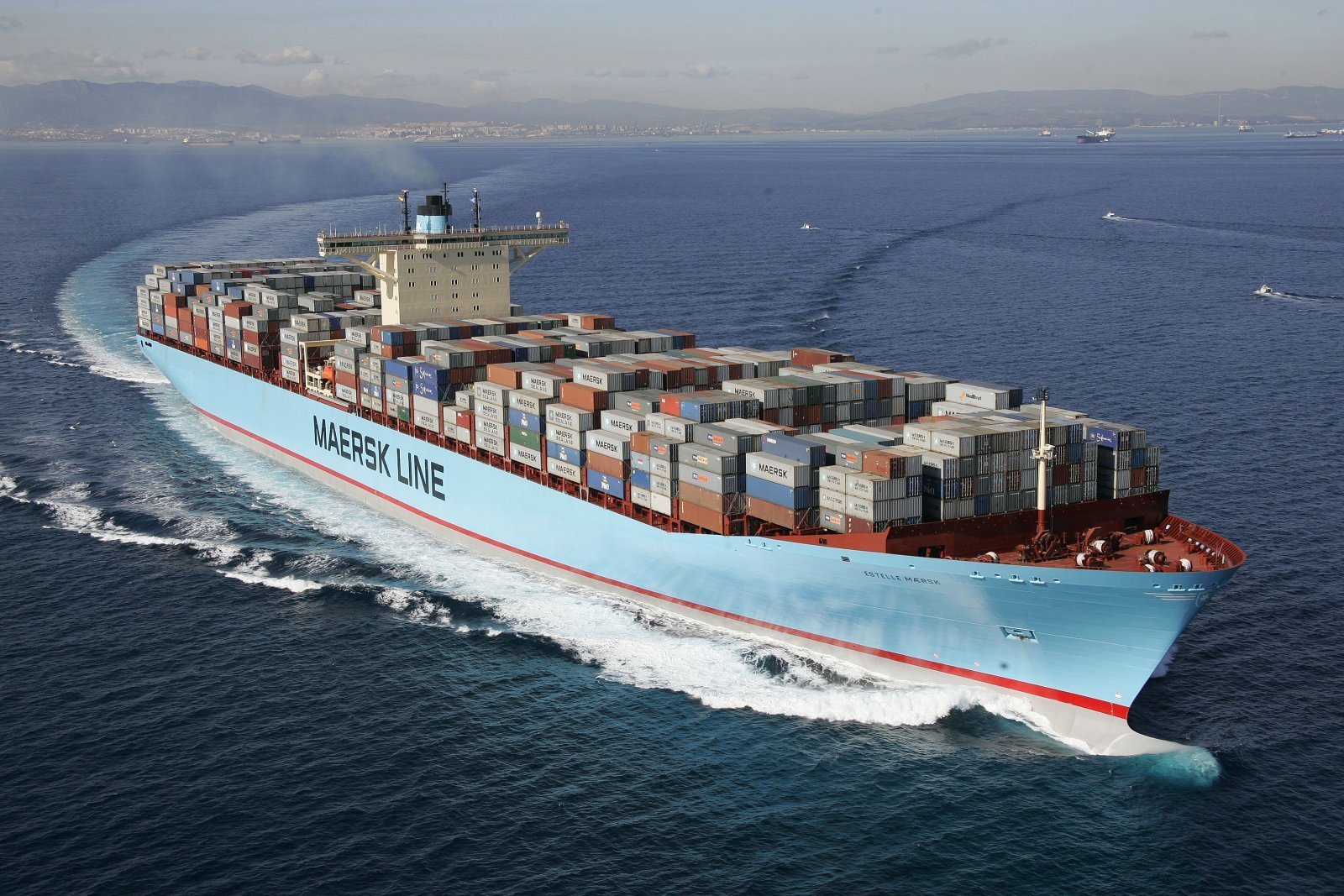
Maersk is introducing Peak Season Surcharges effective June 15 on cargo from China and Hong Kong to East African ports including Dar es Salaam and Mombasa: USD 1,000 per 20-foot container and USD 2,000 per 40-foot container under non-spot contracts. China is East Africa's largest import source, supplying smartphones, solar panels, electrical equipment, clothing, furniture, construction materials, and industrial machinery. Importers with thin margins will transfer the cost forward through distributors and retailers, producing consumer price inflation that functions as an invisible tax on lower and middle-income households spending a large share of income on imported goods. Infrastructure projects dependent on Chinese inputs including steel, construction equipment, electrical systems, and industrial machinery face contractor cost pressures on fixed-price agreements. The surcharge is a symptom of a structural condition: East Africa consumes far more manufactured goods than it produces and has no supply-side buffer against external freight cost shocks. Countries with stronger domestic manufacturing bases absorb these shocks internally. East Africa imports them, and then imports the inflation that follows. The long-term policy question the surcharge poses is not about shipping. It is about whether East Africa can accelerate the manufacturing capacity whose absence makes every Maersk pricing decision an economic event for the region's consumers and governments. Maersk set a freight rate. East Africa will pay it. That sequence, a global shipping company making a commercial decision and an entire region absorbing the consequences without recourse, is the structural story the surcharge is telling. The USD 1,000 is the price. The dependence is the problem.
NAIROBI / DAR ES SALAAM — Maersk, the world's second largest container shipping company, will introduce Peak Season Surcharges on cargo moving from China and Hong Kong to East African ports including Dar es Salaam and Mombasa, effective June 15. The charge is USD 1,000 per 20-foot container and USD 2,000 per 40-foot container on non-spot contracts. The announcement is a standard commercial adjustment by a global logistics company responding to seasonal demand patterns. Its consequences for East Africa are not standard and are not contained to the logistics sector.
The surcharge will move through the region's supply chains with a speed and comprehensiveness that reflects the depth of East Africa's import dependence on China. It will reach retail shelves in Kariakoo before the surcharge has been in effect for a month. It will appear in infrastructure project cost reviews before the quarter ends. It will affect the purchasing power of lower and middle-income households who spend a significant share of their income on imported consumer goods and who have no alternative source for many of the products whose freight cost has just increased.
Understanding why a shipping surcharge set in Copenhagen becomes an economic event for traders in Dar es Salaam, Nairobi, Kampala, and Kigali requires understanding the supply chain structure that makes East Africa uniquely exposed to exactly this kind of external cost shock.
Why China's freight costs are East Africa's problem
China is East Africa's largest source of imports by a substantial margin. The cargo flowing through the China-East Africa shipping corridor encompasses virtually every category of manufactured goods that East African economies consume: smartphones, tablets, and consumer electronics; solar panels and electrical equipment; clothing, textiles, and footwear; furniture and household goods; construction materials including steel, cement equipment, and fittings; industrial machinery and components; agricultural equipment; medical devices; and the thousands of product lines that stock the wholesale markets whose supply chains begin in Guangzhou, Yiwu, and Shenzhen and end in Kariakoo, Gikomba, Kikuubo, and Kigali.
The breadth of this import dependence means the Maersk surcharge does not affect a narrow product category. It affects the cost structure of the entire import-dependent commercial economy simultaneously. An importer of solar panels and an importer of clothing and an importer of construction steel all face the same additional cost per container shipped from the same origin, and all face the same commercial pressure to recover that cost from somewhere in the supply chain.
The somewhere is the consumer. In most East African trading contexts, that is not a choice but an arithmetic inevitability. Importers operating on the thin margins that characterise high-volume consumer goods trading, where the competitive dynamics of wholesale markets in Kariakoo and Gikomba compress margins to levels that leave little room for cost absorption, will pass the freight increase forward through distributors to retailers and from retailers to consumers. The process is not instantaneous but it is reliable. Shipping costs function like an invisible tax on economic activity, levied at the port, collected at the till.
The infrastructure dimension whose budget consequences are direct
The surcharge's consequences extend beyond consumer goods markets into the infrastructure investment programmes whose acceleration Uchumi360's coverage has documented across East Africa in 2025 and 2026.
Tanzania's SGR network expansion, the Julius Nyerere Hydropower Project's transmission infrastructure, the TISEZA manufacturing parks under development, the Rwanda road rehabilitation programme whose Rwf 513 billion deployment includes imported construction equipment and materials, and the Uganda Kampala-Jinja Expressway whose USD 1.4 billion construction requires steel, electrical systems, and machinery not all of which can be sourced domestically, all have supply chains that pass through the China-East Africa shipping corridor now subject to Maersk's surcharge.
Contractors operating on fixed-price or fixed-unit-rate agreements face the choice that every construction project manager facing sudden input cost increases confronts: absorb the additional logistics cost and reduce the project's profitability, or seek contract variations that increase the project's total cost and require renegotiation with the government or development finance institution client. Neither option is without consequence. Absorbed costs reduce the contractor's margin and may affect quality or timeline if the pressure is severe enough. Contract variations increase the government's fiscal exposure on projects whose budget was already fixed, adding to the fiscal pressure that Kenya's broken budget analysis and Tanzania's PPP pipeline management both illustrate as a real and present constraint.
For East African governments managing tight fiscal positions, even seemingly modest increases in import costs on infrastructure inputs can create significant cumulative budgetary pressure across multiple concurrent projects, particularly when the surcharge is applied simultaneously to multiple container shipments across multiple project supply chains.
The wholesale market arithmetic that reaches every household
The transmission mechanism from port surcharge to household price is direct and well-documented from previous freight cost escalation episodes including the 2021 and 2022 global container freight rate spikes whose inflationary consequences across East Africa were severe enough to contribute to the central bank tightening cycles that Kenya, Tanzania, and Rwanda all undertook in 2022 and 2023.
When a container carrying electronics becomes more expensive to ship, the importer's landed cost increases. The importer passes the increase to the wholesaler. The wholesaler adjusts the wholesale price. The retailer adjusts the retail price. The consumer pays more for the same product. At each stage, the pass-through is partial because each participant in the chain absorbs some fraction of the cost, but the aggregate pass-through to the final consumer is substantial. The households that absorb the largest share of the real income loss are those spending the highest proportion of their income on the imported consumer goods whose prices have increased, typically lower and middle-income households with limited ability to substitute away from affected product categories.
The inflationary effect is not limited to the specific products whose freight cost increases most directly. When imported goods become more expensive, domestic alternatives, where they exist, often experience price increases as well as domestic producers capture the competitive headroom the import price increase creates. The surcharge thus has an economy-wide price level effect whose magnitude exceeds the direct freight cost increase on the specific goods affected.
What the surcharge reveals about structural vulnerability
The commercial logic of the Maersk surcharge is straightforward. Peak season on the China-East Africa trade lane generates demand for container capacity. Maersk is pricing that demand. The decision reflects nothing about East Africa specifically and everything about global shipping economics. Maersk is not targeting East African economies with the surcharge. It is applying standard freight pricing practices to a trade corridor whose economics justify the adjustment.
That indifference is precisely the structural problem the surcharge exposes. East Africa has no capacity to influence, resist, or route around a pricing decision made by a global shipping company about a trade corridor the region depends on for the majority of its manufactured goods imports. The region is a price taker in global shipping markets in the same way that it is a price taker in global commodity markets, with the critical difference that its commodity export revenues at least provide some offset to the cost increases that import dependency imposes.
Countries with stronger domestic manufacturing bases are significantly more insulated from this kind of external freight cost shock. When a product is manufactured domestically, its cost is determined by domestic input costs, domestic labour rates, domestic energy costs, and domestic logistics, none of which are affected by a shipping surcharge on international freight lanes. The more of its consumption a country can supply from domestic production, the smaller the share of its price level that is exposed to external freight cost decisions by global shipping companies.
East Africa has not yet built that buffer at the scale that its import volumes would require to provide meaningful insulation. Despite decades of policy discussion around industrialisation, regional manufacturing capacity remains concentrated in a relatively narrow range of sectors including food processing, beverages, cement, construction materials, and agricultural processing, while the wider manufactured goods economy, electronics, textiles, machinery, electrical equipment, and the diverse product lines that stock consumer markets, continues to depend on imports from China and other manufacturing economies.
The longer argument the surcharge is making
Every disruption in global shipping, whether caused by the Red Sea security situation that drove freight rate spikes in late 2023 and 2024, the COVID-19 pandemic's port congestion effects in 2021 and 2022, the Suez Canal blockage, container shortages at specific port hubs, or peak season surcharges from major carriers like Maersk, immediately affects East African economies in ways they cannot mitigate through domestic market mechanisms.
This recurrent exposure is the structural argument for the manufacturing and industrial policy priorities that Tanzania's Vision 2050, Kenya's manufacturing sector development programmes, Rwanda's Made in Rwanda strategy, and Uganda's industrial park investment are all attempting to address. The argument is not primarily about economic nationalism or import substitution ideology. It is about supply chain resilience: the capacity to supply a meaningful share of domestic consumption from domestic production, reducing the economy's exposure to external cost shocks that are beyond its control.
Tanzania's TISEZA-facilitated manufacturing investment acceleration, running at over 900 project approvals in 2025 and one new factory per day through 2024, is the most direct available evidence in the region of what accelerated industrialisation at scale looks like in practice. The Tanzol Solar Manufacturing Complex at Kwala, producing solar panels that would otherwise arrive through the same China-East Africa shipping corridor whose freight costs the Maersk surcharge has just increased, is the specific product-level expression of the import substitution logic that industrial policy is designed to advance.
But the scale of current domestic manufacturing relative to the scale of import dependence means the buffer is small. Every container arriving from China reflects production that could not be performed locally. The Maersk surcharge is a reminder of what that gap costs, not in the abstract language of industrial policy analysis, but in the concrete arithmetic of USD 1,000 per container, repeated across every shipment, passed forward through every supply chain link, and eventually collected from every household in the region whose income is not growing at the pace the freight cost increase demands.
Who pays and who does not
Maersk will collect stronger freight revenues. Chinese manufacturers will experience minimal disruption because their products' demand in East Africa is inelastic at the margin: there are no domestic alternatives of sufficient scale to which East African buyers can switch. The shipping company makes more money. The factory owners in Guangzhou and Shenzhen notice nothing. The people who pay are the importer in Dar es Salaam managing the landed cost calculation, the wholesaler in Kariakoo adjusting the wholesale price list, the retailer in Gikomba updating the shelf price, and the consumer in Kinondoni, Nairobi's Eastleigh, Kampala's Nakasero, and Kigali's Nyarugenge who pays a few hundred shillings or francs more for goods they needed before the surcharge existed and will still need after it takes effect.
The income that leaves East African households through the mechanism of higher import costs does not return to East African economies through any reciprocal channel. It flows to global shipping companies and to the Chinese manufacturers whose competitive pricing, now augmented by Maersk's surcharge, remains lower than the alternatives. The terms of the trade relationship are set externally and adjusted externally. East Africa participates on the terms offered.
The long-term response to that condition is not to stop importing from China. The trade relationship has delivered affordable goods at a quality and price point that domestic manufacturing cannot yet match across most product categories, and disrupting it unilaterally would harm the consumers it currently serves before the domestic manufacturing capacity whose development would eventually replace it has been built.
The response is to build that capacity, at the pace and scale that Tanzania's industrial policy acceleration, Rwanda's manufacturing investment programme, Kenya's manufacturing sector development, and Uganda's industrial park expansion are attempting, with the urgency that the Maersk surcharge, and the one before it, and the one that will come after it, keeps supplying.
Maersk set a freight rate. East Africa will pay it. The structural work of not needing to keep paying it is already underway. It is not yet finished.
FAQ
What is the Maersk Peak Season Surcharge on East Africa routes? Maersk is introducing surcharges of USD 1,000 per 20-foot container and USD 2,000 per 40-foot container on cargo shipped from China and Hong Kong to East African ports including Dar es Salaam and Mombasa under non-spot contracts, effective June 15.
Why does a shipping surcharge affect East African consumer prices? China is East Africa's largest import source, supplying electronics, solar panels, clothing, furniture, construction materials, and industrial machinery. When freight costs rise, importers with thin margins transfer the cost forward through distributors to retailers and from retailers to consumers. The surcharge functions as an invisible tax on the full range of imported consumer goods, whose price increases reach household budgets within weeks of the surcharge taking effect.
Which sectors are most affected by the Maersk surcharge? Consumer goods traders across wholesale markets in Kariakoo, Gikomba, Kikuubo, and Kigali are most immediately affected. Infrastructure contractors dependent on Chinese steel, construction equipment, electrical systems, and machinery face cost pressures on fixed-price project agreements. Lower and middle-income households spending a large share of income on imported consumer goods absorb the largest real income impact.
Why can't East Africa simply route shipments differently to avoid the surcharge? The surcharge applies to the China-East Africa trade lane because China is the dominant source of manufactured goods imports. East Africa's import dependence on China is structural rather than incidental: domestic manufacturing capacity does not exist at sufficient scale across most product categories to substitute meaningfully for Chinese supply in response to freight cost changes. There is no alternative routing that avoids the source of the goods.
What is the long-term solution to East Africa's exposure to shipping surcharges? Building domestic manufacturing capacity that reduces the share of consumption supplied through the affected shipping corridors. Tanzania's industrial policy acceleration, Rwanda's Made in Rwanda strategy, Kenya's manufacturing sector development, and Uganda's industrial park expansion are all addressing this structural gap. Tanzania's TISEZA-facilitated manufacturing investment, running at over 900 project approvals in 2025 and one factory per day in 2024, is the most advanced regional example of what that acceleration looks like at scale. The solution is long-term. The surcharge is immediate.
 Uchumi360
Business Intelligence
Uchumi360
Business Intelligence
- Maersk, Peak Season Surcharge announcement for China and Hong Kong to East Africa routes effective June 15
- USD 1,000 per 20-foot container and USD 2,000 per 40-foot container on non-spot contracts
- Available at maersk.com
- Tanzania Investment and Special Economic Zones Authority, manufacturing investment data
- Over 900 project approvals 2025, one factory per day 2024
- Available at tiseza.go.tz
- Gilead Teri, Director General TISEZA, Divya Briefing podcast, May 2026
- Manufacturing acceleration data confirmed
- Rwanda Ministry of Infrastructure, Rwf 513 billion infrastructure programme 2025/26
- Available at mininfra.gov.rw
- Uganda National Roads Authority, Kampala-Jinja Expressway project documentation
- Available at unra.go.ug
- Tanzania Railways Corporation, SGR network expansion documentation
- Available at trc.go.tz
- Kenya National Bureau of Statistics, Kenya import data and China trade volumes
- Available at knbs.or.ke
- National Bureau of Statistics Tanzania, import data and China trade volumes
- Available at nbs.go.tz
- Uganda Bureau of Statistics, import data and trade volumes
- Available at ubos.org
- Rwanda Development Board, trade and import data
- Available at rdb.rw
- African Development Bank, East Africa trade and manufacturing research
- Available at afdb.org
- World Bank, East Africa supply chain and manufacturing development research
- Available at worldbank.org
- International Monetary Fund, East Africa inflation and import cost transmission research
- Available at imf.org
Uchumi360 covers business, investment, and economic policy across East, Central, and Southern Africa.
For the serious reader
You read to the end. That places you in a small group.
Uchumi360 is built for readers who demand precision over speed, structure over sentiment, and analysis that holds uncomfortable conclusions rather than softening them. If this work sharpens how you think about Africa's economy, help us keep building the infrastructure behind it.
Institutional Partners
Commission intelligence. Shape the conversation.
Uchumi360 works with development finance institutions, investment firms, sovereign bodies, and strategic organisations across the coverage region. Institutional partnership unlocks:
- Commissioned sector and country intelligence reports
- Branded research series under your institution's authority
- Exclusive data briefings for internal strategy teams
- Speaking and editorial presence at Uchumi360 events
- Co-published investment outlooks for your markets
Support Our Work
Independent analysis has a cost. Help us bear it.
Uchumi360 does not carry advertising. It does not take editorial direction from sponsors. Every article is produced without commercial compromise. Your contribution funds the reporting, research, and editorial infrastructure that keeps this analysis free from influence.
Secure checkout: One-time and monthly support are processed securely. Add payment credentials to enable checkout here.
Stay Connected
Keep up with every new insight.
Follow our latest analysis, policy coverage, and market intelligence as soon as it is published. If you need something specific, reach out directly and we will point you to the right research.
