
Dangote Confirms Lamu Refinery Groundbreaking By October 2026 As Cost Revised Downward
Ready
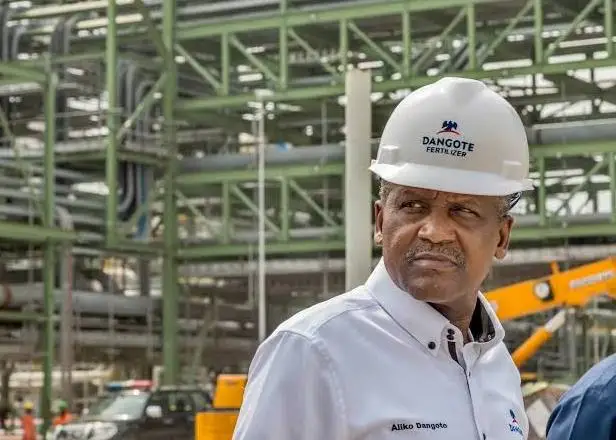
Aliko Dangote has confirmed construction on the 700,000 barrel-per-day Lamu Oil Refinery in Kenya will begin with a groundbreaking ceremony no later than October 2026, with completion expected within four years of that date. Speaking to the BBC's Nancy Kacungira, Dangote revised the project's cost down from an earlier estimate of roughly $17 billion to about $16 billion, attributing the reduction to efficiencies from building his Lagos refinery, faster construction timelines and lower financing costs. Financing splits 30% equity from Dangote's company and 70% debt. The refinery, designed to supply Kenya, Uganda, Tanzania, South Sudan and other regional markets, is sited at Lamu specifically, chosen for its deep-water port and LAPSSET Corridor connectivity, with soil testing, design and engineering already underway and a Kenyan government committee and seed capital already committed.
Aliko Dangote has put a date on East Africa's largest oil refinery project. In an interview with the BBC's Nancy Kacungira near his Lagos refinery, Dangote said groundbreaking on the Lamu Oil Refinery in Kenya will happen no later than October 2026: "By October this year, we will be groundbreaking. Once we break the ground, we will begin the construction." The project is expected to take under four years to complete once work starts.
The site is Lamu, not Mombasa
Earlier coverage of this project tracked a broader contest between Kenya and Tanzania for the refinery's location, with Mombasa cited as Kenya's likely host given its established port infrastructure and distribution network. That's been refined since: the confirmed site is Lamu specifically, chosen for its deep-water port and connectivity to the Lamu Port-South Sudan-Ethiopia Transport Corridor, LAPSSET, which extends the refinery's reach into South Sudan and Ethiopia alongside the Kenya-Uganda-Tanzania markets already under discussion. Soil testing, design and engineering work are already underway, and the Kenyan government has appointed a high-level committee and committed seed capital to the project, consistent with the National Infrastructure Fund backing reported earlier this year.
The cost came down, and Dangote explained why
The refinery's price tag has moved from an earlier estimate of roughly KSh 2.2 trillion, about $17 billion, to approximately KSh 2 trillion, roughly $16 billion or less. Dangote was direct about the reasoning: "We first thought it was going to cost $17 billion, but it will cost less than that, about $16 billion." He attributed the reduction to three factors: efficiencies gained from building the Nigerian refinery, faster construction timelines this time around, and lower financing costs.
That's a meaningful signal beyond the headline number. A billion-dollar-plus downward revision on a project this size, explained by learning curve effects from a prior build rather than a scope cut, suggests Dangote's team is applying real institutional knowledge from Lagos to Lamu rather than starting the cost model from scratch. It's also the kind of detail that should reassure Kenyan officials and financing partners who committed to the project based on the original $17 billion figure.
How it's being financed
Financing will combine equity and debt: Dangote's company contributing roughly 30% through equity, with the remaining 70% raised via debt. That structure is standard for large-scale industrial infrastructure and puts real weight on Dangote's ability to secure debt financing at the scale and terms his cost revision assumes, a detail worth watching as the project moves from announcement to actual capital raising over the next several months.
What it's expected to deliver
At 700,000 barrels per day, the refinery would be among Africa's largest and the biggest in East Africa, designed to supply Kenya and the wider region, explicitly including Uganda, Tanzania, South Sudan and other neighbouring markets. Dangote framed the ambition in continental terms: "The plans for the refinery have gone very far with Kenya because what we are trying to do is to make sure that in most African countries we make them sufficient in their own energy needs." He was explicit that the facility is intended to serve East Africa as a whole, not Kenya in isolation.
On employment, Kenyan government estimates have previously put the figure at around 60,000 direct and indirect jobs across construction and operations, spanning engineering, logistics, manufacturing and related sectors, tens of thousands of positions during the build phase alone, per Dangote's own framing.
Where this leaves the regional picture
This confirms and sharpens what was reported when Dangote first chose Kenya over Tanzania for the project: Mombasa's port depth and Kenya's existing distribution network reaching Uganda, Rwanda, South Sudan and eastern DRC were cited as the deciding factors at the time. Lamu's LAPSSET connectivity extends that logic further north and east than Mombasa alone would have, reinforcing rather than reversing the original site-selection reasoning.
For Tanzania, this is confirmation that the Dangote refinery decision has moved from announcement to construction commitment, with a hard date attached. Tanzania's own response, the $20 billion Tanga Regional Energy Hub agreement with Vitol Bahrain and Uganda, remains a separate, smaller-scale project rather than a rival bid for the same facility. With Lamu now moving toward groundbreaking on a fixed timeline, the practical question for Tanzania shifts from "can we still win this specific refinery" to "can Tanga reach operational capacity before Lamu's four-year build clock runs out and locks in Kenya's position as the region's dominant refined-fuel exporter." That's a narrower and more urgent version of the same competition, not a new one.
What happens next
The confirmed near-term milestones are the October 2026 groundbreaking and the completion of financing arrangements behind the 30/70 equity-debt split. Full details of the BBC interview are expected to air on the BBC News Channel in October, likely timed close to the groundbreaking itself. Until construction actually begins, the project remains, as with any infrastructure commitment this size, a statement of intent backed by committed seed capital and site preparation rather than a fully financed and contracted build.
FAQ
When will construction on the Lamu refinery begin? Groundbreaking is confirmed for no later than October 2026, with construction expected to take under four years from that point.
How much will the refinery cost? Approximately $16 billion (KSh 2 trillion), revised down from an earlier estimate of $17 billion (KSh 2.2 trillion), due to efficiencies from Dangote's Lagos refinery build, faster construction timelines and lower financing costs.
How is the project being financed? 30% equity from Dangote's company, 70% debt.
Why was Lamu chosen over Mombasa? Lamu offers a deep-water port and direct connectivity to the LAPSSET Corridor, extending the refinery's reach into South Sudan and Ethiopia alongside Kenya, Uganda and Tanzania.
How many jobs is the project expected to create? Kenyan government estimates point to around 60,000 direct and indirect jobs across construction and operations.
Which countries will the refinery supply? Kenya, Uganda, Tanzania, South Sudan and other regional markets.
 Uchumi360
Business Intelligence
Uchumi360
Business Intelligence
- BBC interview with Aliko Dangote (Nancy Kacungira), and subsequent coverage by Kenyan media outlets
Uchumi360 covers business, investment, and economic policy across East, Central, and Southern Africa.
For the serious reader
You read to the end. That places you in a small group.
Uchumi360 is built for readers who demand precision over speed, structure over sentiment, and analysis that holds uncomfortable conclusions rather than softening them. If this work sharpens how you think about Africa's economy, help us keep building the infrastructure behind it.
Institutional Partners
Commission intelligence. Shape the conversation.
Uchumi360 works with development finance institutions, investment firms, sovereign bodies, and strategic organisations across the coverage region. Institutional partnership unlocks:
- Commissioned sector and country intelligence reports
- Branded research series under your institution's authority
- Exclusive data briefings for internal strategy teams
- Speaking and editorial presence at Uchumi360 events
- Co-published investment outlooks for your markets
Support Our Work
Independent analysis has a cost. Help us bear it.
Uchumi360 does not carry advertising. It does not take editorial direction from sponsors. Every article is produced without commercial compromise. Your contribution funds the reporting, research, and editorial infrastructure that keeps this analysis free from influence.
Secure checkout: One-time and monthly support are processed securely. Add payment credentials to enable checkout here.
Stay Connected
Keep up with every new insight.
Follow our latest analysis, policy coverage, and market intelligence as soon as it is published. If you need something specific, reach out directly and we will point you to the right research.
