
Tanzania Breaks Ground on $2.7 Billion Tabora to Kigoma Railway, Strengthening Great Lakes Trade
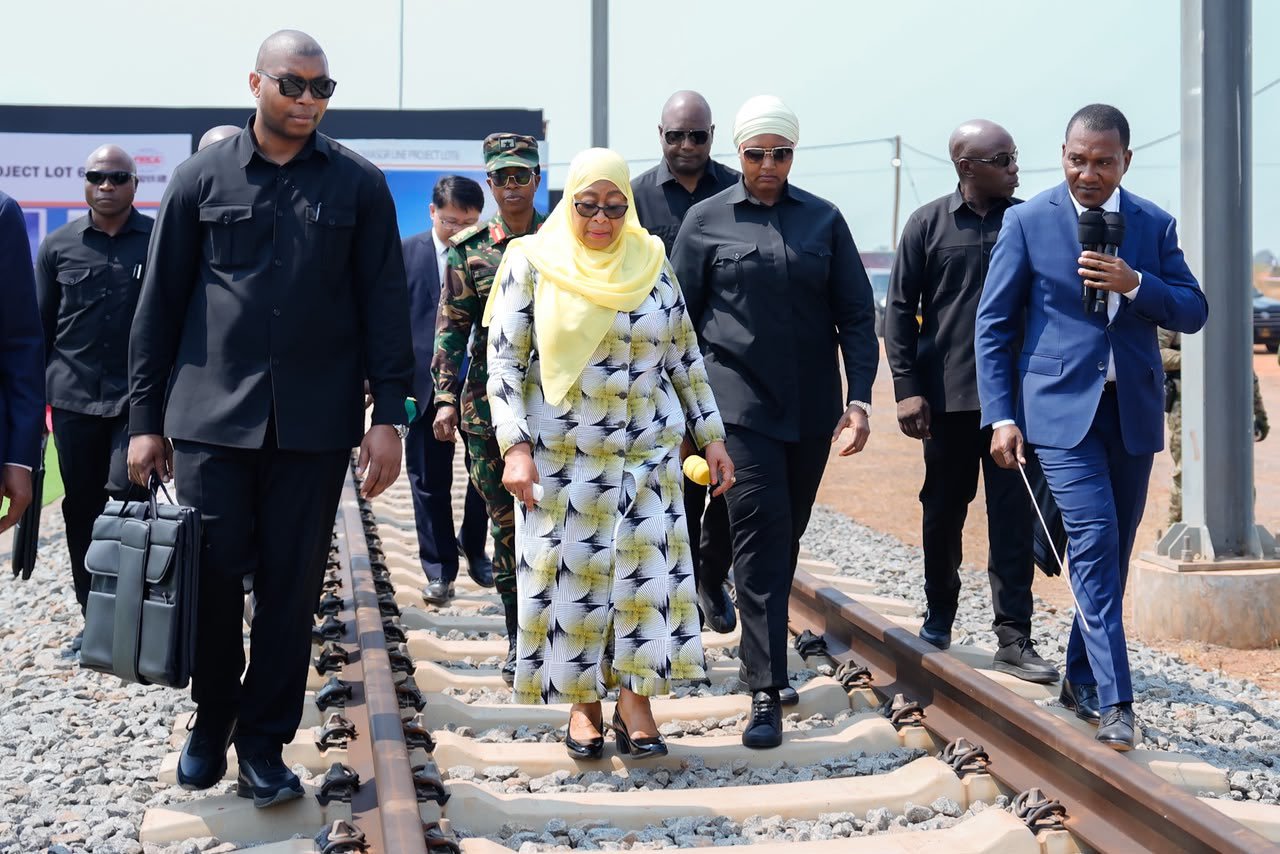
Ready
President Samia Suluhu Hassan laid the foundation stone for the Tabora-Kigoma Standard Gauge Railway on 20 July 2026, a 506-kilometre line estimated at TZS 6.3 trillion (about US$2.7 billion) that will connect Tanzania's central corridor to Lake Tanganyika and the Democratic Republic of Congo. The ceremony, held at Katosho Grounds in Kigoma-Ujiji, comes nearly four years after Tanzania signed the original $2.21 billion construction contract with CCECC and CRCC in December 2022. Alongside the railway, the president inaugurated four new 2,000-tonne cargo vessels and inspected an upgraded cargo terminal at Kigoma Port. The project is the second of two corridors that make up Phase II of Tanzania's SGR programme, which will bring the national network to roughly 2,809 kilometres once complete. Whether the region's port and shipyard capacity can absorb the cargo the railway is designed to carry is the question now shaping the debate around it.
KIGOMA — President Samia Suluhu Hassan laid the foundation stone for the Tabora-Kigoma Standard Gauge Railway on Monday, 20 July 2026, at a ceremony held at Katosho Grounds in Kigoma-Ujiji Municipality. The event marked the formal start of construction on SGR Lot 6, a 506-kilometre line that will extend Tanzania's modern rail network from Tabora west to the shores of Lake Tanganyika.
The current cost estimate for the line stands at TZS 6.3 trillion, approximately US$2.7 billion. That figure has grown since Tanzania first signed a construction contract for the same route in December 2022, a $2.21 billion agreement between the Tanzania Railway Corporation and a joint venture of China Civil Engineering Construction Corporation and China Railway Construction Corporation, witnessed at the time by President Hassan herself. Nearly four years separate that signing from Monday's groundbreaking, a gap that reflects the sequencing of Tanzania's SGR programme as much as any single delay, since the government prioritised completing the Dar es Salaam-Mwanza corridor of Phase I before mobilising fully on the western extension.
Work on sections of the route had already begun ahead of the ceremony. Pillar construction on the Malagarasi River bridge, one of the project's largest structures, has been completed, and Kigoma's Regional Commissioner, Simon Sirro, told journalists on 17 July that construction had progressed beyond 10% overall.
What Is Actually Being Built
The Tabora-Kigoma line comprises 411 kilometres of main line and 95 kilometres of sidings and passing loops, a combined 506 kilometres running through Tabora Urban, Uyui, Urambo, Kaliua and into Kigoma Rural and Kigoma Urban. It is being built to the same electrified, standard-gauge specification as earlier SGR segments, permitting passenger services at up to 160 km/h and freight at 120 km/h. The route requires 27 major bridges, 75 minor bridges and 475 box culverts, along with dedicated level crossings for the full length of the corridor from Dar es Salaam to Kigoma.
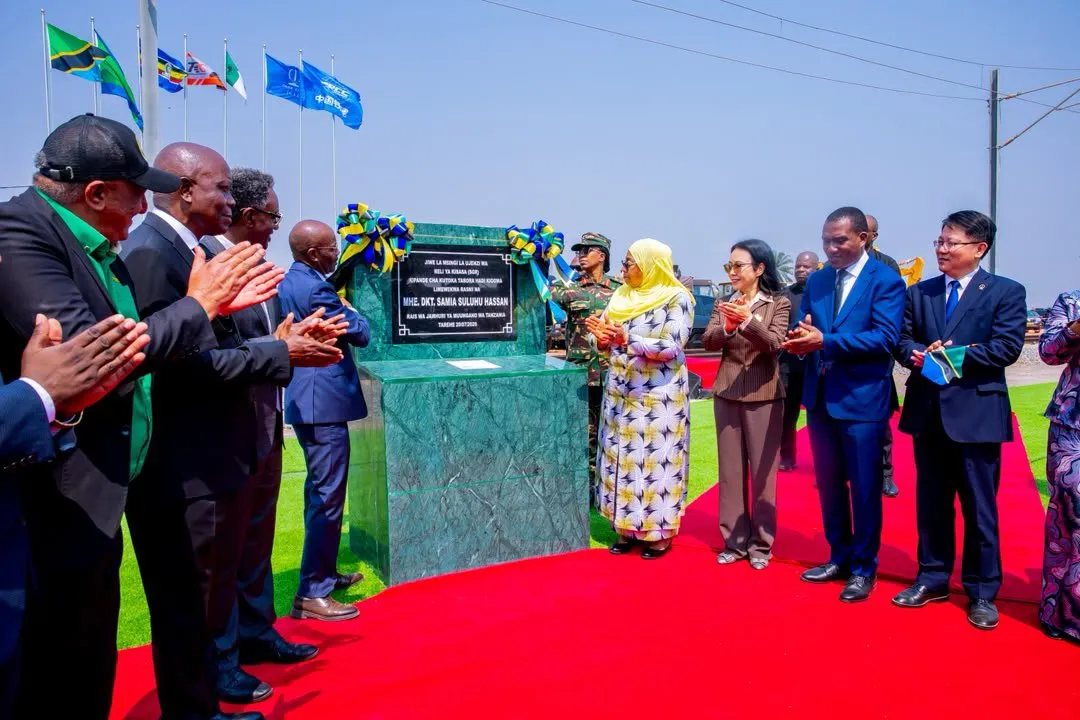 The President of the United Republic of Tanzania, Dr. Samia Suluhu Hassan, cutting the ceremonial ribbon to mark the laying of the foundation stone for the construction of the Standard Gauge Railway (SGR) Section Six from Tabora to Kigoma, during an event held at Katosho in Kigoma Region on 20 July 2026.
New stations are planned at Urambo and Uvinza, alongside a significantly upgraded Kigoma station that is expected to become Tanzania's fourth-largest, behind Dodoma, Dar es Salaam and Mwanza. Construction is being carried out by CCECC in joint venture with CRCC, with Dar Al-Handasah serving as consultant engineer and the Tanzania Railway Corporation overseeing delivery.
Part of a Larger, Longer-Dated Network
The Tabora-Kigoma line is the more advanced of two corridors that make up Phase II of Tanzania's SGR programme, the other being the Uvinza-Musongati section, together totalling 1,590 kilometres. Speaking to Parliament while presenting his ministry's 2026/27 budget estimates, Transport Minister Prof Makame Mbarawa said that once both phases are complete, Tanzania's Standard Gauge Railway network will span roughly 2,809 kilometres, combining Phase I's 1,219-kilometre Dar es Salaam-Mwanza corridor with the western extensions now under construction.
The strategic logic behind the western push has not changed since the original 2022 contract signing, when President Hassan pointed to the volume of cargo waiting on the other side of the border. She noted at the time that the Democratic Republic of Congo's mineral mines produce more than 150 million tonnes of cargo requiring transport, and that a functioning rail link could cut the cost of moving freight between Dar es Salaam and DRC from around $6,000 per tonne to roughly $4,000. Whether those figures hold once the line is operational will depend on final tariff structures the Tanzania Railway Corporation has not yet published.
Lake Tanganyika Gets New Vessels and a Refurbished Port
The railway did not launch in isolation. During the same visit, President Hassan inaugurated four new cargo vessels for Lake Tanganyika, each with a combined capacity to move up to 2,000 tonnes of cargo per trip, and inspected an upgraded cargo terminal at Kigoma Port. Prof Mbarawa said the vessel and port investments would create more than 600 direct jobs, spanning marine crew, drivers and other logistics roles, and would position Kigoma as a transport and trade centre for the countries bordering Lake Tanganyika, including Burundi and the DRC.
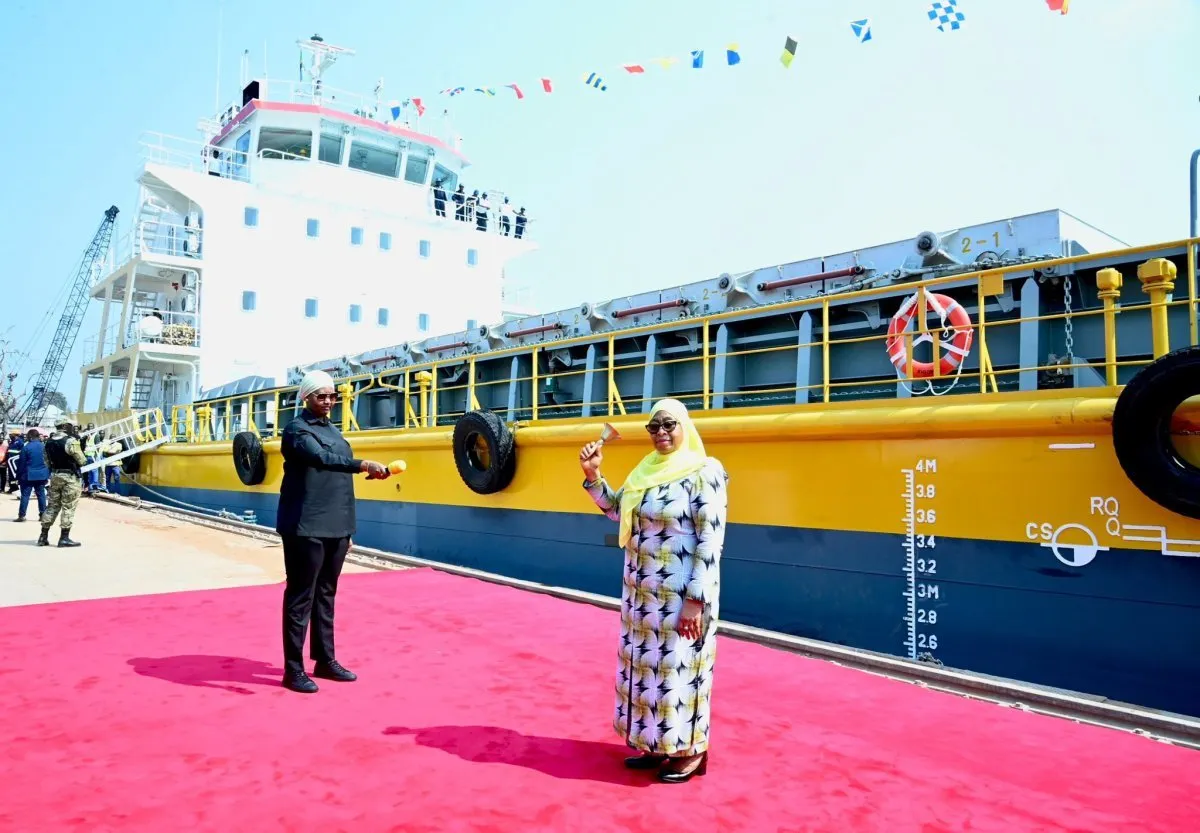 The President of the United Republic of Tanzania, Dr. Samia Suluhu Hassan, striking the ceremonial gong to officially commission four cargo vessels that will operate on Lake Tanganyika, during an event held in Kigoma Region on 20 July 2026.
The pairing of rail and lake transport investment reflects the multimodal logic behind the western corridor: a railway alone does not move cargo across Lake Tanganyika into DRC and Burundi, and a port without rail connectivity to Dar es Salaam cannot move cargo efficiently to the coast either. Both pieces are being built concurrently rather than sequentially.
The Capacity Question Nobody Has Fully Answered Yet
Not all of the commentary accompanying the launch has been celebratory. An opinion piece published in The Citizen on the eve of the ceremony argued that without a properly scaled shipyard at Kigoma, the railway risks falling short of its intended purpose, since a rail line terminating at a lake port only delivers its full value if the vessels and port infrastructure on the other end can absorb the freight volumes the railway is designed to carry. The argument does not dispute the value of the railway itself, since Kigoma residents have campaigned for the line for decades. It raises a narrower, more practical question: whether the four new vessels and the upgraded cargo terminal announced alongside the railway represent a shipyard capacity roughly matched to a 506-kilometre, standard-gauge line built to move freight at 120 km/h, or whether the lake-side infrastructure will need a second wave of investment once the railway itself is operational.
That question will not be answerable until construction is complete and traffic volumes materialise. The railway's own timeline gives a rough date for when it will be tested: with a 48-month construction schedule from Monday's groundbreaking, the Tabora-Kigoma line is expected to be operational by around mid-2030, four years after a contract that was itself signed nearly four years before construction began.
FAQ
When did construction of the Tabora-Kigoma SGR actually start? President Samia Suluhu Hassan laid the foundation stone on 20 July 2026, though some sections, including pillar work on the Malagarasi River bridge, had already progressed beyond 10% ahead of the formal ceremony.
Why did it take almost four years between the contract signing and the groundbreaking? Tanzania signed the original construction contract for the route in December 2022, but the government prioritised completing Phase I's Dar es Salaam-Mwanza corridor before mobilising full construction resources on the western Phase II extension.
How much will the Tabora-Kigoma railway cost? The current estimate is TZS 6.3 trillion, roughly US$2.7 billion, higher than the $2.21 billion contract value agreed in December 2022.
How long will the railway take to build? The project has a 48-month construction schedule from the July 2026 groundbreaking, putting completion at roughly mid-2030.
What does the railway connect Tanzania to? It links Tabora to Kigoma on Lake Tanganyika, positioning Kigoma as a trade gateway to the Democratic Republic of Congo and Burundi, and connects to the existing SGR network running to Dar es Salaam and, eventually, Mwanza.
Is the railway alone enough to unlock trade with the Great Lakes region? Not on its own, according to critics writing alongside the launch. The railway terminates at Lake Tanganyika, so its value depends on port and vessel capacity at Kigoma being able to move the freight volumes the rail line is designed to carry into DRC and Burundi, a capacity question the four new cargo vessels and upgraded terminal announced this week have only partially addressed.
 Uchumi360
Business Intelligence
Uchumi360
Business Intelligence
Uchumi360 covers business, investment, and economic policy across East, Central, and Southern Africa.
For the serious reader
You read to the end. That places you in a small group.
Uchumi360 is built for readers who demand precision over speed, structure over sentiment, and analysis that holds uncomfortable conclusions rather than softening them. If this work sharpens how you think about Africa's economy, help us keep building the infrastructure behind it.
Institutional Partners
Commission intelligence. Shape the conversation.
Uchumi360 works with development finance institutions, investment firms, sovereign bodies, and strategic organisations across the coverage region. Institutional partnership unlocks:
- Commissioned sector and country intelligence reports
- Branded research series under your institution's authority
- Exclusive data briefings for internal strategy teams
- Speaking and editorial presence at Uchumi360 events
- Co-published investment outlooks for your markets
Support Our Work
Independent analysis has a cost. Help us bear it.
Uchumi360 does not carry advertising. It does not take editorial direction from sponsors. Every article is produced without commercial compromise. Your contribution funds the reporting, research, and editorial infrastructure that keeps this analysis free from influence.
Secure checkout: One-time and monthly support are processed securely. Add payment credentials to enable checkout here.
Stay Connected
Keep up with every new insight.
Follow our latest analysis, policy coverage, and market intelligence as soon as it is published. If you need something specific, reach out directly and we will point you to the right research.
