
Mwanza Has 5 Million People, Africa's Largest Lake, Tanzania's Second Largest Economy, and a New Bridge That Cuts Travel Time From Two Hours to Five Minutes. Why Has It Not Become the Economic City It Should Be?
Ready
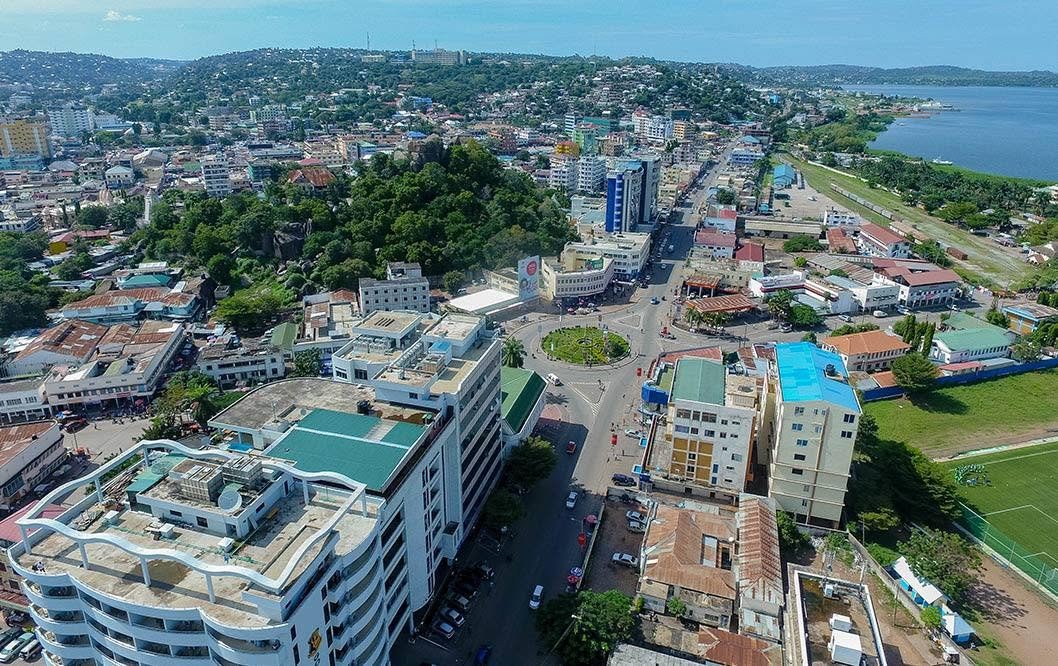
Mwanza is East Africa's second largest city on Lake Victoria with a population of 4.24 million. It contributed TZS 13.5 trillion, approximately 7.2 percent, to Tanzania's national GDP in 2023, making it the country's second-largest regional economy after Dar es Salaam at 17 percent. AngloGold Ashanti's Geita mine 120km away produces hundreds of thousands of ounces of gold annually. Perseus Mining's Nyanzaga project, a USD 679 million investment with a USD 523 million capital commitment confirmed in April 2025, expects first gold in 2027. The Mwanza-Isaka SGR reached 68 percent completion by early 2026, with freight trials beginning in June 2025. The John Pombe Magufuli Bridge, a 3.2km cable-stayed structure opened in June 2025, cut the lake crossing time between Kigongo and Busisi from a 35-minute ferry dependent on weather and schedule to a five-minute drive. The question Mwanza faces is not whether it has the assets to become a major economic city. It has. The question is whether the policy, commercial, and institutional decisions that would convert those assets into sustained economic agglomeration are being made at the pace the infrastructure window now opening requires.
Mwanza had a GDP of TZS 13.5 trillion and a 7.2 percent share of Tanzania's national GDP in 2023, making it the country's second-largest regional economy. Its regional commissioner has publicly targeted doubling that share to 10 percent by 2035. Three infrastructure investments have changed Mwanza's economic geography in the past 18 months: the John Pombe Magufuli Bridge opened June 2025 at TZS 682 billion, cutting the lake crossing from 35 minutes by ferry to five minutes by road; the Mwanza-Isaka SGR at 68 percent completion targeting late 2026 operational start, connecting Mwanza to the Central Corridor; and the Mwanza Airport expansion to 4,000-passenger capacity from under 100. Surrounding the city are AngloGold Ashanti's Geita mine at 120km, Perseus Mining's USD 679 million Nyanzaga project with first gold expected 2027, and the Lake Victoria fishing and aquaculture sector. Rwanda, Uganda, Burundi, and eastern DRC are all accessible through Mwanza's lake and road network. The city has been described as undervalued for thirty years. What has changed is that the infrastructure gap that kept it undervalued is closing faster than at any previous point.
The question Mwanza keeps not answering
Every five years, Tanzania publishes a new development plan. Every plan identifies Mwanza as a priority secondary city whose strategic position on Lake Victoria, proximity to gold and mineral deposits, and role as the lake zone's commercial centre give it the potential to become a major economic hub. Every plan targets a meaningfully higher share of national economic activity for the region. The plans are not wrong about any of this.
Mwanza remains Tanzania's second city and its second-largest regional economy. It has not become the industrial and commercial hub that its geographic and resource endowments suggest it should be.
That gap between potential and performance is the Mwanza Question. And for the first time in at least a decade, the infrastructure being built around the city is creating the conditions under which the gap could actually close.
What Mwanza actually is
The numbers establish the baseline. Mwanza contributed TZS 13.5 trillion to Tanzania's national GDP in 2023, approximately 7.2 percent of the total, according to Bank of Tanzania data. Dar es Salaam leads in contribution to GDP, accounting for TZS 32.1 trillion of Tanzania's TZS 188.8 trillion economy as of 2023, contributing 17 percent. Mwanza, in second place, contributed about 7.2 percent to the national GDP, with Mbeya third at TZS 10.5 trillion.
The population of 4.24 million makes Mwanza the second-largest city in Tanzania and one of East Africa's largest cities. The NBS 2026 population projections confirm this ranking. Dar es Salaam at 6 million is in a category of its own. Mwanza at 4.24 million is substantially larger than Kampala, which serves a comparable regional anchor function in Uganda, and larger than Kigali, which has built a continental reputation as a governance and finance hub with a fraction of Mwanza's population.
The TICGL analysis of Tanzania's urban economies is direct in its assessment: Mwanza's comparative advantages, Lake Victoria for inland trade, gold mining, fishing value chains, and the SAGCOT agricultural corridor, make it East Africa's most undervalued secondary city investment opportunity. An SEZ designation with rail and port upgrades could unlock USD 2 billion or more in manufacturing investment within five years.
That is an external analytical verdict, not a promotional claim. The question it raises is: if the assessment is correct, what has prevented the opportunity from being captured?
Three answers to why Mwanza has underperformed its potential
The explanation for Mwanza's relative underperformance against its resource endowment is not a single policy failure. It is the accumulation of three structural constraints that development plans have identified and infrastructure investment is now beginning to remove simultaneously.
The first is the lake crossing bottleneck. Before June 2025, the only way to cross the Gulf of Mwanza between Kigongo and Busisi was by ferry. The ferry system was slow, subject to weather conditions, had limited capacity, and created a specific logistics inefficiency for freight moving between Mwanza and the Geita gold corridor. Trucks from Rwanda and Burundi, whose cargo was destined for or transiting through Mwanza, faced circuitous routes or unreliable crossing times that added cost and unpredictability to the Central Corridor's western leg. The absence of a direct bridge crossing meant longer travel times, higher transport costs, and logistical inefficiencies for goods moving between Rwanda, Burundi, and Mwanza, as well as onward to the Tanzanian coast or other regional markets.
The John Pombe Magufuli Bridge opened in June 2025, spanning 3.2 kilometres across the Gulf of Mwanza on Lake Victoria, linking the Misungwi and Sengerema districts in the Mwanza region. Costing TZS 682 billion and financed entirely from domestic tax revenues, the bridge slashed travel time across the lake from 35-minute ferry rides to a five-minute drive, with a 32-metre clearance for maritime traffic supporting 3,500 daily vehicles and cutting logistics costs by up to 20 percent. Tanzania Railways Corporation Director General Masanja Kadogosa confirmed that once the Kigongo-Busisi Bridge is operational, cargo can move from Mwanza to the Democratic Republic of Congo within 24 hours.
The second structural constraint is railway connectivity. Mwanza has been connected to Tanzania's metre-gauge Central Line since the 1920s, but the metre-gauge system's speed, reliability, and freight economics were insufficient to make Mwanza a genuine industrial logistics hub. Goods moving between Mwanza and Dar es Salaam faced a multi-day journey on aging rolling stock whose service reliability was a persistent commercial deterrent. The Mwanza-Isaka SGR Project reached approximately 68 percent completion as of early 2026, with embankment works surpassing 89 percent and bridge and culvert construction exceeding 70 percent. Freight trials started in June 2025, with full operations expected by late 2026. When operational, the 341km section at a USD 1.321 billion investment will connect Mwanza to Isaka, where it joins the Central Corridor SGR extending to Dar es Salaam, giving Mwanza standard gauge rail connectivity to the Indian Ocean port for the first time.
The third constraint is airport capacity. Mwanza Airport's expansion to serve 4,000 passengers at a time, up from under 100 previously, and its designation for international service, addresses the aviation connectivity gap that has made Mwanza commercially invisible to the international investors and buyers who increasingly evaluate East African investment locations in terms of direct air accessibility. The Mwanza Airport expansion, worth TZS 28 billion, will become an international hub with capacity to serve up to 4,000 passengers at a time, up from the current less than 100.
These three infrastructure investments, simultaneously reaching operational or near-operational status between 2025 and 2026, represent the most concentrated infrastructure improvement in Mwanza's history. Each addresses a constraint that has been identified in development plans for years. Their near-simultaneous delivery creates an infrastructure platform that did not exist in any previous development cycle.
The gold economy that Mwanza anchors but does not fully benefit from
Mwanza's economic geography includes one of the highest concentrations of gold mining investment in East Africa, most of which sits within 120 to 200 kilometres of the city. The relationship between that mining investment and Mwanza's urban economy is the clearest illustration of the gap between resource endowment and economic capture that the Mwanza Question describes.
AngloGold Ashanti's Geita mine, located approximately 120km from Mwanza, is one of Africa's largest gold mines. As of December 2020 confirmed mineral resources stood at 7.92 million ounces. The mine operates a 5.2 million tonne per annum CIL processing plant, employs thousands of workers, and generates gold export revenues that flow through Tanzania's national accounts but whose value addition largely accrues elsewhere in the supply chain.
Perseus Mining's Nyanzaga Gold Project, located within the Mwanza region in Sengerema District, represents the next phase of the area's gold development. Perseus confirmed a final investment decision in April 2025 to proceed with development. The project is expected to produce a total of 2.01 million ounces over an initial 11-year Phase 1 mine life, averaging more than 200,000 ounces per annum from FY2028 to FY2035. The LOM project capital cost is estimated at USD 679.1 million. First gold production is expected in the first quarter of 2027.
These are significant numbers. But the critical economic question for Mwanza is how much of the value chain these mines create is captured locally versus extracted from the region. Gold mining at commercial scale requires equipment, chemicals, energy, engineering services, logistics, catering, accommodation, and financial services. Each of those inputs represents an opportunity for Mwanza-based businesses to supply, or a revenue transfer to suppliers located elsewhere. The ratio between those two outcomes determines whether Mwanza is enriched by its proximity to gold mining or simply hosts it.
The current ratio is not in Mwanza's favour, primarily because the city lacks the industrial service infrastructure whose presence would make local procurement commercially competitive with supply from Dar es Salaam or international sources. A mining procurement manager choosing between a Mwanza supplier and a Dar es Salaam supplier for heavy equipment maintenance, chemical supply, or engineering services will consistently choose the Dar es Salaam alternative if Mwanza's commercial infrastructure is insufficient to provide the reliability, quality, and price competitiveness that commercial mining requires.
Lake Victoria and the regional market Mwanza can serve
Beyond the gold corridor, Mwanza's most distinctive strategic asset is its position on Lake Victoria and its connectivity to the landlocked markets of Uganda, Rwanda, Burundi, and eastern DRC through the lake's ferry and port network.
Lake Victoria is Africa's largest lake and one of the world's largest freshwater bodies. It borders Tanzania, Uganda, and Kenya simultaneously. The MV Hapa Kazi Tu passenger ship, now operational on the lake, connects Mwanza and Bukoba to Uganda. MV Mwanza provides further connectivity. The Isaka dry port, historically a rail transhipment hub for cargo from Rwanda and Burundi, is now the junction point at which the new SGR network meets the existing lake transport system.
The strategic implication is specific. When the Mwanza-Isaka SGR is fully operational, a freight movement from the Dar es Salaam port can reach Mwanza in hours rather than days, be transferred to lake vessels, and reach Ugandan lake ports, Burundian lake ports, and the Rwandan market through connections at Kigali. The Kigongo-Busisi Bridge completes the road connectivity that allows this multimodal system to function without the ferry bottleneck that previously broke the supply chain.
Tanzania Railways Corporation Director General Masanja Kadogosa confirmed the government's vision for this integration: the long-term strategy is to seamlessly integrate rail, road, and water transport systems, with cargo moving from Mwanza to the DRC within 24 hours once the bridge is operational.
Flagship connectivity projects include the Kigongo-Busisi Bridge, inaugurated in June 2025, which improves transport along the Sirari-Usagara-Geita-Bukoba-Mutukula corridor, facilitating trade with Uganda, Rwanda, and Burundi.
The addressable market that this connectivity opens is significant. Rwanda's economy grew 7.0 percent in 2025. Uganda grew 6.7 percent. Both are landlocked economies whose import and export costs are directly affected by the efficiency of the Central Corridor. Every percentage point reduction in their logistics costs, through faster Mwanza connectivity, represents commercial activity that Mwanza's port, warehousing, and logistics sector can capture.
The fishing economy and its underrealised value
Lake Victoria's fishing economy is Mwanza's second major asset beyond gold, and the one whose value chain development is most directly within the reach of local policy and investment without requiring large capital from external sources.
Lake Victoria's Nile perch fishery, concentrated in Tanzania's lake zone, has historically been one of East Africa's most valuable export fisheries. The processing and export of Nile perch generates foreign exchange, employs substantial numbers in processing plants along the lake shore, and creates logistics demand for cold chain, port, and air freight services.
The sector has faced sustainability challenges, with Nile perch stocks under pressure from overfishing and environmental degradation, and aquaculture investment has been slower than the sector's potential would justify. But the infrastructure investment now being completed around Mwanza creates the conditions for a more sophisticated fisheries economy: faster road connectivity reducing spoilage in transit, SGR freight enabling cold chain logistics at scale, and the airport expansion enabling direct export of processed fish products to international markets.
Mwanza Regional Commissioner Saidi Mtanda's ambition is explicit: planes will land directly from outside Tanzania, picking up processed meat and fish products for export. That is a specific value chain upgrade from the current model of low-value dried and fresh fish export through circuitous routes.
The comparator: Kisumu did not become a hub either
Before declaring that Mwanza's infrastructure moment will translate into economic transformation, the regional comparator is worth examining. Kenya's Kisumu, on the northeastern shore of Lake Victoria, is a city with similar geographic positioning, similar lake connectivity advantages, and similar landlocked hinterland market access. Kisumu has not become the East African lake zone commercial hub that its geography implies.
The reasons for Kisumu's underperformance relative to its geographic potential are instructive: a smaller catchment population than Mwanza, road connectivity to Nairobi that while improving has historically been unreliable, competition from Nairobi's overwhelming commercial concentration that pulls investment eastward rather than westward, and the absence of the gold and mining hinterland that gives Mwanza a distinct industrial anchor.
But Kisumu's experience also reveals the limits of infrastructure as a transformation mechanism on its own. The SGR extension to Kisumu now under construction, the lake port expansion, and the improved road connectivity have all been announced or advanced in multiple previous planning cycles without producing the structural economic transformation that geographic potential suggested. Connectivity is necessary but insufficient if the commercial ecosystem, the industrial services, the financial sector, and the regulatory environment are not simultaneously developed.
Mwanza's advantage over Kisumu is the mining hinterland whose procurement demand creates a floor of commercial activity that does not depend on discretionary investment decisions. But Mwanza needs to convert that procurement demand into locally supplied services rather than allowing it to flow to Dar es Salaam or international sources.
What the Mwanza Strategic Plan targets and whether it is achievable
Regional authorities aim to elevate Mwanza's GDP contribution from 7.2 percent to 10 percent of the national total by fostering investment in processing industries and logistics. Mwanza Regional Commissioner Mtanda set the target explicitly: our goal is to exceed 10 percent contribution to the national GDP. We have land, a lake with enormous resources and our infrastructure plans are solid. We are not just catching up with Dar; we want to overtake them.
The ambition is legitimate. The mechanism for achieving it is what the plan needs to specify more precisely than development ambitions typically do.
Mwanza's GDP share rising from 7.2 to 10 percent against a national economy growing at 6 percent annually requires Mwanza's economy to grow materially faster than the national rate for a sustained period. The infrastructure investments now completing create the conditions in which that differential growth is possible. The Nyanzaga gold project alone, at USD 679 million in capital investment and 200,000 ounces annually at current gold prices, represents a significant addition to the region's output over the project life. The SGR connectivity improvement lowers logistics costs whose reduction makes manufacturing in Mwanza more competitive than it has previously been. The airport expansion opens export markets for fish, horticultural products, and processed goods that air freight logistics previously made inaccessible.
But realising those possibilities requires four things that infrastructure alone does not provide. Industrial land with serviced plots, power, water, and logistics infrastructure available for manufacturing investors. A financial sector in Mwanza with the product depth to serve mining supply chain businesses, fish processing operations, and logistics companies at commercial scale rather than retail scale. A skills base whose technical and vocational depth matches the mining, logistics, and manufacturing operations whose growth the infrastructure is designed to attract. And a regulatory environment at the city level whose approval timelines and consistency give investors confidence that the infrastructure investment they are committing to will be matched by administrative responsiveness.
The TZS 5.6 trillion in central government allocations over the past five years supporting multi-sectoral projects in the Mwanza region, confirmed by Grokipedia, establishes the public investment base. The Nyamhongolo Modern Industrial Park, designated as an Export Processing Zone and covering 260 hectares at Ihalalo for industrial development, is the institutional investment vehicle. The ultra-modern market at TZS 123 billion under construction, designed to operate 24 hours, is the commercial infrastructure.
The question is sequencing. Manufacturing investors need serviced industrial land before they commit. The industrial park needs anchor tenants before it attracts followers. The anchor tenants need power and logistics reliability before they sign. Power and logistics reliability needs the SGR and energy infrastructure improvements to be complete before they materialise.
Each of those conditions is being built simultaneously, which is the correct approach but also the most demanding one to manage. The window in which Mwanza's infrastructure improvement coincides with manufacturing investors actively looking for East African locations is open now. The Nyanzaga construction beginning in 2025 and first gold in 2027 bring procurement demand for local services at scale within the next 24 months. The SGR freight trials begun in June 2025 mean that logistics reliability improvement is measurable now rather than theoretical.
Whether the window closes or stays open
Tanzania's Vision 2050 and the FY2026/27 National Development Plan both name Mwanza's Lake Zone Industrial Hub as one of the seven flagship programmes. That designation brings specific budget allocation, inter-ministerial coordination, and political priority that previous development plan references to Mwanza did not consistently carry through to implementation.
The SGR, the bridge, the airport, the industrial park, and the mining investment pipeline are all converging on Mwanza between 2025 and 2027 in a way that is genuinely unprecedented in the city's economic history. The Mwanza Question has been asked for thirty years. For the first time, the infrastructure being built around it is changing the answer's preconditions.
Whether Mwanza converts this infrastructure moment into sustained economic agglomeration depends on decisions that infrastructure cannot make. Which manufacturers choose Mwanza over Dar es Salaam or Morogoro for their next production facility. Which mining services companies open Mwanza offices to supply Nyanzaga's procurement needs locally. Which banks develop the product depth to serve Mwanza's commercial complexity rather than routing decisions through Dar es Salaam branches. Which TVET institutions align their programmes to Mwanza's specific skills needs rather than general curricula.
Those decisions happen at the firm level, not the government level. But the policy and infrastructure conditions that make Mwanza the rational choice for those decisions are, for the first time in a generation, genuinely competitive
FAQ
What is Mwanza's current contribution to Tanzania's national GDP? Mwanza contributed TZS 13.5 trillion, approximately 7.2 percent of Tanzania's national GDP, in 2023 according to Bank of Tanzania data, making it the country's second-largest regional economy after Dar es Salaam at 17 percent. The regional commissioner has publicly targeted raising that share to 10 percent by 2035.
What is the John Pombe Magufuli Bridge and why does it matter? The John Pombe Magufuli Bridge, also known as the Kigongo-Busisi Bridge, is a 3.2km cable-stayed structure opened in June 2025 connecting the Kigongo and Busisi sides of the Gulf of Mwanza on Lake Victoria. It is East and Central Africa's longest bridge, costing TZS 682 billion and financed entirely from domestic revenues. It reduced the lake crossing time from a 35-minute ferry ride to a five-minute drive, cutting logistics costs by up to 20 percent and improving connectivity for Rwanda, Burundi, and Uganda trade routes.
What is the Mwanza-Isaka SGR and when will it be operational? The Mwanza-Isaka SGR is a 341km standard gauge railway section connecting Mwanza to Isaka, where it joins the Central Corridor SGR extending to Dar es Salaam. Built at a cost of USD 1.321 billion by CCECC and CRCC, it reached approximately 68 percent completion by early 2026 with freight trials beginning in June 2025. Full operations are targeted for late 2026.
What gold mining activity surrounds Mwanza? AngloGold Ashanti's Geita mine, approximately 120km from Mwanza, is one of Africa's largest gold operations with a 5.2 million tonne per annum processing plant. Perseus Mining confirmed a final investment decision in April 2025 for the Nyanzaga Gold Project in Sengerema District, Mwanza region, at a total capital cost of USD 679 million. The project targets 200,000 ounces annually from 2028 to 2035 and represents USD 523 million in committed capital.
Why has Mwanza not already become the economic city its assets suggest it should be? Three structural constraints have historically limited Mwanza's economic development relative to its endowments: the lake crossing bottleneck requiring ferry transit between Kigongo and Busisi, the metre-gauge railway whose freight economics were insufficient to make Mwanza a competitive industrial logistics hub, and limited airport capacity at under 100 passengers that made the city commercially invisible to international investors. All three are being addressed simultaneously for the first time between 2025 and 2027, creating an infrastructure platform that is genuinely new in Mwanza's economic history.
 Uchumi360
Business Intelligence
Uchumi360
Business Intelligence
- The Citizen Tanzania, "Why Mwanza looks poised to rival Dar's economic influence," June 2025
- Mwanza GDP TZS 13.5 trillion 7.2 percent national share, Regional Commissioner GDP target 10 percent, bridge details, airport expansion, SGR 60 percent
- Available at thecitizen.co.tz
- Bank of Tanzania, regional GDP data 2023
- Dar es Salaam TZS 32.1 trillion 17 percent, Mwanza TZS 13.5 trillion 7.2 percent, Mbeya TZS 10.5 trillion
- Available at bot.go.tz
- Tanzanian Affairs, SGR progress update
- Mwanza-Isaka 63 percent complete, freight trials June 2025, full operations late 2026
- Magufuli Bridge June 2025, 3.2km, TZS 682 billion
- Available at tzaffairs.org
- Construction Review Online, "Tanzania's Mwanza-Isaka SGR 63 Complete," April 2026
- 68 percent completion as of early 2026
- Available at constructionreviewonline.com
- The Voice of Africa, "Tanzania Unveils East and Central Africa's Longest Bridge," May 2025
- Kigongo-Busisi Bridge construction details, TZS 716.3 billion total investment
- Available at thevoiceofafrica.com
- Freight News, "New bridge heralds forward leap for Lake Vic logistics," May 2025
- Pre-bridge logistics constraints
- Available at freightnews.co.za
- The Citizen Tanzania, "Kigongo-Busisi Bridge to unlock major trade corridors," June 2025
- TRC Director General Masanja Kadogosa on Mwanza to DRC 24 hours
- Available at thecitizen.co.tz
- NS Energy Business, "Nyanzaga Gold Project Tanzania," 2025
- Perseus Mining FID April 2025, USD 679 million capital cost, 2.01 million ounces over 11 years, first gold Q1 2027
- Available at nsenergybusiness.com
- Geita Mine, about page
- AngloGold Ashanti, 120km from Mwanza, 5.2 million tonne CIL plant
- Available at geitamine.com
- Grokipedia, Mwanza Region
- TZS 5.6 trillion central government allocations over five years, 260 hectare Ihalalo industrial park
- Available at grokipedia.com
- TICGL, "Economics of Cities in Tanzania," February 2026
- Mwanza USD 2 billion plus manufacturing investment estimate with SEZ designation
- Available at ticgl.com
- Uchumi360, "Tanzania Has Reached 70 Million People," July 2026
- Mwanza 4.24 million population
- Available at uchumi360.com
Uchumi360 covers business, investment, and economic policy across East, Central, and Southern Africa.
For the serious reader
You read to the end. That places you in a small group.
Uchumi360 is built for readers who demand precision over speed, structure over sentiment, and analysis that holds uncomfortable conclusions rather than softening them. If this work sharpens how you think about Africa's economy, help us keep building the infrastructure behind it.
Institutional Partners
Commission intelligence. Shape the conversation.
Uchumi360 works with development finance institutions, investment firms, sovereign bodies, and strategic organisations across the coverage region. Institutional partnership unlocks:
- Commissioned sector and country intelligence reports
- Branded research series under your institution's authority
- Exclusive data briefings for internal strategy teams
- Speaking and editorial presence at Uchumi360 events
- Co-published investment outlooks for your markets
Support Our Work
Independent analysis has a cost. Help us bear it.
Uchumi360 does not carry advertising. It does not take editorial direction from sponsors. Every article is produced without commercial compromise. Your contribution funds the reporting, research, and editorial infrastructure that keeps this analysis free from influence.
Secure checkout: One-time and monthly support are processed securely. Add payment credentials to enable checkout here.
Stay Connected
Keep up with every new insight.
Follow our latest analysis, policy coverage, and market intelligence as soon as it is published. If you need something specific, reach out directly and we will point you to the right research.
