
Kenya, Uganda, Tanzania, Rwanda, and the EAC: Who’s Winning East Africa’s Financial Openness Race?
Ready
East Africa’s financial markets are diverging fast. Kenya is betting on innovation, Uganda on reform, Tanzania on stability, and Rwanda on technology—while the DRC and its frontier peers prepare to join the race. The Absa Africa Financial Markets Index 2025 reveals who’s truly leading the region’s financial transformation.
East Africa’s financial race has a new shape and new competitors.
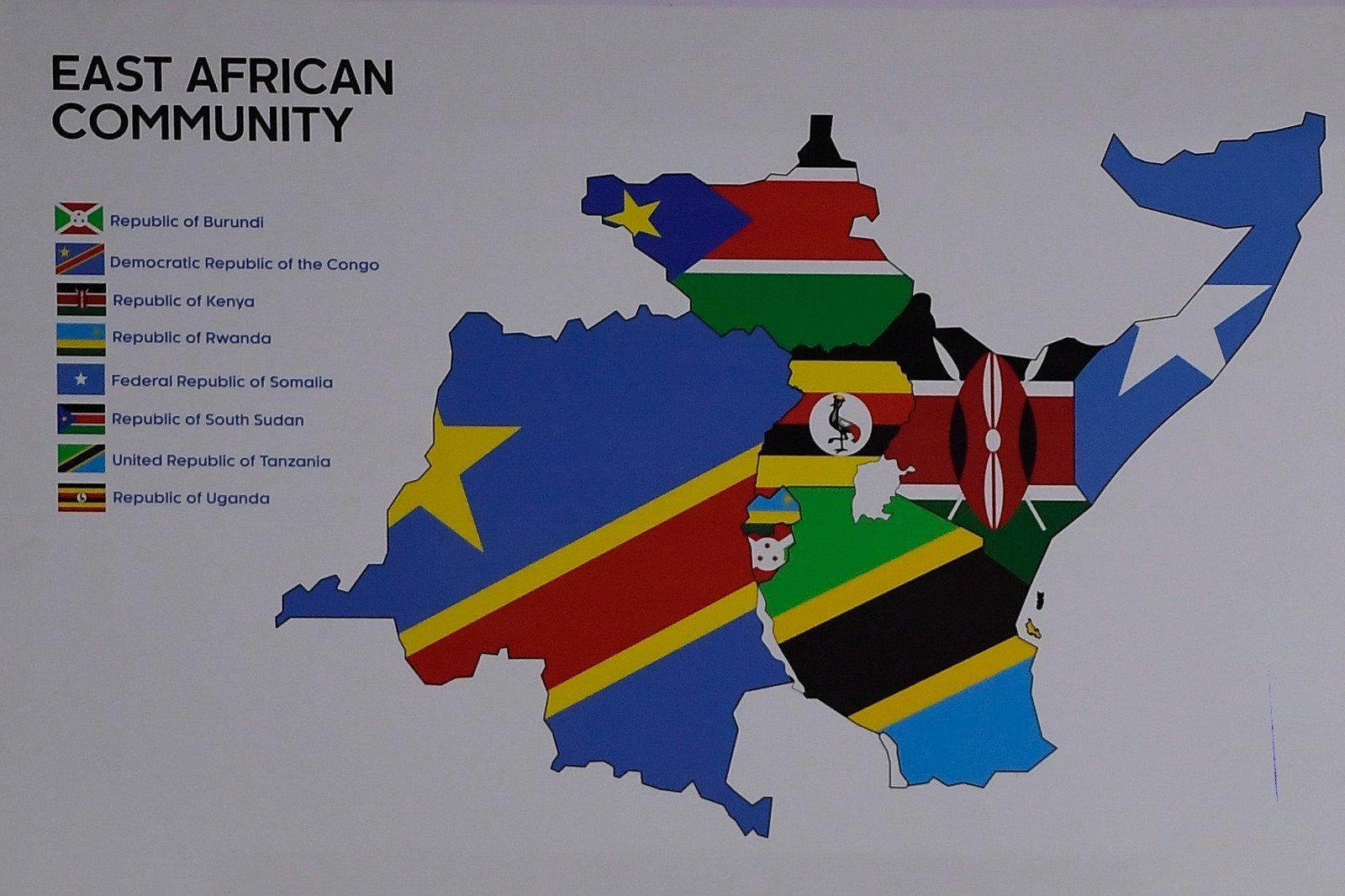
The region’s eight-member bloc, the East African Community (EAC), now stretches from the Indian Ocean to the Atlantic side of the Congo Basin. But when it comes to financial market openness, the bloc is a story of contrasts.
Kenya drives innovation.
Uganda is reforming fast.
Tanzania remains the region’s anchor of stability.
Rwanda leads in regulatory modernisation.
And the Democratic Republic of Congo (DRC), Burundi, South Sudan, and Somalia are still catching up, each at a different stage of building basic financial infrastructure.
The Absa Africa Financial Markets Index (AFMI) 2025 captures the split clearly. Among 29 African economies surveyed, only four EAC members, Uganda, Kenya, Tanzania, and Rwanda, made the list. The rest remain outside formal measurement due to limited market data and institutional depth.
Still, the rankings paint a revealing picture of who’s opening up, who’s holding back, and who’s positioning for the long game.
Uganda: The Reformer’s Momentum
Uganda is the region’s top performer, scoring 66 points in the 2025 AFMI, third-highest in Africa overall.
The Bank of Uganda liberalised its foreign exchange regime, boosted interbank liquidity, and adopted global reporting standards. Its foreign exchange access score of 70, up from 67 in 2024, signals real structural change.
These reforms have made Kampala a model for measured liberalisation. Investors can move capital in and out more easily, and the interbank market is now more transparent.
Uganda’s macroeconomic environment, scored at 85, matches Tanzania’s, proof that reform and stability can coexist when policy discipline holds.
“Uganda has found the sweet spot,” says a Nairobi-based economist. “It’s open enough for investors, but not reckless. That’s a rare balance in this region.”
Kenya: The Innovator’s Paradox
Kenya remains East Africa’s financial hub in scale, infrastructure, and product range, but faces a growing credibility gap.
Its overall AFMI score of 56 reflects both strength and strain. Kenya leads the region in transparency and regulatory sophistication (score: 87), yet fell behind in foreign exchange access (64) as reserves dwindled and fiscal pressures intensified.
Still, Kenya remains the region’s laboratory for financial innovation. The Capital Markets Authority’s approval of the first asset-backed security in 2025 and continued leadership in green and sustainability-linked bonds reinforce Nairobi’s dominance in structured finance.
However, macroeconomic risk looms large. With debt levels rising and policy unpredictability shaking investor confidence, Kenya’s advantage could narrow if reforms stall.
“Kenya has the tools but not the fiscal discipline,” notes a regional investor. “Innovation isn’t enough when investors don’t trust the policy environment.”
Tanzania: The Stability Strategist
Tanzania is East Africa’s steady hand.
Its total score of 53 puts it just below Kenya, but the country’s macroeconomic environment score of 85 is among the continent’s top five. Inflation is contained, the shilling is stable, and fiscal policy remains disciplined.
Tanzania’s signature move has been diversification, not deregulation. Its sovereign sukuk bond and Samia Infrastructure Bond, both oversubscribed, signal a shift toward Islamic and ethical finance, attracting new pools of capital and broadening domestic investor participation.
But its foreign exchange regime (score: 58) remains restrictive, limiting market fluidity. As one Dar es Salaam analyst put it, “Tanzania is trading speed for control, and right now, that’s a calculated choice.”
Rwanda: The Digital Financier
Rwanda, with a total AFMI score of 54, continues to outperform its small size through reform agility and digital ambition.
The Rwanda Capital Markets Authority launched a National Fintech Strategy and Regulatory Sandbox, opening the way for fintech-led capital mobilisation. While its market depth (31) and liquidity are low, its transparency and ESG alignment (74) remain strong.
Rwanda’s challenge is scale, not policy. The economy’s limited base and low investor participation keep volumes small, but its regulatory clarity makes it a model for early-stage markets.
“Rwanda doesn’t have Kenya’s market or Tanzania’s currency,” says a Kigali-based fintech founder. “But it has consistency, and that’s its best asset.”
DRC, Burundi, South Sudan, Somalia: The New Frontier
The rest of the EAC, DRC, Burundi, South Sudan, and Somalia are still in the early stages of financial development.
The DRC, which joined the EAC in 2022, is exploring the creation of a national stock exchange to improve capital formation. Its AFMI score of 36 reflects promise amid fragility.
Burundi and South Sudan are starting from near-zero: fragmented banking systems, limited FX access, and little capital market infrastructure. Both rely heavily on regional banks and donor-backed projects for liquidity.
Somalia, the bloc’s newest entrant, has made early strides in rebuilding its central banking system and financial regulation after years of instability—but remains outside continental financial benchmarking.
For all four, regional integration under the EAC provides a potential path forward. Harmonised regulation, cross-border listings, and shared payment systems could accelerate their transition from informal to formal financial markets.
East Africa’s Diverging Models
The EAC’s financial race now reflects three distinct philosophies:
- Kenya: Innovation-driven and private sector-led.
- Uganda: Reform-oriented and policy-balanced.
- Tanzania: Stability-focused and inclusive.
- Rwanda: Tech-enabled and regulatory-forward.
- DRC, Burundi, South Sudan, Somalia: Early-stage and integration-dependent.
Together, they form one of Africa’s most dynamic yet uneven economic blocs.
For investors, East Africa now offers a full spectrum of risk and return: high-yield volatility in Kenya, measured reform in Uganda, long-term safety in Tanzania, regulatory clarity in Rwanda, and frontier opportunity in the DRC and beyond.
The Bottom Line
East Africa’s financial openness isn’t a single story, it’s a mosaic.
Kenya is fast but volatile.
Uganda is reforming with purpose.
Tanzania is steady by design.
Rwanda is small but sharp.
And the others are preparing to enter the race.
The next decade will show which model wins: Kenya’s innovation, Uganda’s reform, or Tanzania’s discipline. But one truth is clear, East Africa’s financial future will be decided not by speed, but by staying power.
 Uchumi360
Business Intelligence
Uchumi360
Business Intelligence
Uchumi360 covers business, investment, and economic policy across East, Central, and Southern Africa.
For the serious reader
You read to the end. That places you in a small group.
Uchumi360 is built for readers who demand precision over speed, structure over sentiment, and analysis that holds uncomfortable conclusions rather than softening them. If this work sharpens how you think about Africa's economy, help us keep building the infrastructure behind it.
Institutional Partners
Commission intelligence. Shape the conversation.
Uchumi360 works with development finance institutions, investment firms, sovereign bodies, and strategic organisations across the coverage region. Institutional partnership unlocks:
- Commissioned sector and country intelligence reports
- Branded research series under your institution's authority
- Exclusive data briefings for internal strategy teams
- Speaking and editorial presence at Uchumi360 events
- Co-published investment outlooks for your markets
Support Our Work
Independent analysis has a cost. Help us bear it.
Uchumi360 does not carry advertising. It does not take editorial direction from sponsors. Every article is produced without commercial compromise. Your contribution funds the reporting, research, and editorial infrastructure that keeps this analysis free from influence.
Secure checkout: One-time and monthly support are processed securely.
Stay Connected
Keep up with every new insight.
Follow our latest analysis, policy coverage, and market intelligence as soon as it is published. If you need something specific, reach out directly and we will point you to the right research.
