

Tanzania's 2026/27 Budget Speech Is a Transition Document. Read It That Way.
Ready
Tanzania macroeconomic foundation is solid. The private sector pivot is real. But five structural gaps in value addition, logistics integration, fiscal composition, land governance, and skills depth will determine whether this transition delivers or stalls.
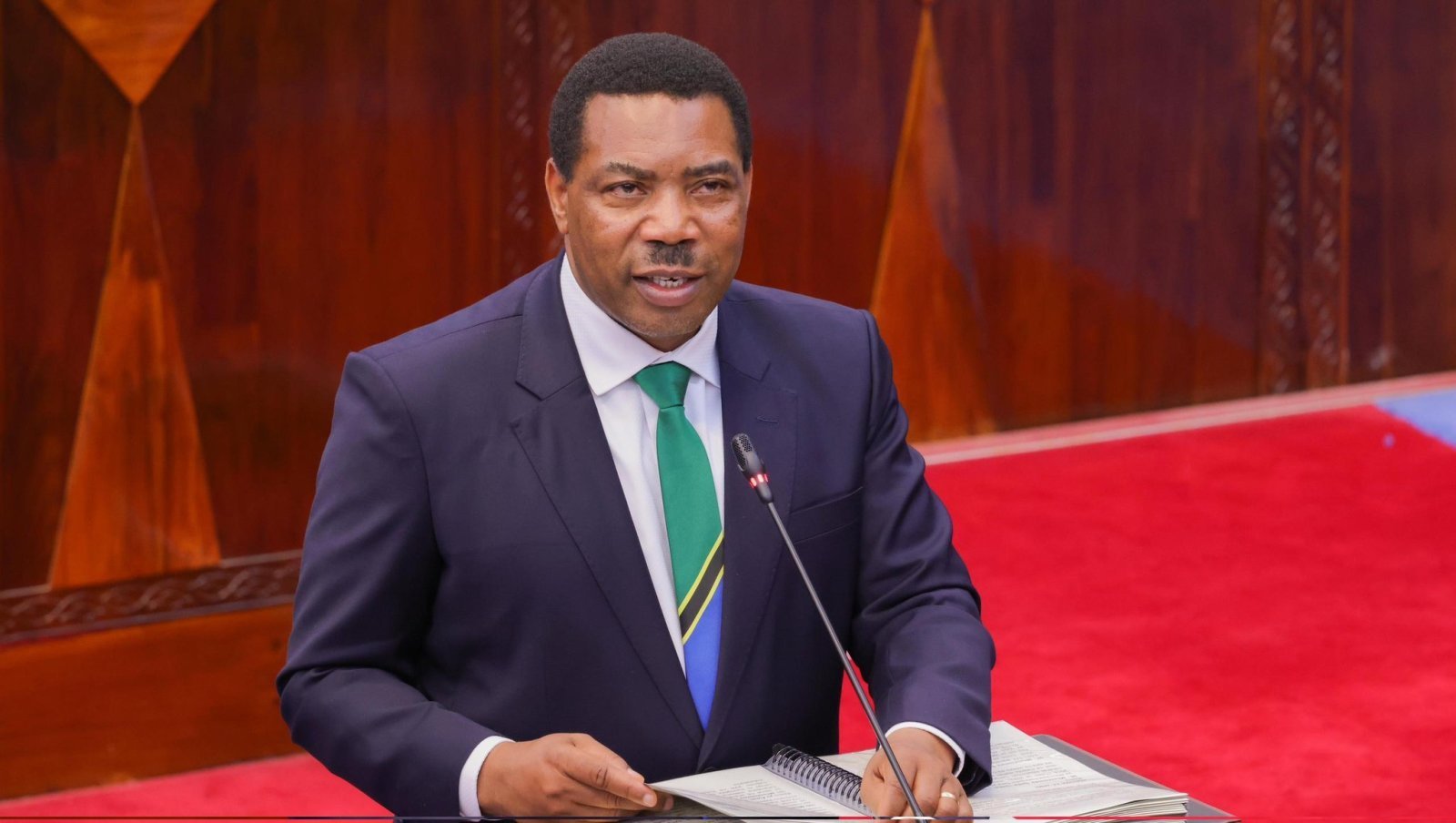
Tanzania is not presenting a routine fiscal plan. The 2026/27 budget speech, delivered by Prime Minister Dkt. Mwigulu Lameck Nchemba, is the first operational document under Dira 2050. That is the national development vision launched in July 2025, replacing Vision 2025, and targeting a USD 1 trillion economy by 2050. The Fourth Five-Year Development Plan covering 2026/2027 to 2030/2031, approved by Parliament in the previous session under the theme "Mageuzi katika Kukuza Uchumi na Kuzalisha Ajira" (Transformation in Economic Growth and Job Creation), is now in its first year of execution.
This matters for how the numbers should be read. The metrics in this speech are not just performance indicators for 2025/26. They are the baseline for a 25 year transformation. The gaps are not policy failures yet. They are the precise points where execution risk lives.
The Macro Foundation Is Holding
Tanzania is not fighting macroeconomic instability. That baseline is now established and worth stating plainly before the structural analysis begins.
GDP growth reached 6.0 percent in Q3 2025, up from 5.5 percent in the same period of 2024. Global growth averaged 3.3 percent in 2025. East Africa as a bloc is projected at 7.7 percent for 2025 and 2026. Tanzania is tracking within that regional range and well above the global average.
Inflation reached 3.3 percent in January 2026, comfortably inside the national target band of 3.0 to 5.0 percent and well below the EAC ceiling of 8.0 percent. This reflects disciplined monetary policy, stabilisation of global fuel prices, and a relatively stable shilling against the dollar. Maintaining this through an expansion phase is not automatic. The trend is good.
The external position is strong. Exports grew from USD 16.3 billion to USD 18.7 billion, a 12.7 percent increase, driven by gold, tobacco, coffee, manufactured goods, tourism, and transport services. Foreign exchange reserves reached USD 6.3 billion, covering 4.8 months of imports. The standard international adequacy threshold is three months. Tanzania is 60 percent above it.
Private sector credit growth is the most operationally significant macro signal in the speech. It expanded from 12.8 percent in January 2025 to 23.5 percent in January 2026. This is not a minor uptick. It reflects financial intermediation beginning to respond to investment demand across mining, trade, agriculture, manufacturing, transport, and construction. When credit accelerates at this rate, the productive sectors are receiving real capital.
Revenue performance reinforces the picture. TZS 26.63 trillion was collected against a target of TZS 25.68 trillion, a 103.7 percent performance rate and a 19.27 percent year on year increase from TZS 22.32 trillion in the same period of 2024/25. Of that, TZS 22.09 trillion came from taxation, TZS 3.78 trillion from non-tax revenue, and TZS 754.26 billion from development partners. TZS 12.28 trillion was directed toward development projects including SGR, Msalato International Airport, health and education infrastructure, water projects, energy, and irrigation schemes.
These numbers represent operational momentum, not aspiration.
The Private Sector Pivot Is Real, With One Structural Contradiction
The government registered 927 investment projects worth USD 11.08 billion in 2025/26. In parallel, 34 Special Economic Zones have been established, with 25 projects valued at USD 280.8 million in execution and projected to generate USD 672.63 million in export value. The state also reduced 245 fees, revised 28 pieces of legislation, and consolidated investment services under TISEZA to lower transaction costs.
The signal here is directional. The government intends to be an enabler, not a dominant economic actor. This is a coherent strategic repositioning for a country at Tanzania's stage of development.
There is, however, a structural contradiction running through the speech that deserves direct attention. The government is simultaneously the primary driver of large infrastructure spending across SGR, Julius Nyerere Hydropower, port expansion, road networks, the Bagamoyo SEZ, Liganga and Mchuchuma, and the Magadi Soda Engaruka project, while expecting the private sector to lead economic transformation. These two roles are not mutually exclusive. They create a sequencing problem. Private capital does not scale because policy signals it should. It scales when regulatory certainty, financing depth, and market access are stable and predictable over time.
Tanzania is building that alignment. It has not yet arrived.
The tax reform commission's report, submitted to President Samia on 18 March 2026, adds urgency to this. The commission's mandate was a comprehensive review of the tax system, the first in 30 years, following sustained complaints from businesses and investors about unpredictability and opacity. Implementation of those recommendations will either accelerate the private sector pivot or slow it, depending on how the reforms are calibrated. Poorly designed reforms can suppress the very activity they are meant to stimulate.
Industrial Infrastructure Is More Advanced Than It Appears
This is the most underreported story in Tanzania's current economic phase.
The Sino Tan Industrial Park at Kwala has reached 80 percent completion, with four factories already in production. The Modern Industrial Park at Mlandizi has completed its core infrastructure, with five factories under construction. Together, these two parks are expected to create over 130,000 jobs when fully operational.
The Mkulazi Sugar Factory began commercial production of industrial sugar in November 2025. It is the first domestic production of industrial sugar in Tanzania's history. By February 2026, 256 tonnes had been produced. The plant is projected to reduce industrial sugar import requirements by 20 percent annually. That is a direct import substitution gain with foreign exchange implications.
A national industrial survey has been completed across nine regions, identifying 25,650 factories now entered into a central database. This is foundational work. You cannot develop what you cannot account for.
On the trade architecture side, Tanzania completed its AfCFTA implementation strategy, creating a structured pathway to a market of over 1.4 billion people valued at over USD 3.4 trillion. A simplified trade agreement with Malawi has been signed, designed specifically for small border traders, covering 61 product categories with daily duty-free thresholds of USD 2,000. A joint trade committee has been established with Turkey. The COMESA, EAC, and SADC Tripartite Free Trade Area implementation has begun. These are not announcements. They are active commercial structures.
The Kilwa Masoko Fishing Port in Lindi is 95 percent complete and projected to create 30,000 jobs. A 22 metre deep-sea fishing vessel has arrived in country. These are blue economy assets beginning to generate real output.
Infrastructure Is Expanding. Integration Is the Actual Constraint.
Infrastructure expansion is among the strongest components of the speech. The most important analytical question is not whether infrastructure is being built. It is whether these systems are converging into an integrated network.
SGR freight operations between Dar es Salaam and Dodoma began in June 2025. Between July 2025 and February 2026, 52,305 tonnes of freight were moved on that segment. The Mwanza to Isaka segment (341 km) is 67.85 percent complete. Makutupora to Tabora (368 km) is at 14.54 percent. Tabora to Isaka (165 km) at 8.95 percent. Tabora to Kigoma (506 km) at 9.06 percent. The cornerstone segment is operational. The network extension is active but uneven.
Dar es Salaam Port is expanding its throughput capacity from 32 million to 60 million tonnes, with two new berths (500 metres each) and 15 oil storage tanks under construction. Port Kemondo upgrades are complete. Lake Victoria ports at Bukoba and Mwanza North are at 99 and 75 percent completion. The MV New Mwanza, launched in January 2026, carries 1,200 passengers and 400 tonnes of cargo and now operates routes to Uganda.
ATCL operates 33 routes, up from 26, including new international destinations of Victoria Falls, Cape Town, and Accra. It moved 845,275 passengers and 3,500 tonnes of cargo between July 2025 and January 2026.
The national fibre optic backbone now covers 120 of 139 districts. 758 new telecommunications towers have been built across 713 wards. EACOP reached 81 percent completion by February 2026, up from 52 percent a year earlier.
The energy picture has shifted. The Julius Nyerere Hydropower project is generating a national surplus. The constraint has moved from generation to distribution. 61 percent of streets (vitongoji) are now electrified, with a TZS 1.2 trillion project covering the remaining 9,009. Transmission lines from Chalinze to Dodoma (345 km, 64.14 percent complete) and from Chalinze to Mkuranga (135 km, 53.53 percent complete) must finish before the surplus can reach manufacturing zones at industrial scale.
Water access has reached 85.2 percent of rural areas and 92.5 percent of urban areas as of December 2025, up from 83.0 and 91.6 percent respectively. 28 urban water projects are in various stages of completion, set to serve close to 6 million people.
Physical assets alone do not create competitiveness. Logistics efficiency, distribution reliability, and pricing do. The foundation is being built. The integration work that converts that foundation into a cost-competitive system is what will matter most in the next five years.
The Value Addition Gap Is Acknowledged but Not Yet Closed
Tanzania's productive sectors are expanding in volume. The structural problem is that most of that volume remains positioned at the lower end of the value chain.
Agriculture achieved 130 percent food security relative to national needs, with 23.78 million tonnes produced against a requirement of 18.28 million tonnes in 2025/26. Fertiliser use increased by 14.6 percent year on year. Nutrient application per hectare rose from 19 to 24 kilograms. 79 agricultural mechanisation service centres are operational with 360 tractors deployed. Irrigated land expanded from 727,280 to 983,467 hectares. The Agricultural Extension Services Agency is in formation.
These are upstream gains. The downstream question is how much of this harvest enters processing, packaging, and value-added export. The speech does not answer it.
Mining tells the same story at a larger scale. The Panda Hill Niobium Project in Mbeya has been signed and represents Tanzania's most explicit positioning in global critical minerals supply chains. The initial investment is USD 442 million. Tanzania is targeting fourth place globally in niobium production, with projected output of 100,000 tonnes per year and estimated state revenues of TZS 2 trillion from royalties, taxes, and equity returns. 8,418 mining licences have been issued. Mining revenues reached TZS 771.53 billion between July 2025 and January 2026, representing 64.3 percent of the full-year TZS 1.2 trillion target.
The speech itself contains a directive that exposes the gap. The Prime Minister instructed the Ministry of Finance and the Ministry of Mines to establish a dedicated fund from mining revenues to finance geological and exploration research. He also instructed regulation of contracts between Tanzanian licence holders and foreign investors to protect local rights. Both directives point to the same underlying concern. Extraction is scaling faster than the institutional architecture around it.
Tourism generated USD 4.4 billion in 2025, up from USD 3.9 billion in 2024, a 12.82 percent increase. Arrivals rose from 5.36 million to 5.94 million, a 10.73 percent increase. Tanzania won multiple World Travel Awards in 2025. The challenge here is not revenue generation. It is deepening backward industrial linkages in hospitality supply chains, food processing, artisan manufacturing, and cultural content, so that tourist spending generates broader productive activity across the economy.
The Fiscal Model Has a Composition Problem
Revenue performance is strong by any measure. The structure underneath it carries a quiet risk.
Of the TZS 26.63 trillion collected, 83 percent came from taxation. Non-tax revenue was TZS 3.78 trillion. Development partner contributions were TZS 754.26 billion. The revenue base is functional. It is also narrow.
Local government revenue collection reveals the fiscal unevenness more clearly. By February 2026, local authorities had collected TZS 1.08 trillion against a full year target of TZS 1.68 trillion, reaching 64.61 percent. Property tax collection reached TZS 61.13 billion, with TZS 48.9 billion remitted to the national Treasury and TZS 12.23 billion distributed to 184 local authorities. These are not catastrophic numbers. They indicate that fiscal capacity below the national level is still thin.
Land governance cuts through revenue, investment, and social equity simultaneously, and it carries unresolved pressure. The speech acknowledges 5,333 land disputes resolved, 10,113 ownership applications received, and 7,182 title deeds prepared, alongside land use plans developed for 191 villages. It also acknowledges that double ownership, delayed title issuance, corruption among land officials, and farmer-pastoralist conflicts remain live issues. Land is the input to almost everything the economy is trying to produce, from agriculture and industrial parks to infrastructure, housing, and investment sites. Unresolved land governance is a drag on all of it.
The 75 government and private sector empowerment funds disbursed TZS 1.69 trillion in loans and guarantees to 422,921 beneficiaries, and TZS 598.72 billion in grants to 6.45 million beneficiaries. 625,273 jobs were created by February 2026. Tanzanian contractors implemented 97.1 percent of government projects by number. These are meaningful participation metrics. Disbursement and distribution are not transformation, however. Productive capacity is what converts financial access into sustained economic mobility.
Skills and Labour: The Slowest Variable in the System
The speech records significant investment in education and skills infrastructure. University enrolment increased 24 percent, from 137,781 to 170,916 students. Free education through Form 6 is active, with TZS 383.22 billion released to 18,119 primary and 5,179 secondary schools. 64 VETA vocational colleges are under construction across districts at an average completion rate of 67 percent. The intent to place a VETA college in every region and district is explicit.
The SAMIA Scholarship funded 1,786 STEM students and sent 50 high-performing Form 6 graduates to leading global universities to study Data Science, Artificial Intelligence, and Interdisciplinary Sciences. 150 technical teachers received short-term training in India. A national skills market information system launched in August 2025. 5,746 youth received formal apprenticeship training. 2,500 completed internship placements. 7,826 received specialised employment competition training. A cooperation agreement with Japan was signed for practical training in construction companies.
The minimum wage was revised upward in January 2026 with sector-differentiated rates. Social protection fund assets reached TZS 24.6 trillion. The new Hifadhi Scheme for informal sector workers has enrolled 601,434 voluntary members.
This is a more active skills investment picture than most commentary has captured. The size of the transformation required is still larger than the current interventions, however. Industrial transformation requires not just educational access but technical depth, meaning the capacity to operate, maintain, and optimise complex systems at scale. That depth takes a decade to build, not a budget cycle. The infrastructure is being laid. The timeline is long.
What This Budget Actually Represents
This is a transition document. Tanzania is attempting to move simultaneously across multiple axes: from public-led growth to private sector leadership, from extraction to value addition, from infrastructure deficit to industrial readiness, and from policy ambition to execution discipline.
The speech does not fail on ambition or evidence. The macro indicators are real. The industrial infrastructure under construction is real. The investment pipeline is real. The energy and logistics expansion is real. The private sector repositioning is real.
The execution risk lives in five specific places.
Value chain development in agriculture and mining, where volume is growing faster than processing and refining capacity. Logistics integration, where infrastructure is expanding but not yet converging into a seamless and cost-competitive network. Fiscal composition, where revenue performance is strong nationally but thin at the local authority level, with land governance creating persistent drag on productive investment. Tax reform implementation, where the recommendations of a 30 year review must now be executed without suppressing the private sector activity they are meant to support. And skills depth, where the foundation is being built correctly but the timeline to industrial-grade technical capacity is measured in years, not quarters.
Tanzania is no longer constrained by macroeconomic instability. It is constrained by the speed at which its systems in finance, skills, logistics, industrial capacity, and governance can align with its investment momentum.
If that alignment happens, the USD 1 trillion economy target by 2050 is not a slogan.
If it does not, Tanzania risks becoming a high-growth, low-transformation economy, expanding in size without fundamentally changing its position in the global value chain.
That is the question this budget raises. The next five years will begin to answer it.
_______________________________________________________________________________________
Sources: Tanzania Prime Minister Budget Speech 2026/27 (Official Text); IMF World Economic Outlook 2025; Bank of Tanzania Monetary Policy Reports 2025 to 2026; TISEZA Investment Data 2025/26; Tanzania Revenue Authority Collection Reports 2025 to 2026; African Development Bank East Africa Economic Outlook 2025; World Bank Tanzania Economic Update 2025.
_______________________________________________________________________________________
Uchumi360 covers business, investment, and economic policy across East, Central, and Southern Africa.
 Uchumi360
Business Intelligence
Uchumi360
Business Intelligence
Uchumi360 covers business, investment, and economic policy across East, Central, and Southern Africa.
For the serious reader
You read to the end. That places you in a small group.
Uchumi360 is built for readers who demand precision over speed, structure over sentiment, and analysis that holds uncomfortable conclusions rather than softening them. If this work sharpens how you think about Africa's economy, help us keep building the infrastructure behind it.
Institutional Partners
Commission intelligence. Shape the conversation.
Uchumi360 works with development finance institutions, investment firms, sovereign bodies, and strategic organisations across the coverage region. Institutional partnership unlocks:
- Commissioned sector and country intelligence reports
- Branded research series under your institution's authority
- Exclusive data briefings for internal strategy teams
- Speaking and editorial presence at Uchumi360 events
- Co-published investment outlooks for your markets
Support Our Work
Independent analysis has a cost. Help us bear it.
Uchumi360 does not carry advertising. It does not take editorial direction from sponsors. Every article is produced without commercial compromise. Your contribution funds the reporting, research, and editorial infrastructure that keeps this analysis free from influence.
Secure checkout: One-time and monthly support are processed securely.
Stay Connected
Keep up with every new insight.
Follow our latest analysis, policy coverage, and market intelligence as soon as it is published. If you need something specific, reach out directly and we will point you to the right research.
