
Tanzania's $42 Billion LNG Project Is Weeks From Binding Contracts and Decades From Knowing Whether the Institutions Can Handle What Comes Next
Ready
Tanzania is approaching a Final Investment Decision on a $42 billion LNG project anchored by Equinor, ExxonMobil, and Shell, entering global markets at a moment when European demand diversification and Asian industrial growth have made new LNG supply genuinely urgent rather than speculative. The project's strategic geography, its position on Indian Ocean shipping routes outside the Strait of Hormuz chokepoint, adds a risk premium to its market value that is underappreciated in most coverage of the deal. This article makes three arguments: that the timing is structurally advantageous in ways Tanzania has not fully communicated; that the industrial linkage question, not the export revenue question, is what determines long-run economic transformation; and that the institutional test of transparent revenue management and disciplined reinvestment is the variable most likely to determine whether this project compounds into national development or dissipates into the resource curse that has absorbed comparable windfalls elsewhere on the continent.
Tanzania is closer to a Final Investment Decision on its $42 billion LNG project than it has been at any point in the decade since its offshore gas reserves were confirmed at scale, and the significance of that proximity is not primarily about the gas. Equinor, ExxonMobil, and Shell are not companies that commit capital of this magnitude to geology alone; their presence in Dar es Salaam negotiating rooms, with commercial terms and a tax framework already agreed and binding contracts the remaining step, signals that Tanzania has crossed the threshold of political and fiscal credibility that large hydrocarbon investors require before they deploy. That validation matters independently of the project's own economics, because it repositions Tanzania in the assessment frameworks of every other category of institutional investor that uses energy major participation as a proxy for jurisdiction quality.
The reserves themselves are not in question. Tanzania's offshore gas fields, principally in the deep-water blocks of the Ruvuma Basin, hold approximately 57 trillion cubic feet of natural gas, a figure that has been confirmed through exploration programmes over more than a decade and that places Tanzania among the ten largest holders of proven natural gas reserves on the African continent. What has prevented monetisation for the entirety of that decade is not geology but the intersection of commercial complexity, fiscal negotiation, and political economy that characterises large LNG projects everywhere and is particularly demanding in first-mover jurisdictions that are simultaneously building the regulatory frameworks they need to govern the investment while negotiating the terms of the investment itself. Tanzania has been doing both at once, and the reported convergence on commercial terms and tax framework represents the resolution of that complexity in a form that all three major partners have found acceptable.
The timing advantage Tanzania has not fully claimed
The global LNG market that Tanzania is entering in 2024 is structurally different from the market that existed when its reserves were first confirmed, and the difference works decisively in Tanzania's favour. Europe's response to the energy security crisis precipitated by Russia's invasion of Ukraine in 2022 produced the fastest deliberate diversification of a continental energy supply system in the history of modern energy markets, with European buyers committing to long-term LNG supply contracts at a pace and on terms that would have been commercially inconceivable two years earlier. That diversification created demand for new supply sources that is not speculative or marginal; it is treaty-level and balance-sheet-backed, with major European utilities and trading houses holding long-term offtake commitments that need physical LNG supply to fulfil them.
Asian demand adds a second structural layer. Japan, South Korea, and increasingly India and Southeast Asian markets are expanding LNG import capacity as part of energy transition strategies that treat gas as a necessary bridge fuel between coal-dependent power systems and renewable-dominant ones, and the timeline of that bridge is measured in decades rather than years. Qatar dominates the existing long-term supply market for Asian buyers, and Qatar's dominance creates a buyer diversification incentive that is commercially rational independent of any geopolitical consideration, because concentration risk in energy supply chains has become a recognised liability for purchasing utilities and their regulators after the European experience. Tanzania enters this market not as a marginal supplier competing on price at the thin end of the spot market but as a potential long-term counterparty for buyers who actively need supply diversification.
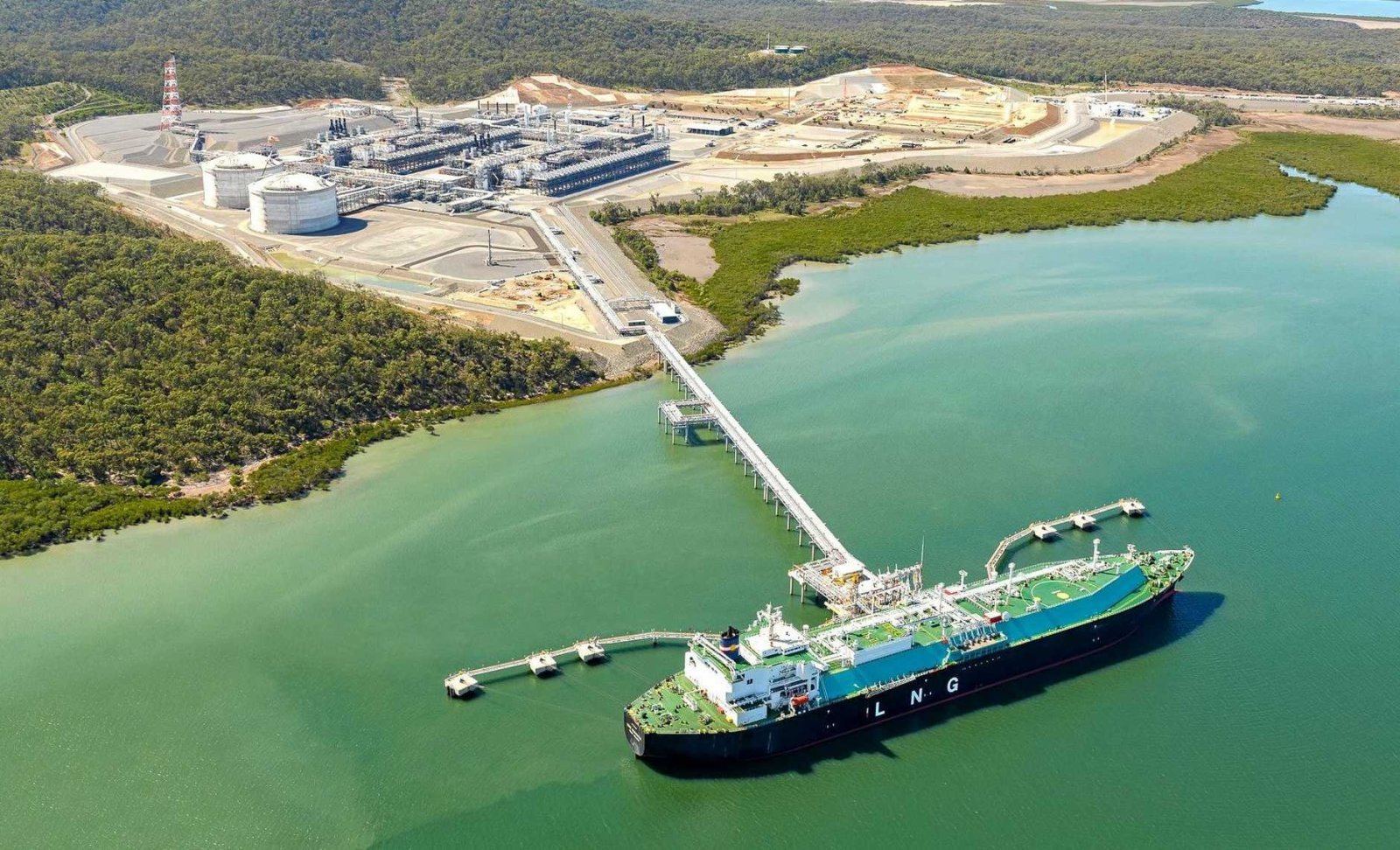
The strategic geography point, while present in most coverage of the Tanzania LNG project, has not been fully valued in the terms its significance warrants. LNG exports from Tanzania's Indian Ocean coast load directly onto tanker routes serving both European and Asian markets without passing through the Strait of Hormuz, which handles approximately 20% of global LNG trade and which energy security planners across importing nations now formally classify as a concentration risk in their supply security assessments. A supply source that is physically outside that chokepoint commands a risk premium that is real and measurable, and Tanzania has not yet structured its market communications around that premium in a way that maximises its negotiating position with potential offtake partners.
The industrial linkage question is the one that actually determines long-run outcomes
Tanzania will receive export revenue, foreign exchange inflows, and fiscal income from this project regardless of how well it manages the downstream policy questions, because the contractual architecture of large LNG projects locks in those flows once production begins. The variable that determines whether those flows produce structural economic transformation or remain confined to government accounts and foreign exchange reserves is industrial linkage, and industrial linkage is determined by decisions that sit entirely within Tanzania's policy authority rather than within the commercial terms negotiated with Equinor, ExxonMobil, and Shell.
Local content requirements are the most immediate of those decisions, covering the share of project goods and services that must be sourced from Tanzanian suppliers, the employment and training obligations for Tanzanian nationals, and the technology transfer conditions attached to the participation of foreign contractors. Tanzania's Petroleum Act and its associated local content regulations establish a framework for these requirements, but the enforcement track record on comparable provisions in Tanzania's extractive sector has been inconsistent, and the gap between regulatory text and operational practice has historically been large enough to limit the actual economic spillover from resource projects into the domestic industrial base. The LNG project's scale means that even a modest improvement in local content enforcement translates into substantially larger domestic economic activity than equivalent improvements in smaller projects, which makes the quality of implementation here more consequential than in any previous Tanzanian extractive investment.
The domestic energy supply dimension is analytically separate from but connected to the industrial linkage question. Tanzania faces chronic electricity generation shortfalls that constrain manufacturing competitiveness, and the proximity of large gas reserves to domestic industrial demand creates an opportunity to address that constraint in parallel with export development. The project's commercial architecture, optimised for export revenue, may not automatically make gas available to domestic industry at prices that make industrial expansion viable, and the regulatory and contractual decisions required to create that domestic supply pathway need to be made deliberately rather than assumed to follow from the project's existence. Several gas-producing African countries, including Mozambique with its Rovuma basin development and Nigeria across multiple decades of gas sector management, have demonstrated that large export-oriented gas infrastructure and domestic energy poverty can coexist indefinitely when the policy linkage between them is not actively constructed.
Mozambique and Nigeria are the precedents Tanzania should study hardest
The regional and continental comparisons that matter most for Tanzania's LNG trajectory are not the success stories; they are the projects that achieved production at scale and still failed to generate the structural economic transformation their resource endowments implied. Mozambique's Rovuma LNG development, anchored by TotalEnergies and involving Eni and ExxonMobil in separate blocks, represented a comparable inflection point for a low-income economy entering global gas markets with proven reserves and major company backing. The Cabo Delgado insurgency that disrupted TotalEnergies' operations from 2021 onward introduced a security dimension that Tanzania does not currently face, but the broader Mozambican experience also illustrates how a country can move from exploration to development to production without building the fiscal management institutions, local supplier ecosystems, or domestic energy linkages that convert hydrocarbon revenue into national development capital. Mozambique remains one of the poorest countries on the continent despite holding reserves that have attracted tens of billions in committed investment.
Nigeria's gas sector history is the longer and more instructive cautionary case, covering six decades of hydrocarbon production during which the country accumulated one of the largest proven gas reserve bases in the world, built a domestic LNG export facility in Nigeria LNG that has operated successfully for over two decades, and still failed to provide reliable electricity to its industrial and household consumers, failed to develop a competitive downstream manufacturing sector, and experienced the full cycle of resource curse dynamics including fiscal pro-cyclicality, currency mismanagement, and institutional erosion. Nigeria's failure is not primarily a governance failure in the narrow sense of corruption, though corruption has been a significant factor; it is a structural failure to build the policy linkages between resource revenue and productive investment that compound over time into economic diversification. Tanzania's institutional starting point is different from Nigeria's in important respects, including its single-party political continuity and its track record of macroeconomic management, but the structural risks are recognisably similar, and the decisions Tanzania makes in the next three to five years about fiscal rules, revenue transparency, and reinvestment discipline will determine which trajectory it follows.
What the capital signal from Equinor, ExxonMobil, and Shell actually means
The three companies bringing capital to this project have a combined century of LNG project development experience across multiple continents and have operated in jurisdictions ranging from Norway and the United States to Australia, Qatar, and across sub-Saharan Africa. Their decision to commit to Tanzania reflects a due diligence process that evaluates geological risk, commercial risk, political risk, and counterparty risk with the rigour that institutions managing tens of billions in shareholder capital are required to apply. The fact that they have reached agreement on commercial and tax terms after a negotiation period that has extended across multiple Tanzanian administrations is itself evidence that Tanzania's negotiating position was credible and consistent enough to sustain a process that many comparable projects have not survived.
That said, the validation signal has limits that are worth naming precisely. Equinor, ExxonMobil, and Shell are validating the investment case for this project under the terms they have negotiated, which includes the fiscal framework, the production sharing arrangement, and the regulatory undertakings they have received. They are not validating Tanzania's institutional readiness to manage the revenue those terms will generate, because that is not a question they have the standing or the incentive to assess on behalf of the Tanzanian public. The distinction matters because the coverage of large resource investments in Africa consistently conflates the signal of investor confidence with a broader endorsement of development readiness that the investors themselves are not making.
The 30-year governance challenge begins at the Final Investment Decision
LNG projects operate on timelines that exceed the planning horizons of most governments and most development institutions, and the compounding nature of good and bad governance decisions over those timelines means that the quality of the institutional framework Tanzania builds now will have effects that are still being felt when the project enters its final production decade. From Final Investment Decision to first export typically takes four to six years for a project of this complexity and scale. From first export to the point where the project has generated sufficient revenue to materially change Tanzania's fiscal position and external account takes another decade. The full economic impact of a 20 to 30 year production horizon at scale will not be assessable until well into the second half of this century.
That long horizon is simultaneously the project's greatest economic promise and its greatest governance challenge. Revenue that arrives over decades rather than years creates the opportunity for disciplined reinvestment into human capital, infrastructure, and institutional quality in a way that commodity windfalls concentrated in short cycles do not, but it also creates the opportunity for institutional decay, rule-of-law erosion, and fiscal dependence that are harder to reverse the longer they are allowed to compound. Tanzania's Natural Wealth and Resources Acts provide a legislative foundation for revenue management, but legislative frameworks without enforcement capacity, independent oversight institutions, and political accountability mechanisms do not constrain behaviour in the way their drafters intend. Building those enforcement and accountability layers before revenue arrives at scale is the work that determines which category of resource producer Tanzania becomes, and that work cannot be contracted out to Equinor, ExxonMobil, or Shell.
The country Tanzania is becoming, once binding contracts are signed and a Final Investment Decision is made, is a country with a 20 to 30 year obligation to govern an asset of extraordinary value on behalf of its current and future citizens. The geological case for that asset was made a decade ago. The commercial case has now apparently been made to the satisfaction of three of the most demanding capital allocators in global energy. The institutional case, the evidence that Tanzania can manage what this project produces with the transparency, discipline, and long-run orientation that its scale demands, has not yet been made. Making it is the only part of this project that remains entirely within Tanzania's control, and it is the part that matters most.
FAQ
What is the current status of Tanzania's LNG project?
Negotiations between Tanzania and the project partners, Equinor, ExxonMobil, and Shell, are reported to be in their final stage, with commercial terms and a tax framework agreed. The remaining step is converting that agreement into binding contracts, after which a Final Investment Decision would follow. Specific timelines should be confirmed against official statements from the Tanzania Petroleum Development Corporation and the partner companies before publication.
Why does Tanzania's Indian Ocean location matter for global LNG markets?
LNG tankers loading from Tanzania's coast can reach both European and Asian import terminals without transiting the Strait of Hormuz, which handles approximately 20% of global LNG trade and is formally classified as a supply concentration risk in the energy security assessments of multiple importing nations. A supply source that is physically outside that chokepoint has strategic value to buyers beyond its volume alone, and that value should be reflected in Tanzania's offtake negotiations.
What is the difference between export revenue and industrial linkage, and why does it matter?
Export revenue accrues to the government and the external account regardless of how the project is managed domestically. Industrial linkage refers to the economic activity generated within Tanzania through local supplier development, domestic energy supply from the gas fields, employment and training of Tanzanian nationals, and the downstream manufacturing activity that reliable and affordable energy can enable. The distinction matters because export revenue without industrial linkage produces fiscal income but limited structural economic transformation, which is the pattern that has characterised resource development in Nigeria and, to a lesser extent, Mozambique.
What can Tanzania learn from Mozambique's LNG experience?
Mozambique's Rovuma LNG development shows that major company participation and proven reserves are not sufficient conditions for development success. The security failure in Cabo Delgado introduced a project-specific risk that Tanzania does not currently face, but the broader Mozambican experience also illustrates how fiscal management institutions, local supplier ecosystems, and domestic energy linkages can remain underdeveloped even as large export infrastructure is built. Tanzania should study the Mozambican trajectory as a structural warning rather than treating its own more stable security environment as sufficient differentiation.
How long before Tanzania sees material economic impact from the LNG project? From a Final Investment Decision, first export is typically four to six years for a project of this complexity. Material fiscal impact at scale, meaning revenue flows large enough to meaningfully change Tanzania's budget position and external account, would follow first export by several years as production ramps toward plateau. The full economic impact of a project operating at plateau production across a 20 to 30 year horizon will not be assessable until well into the second half of this century, which is why the governance and institutional decisions made now compound in significance over time.
 Uchumi360
Business Intelligence
Uchumi360
Business Intelligence
- Equinor, ExxonMobil, and Shell, official statements on Tanzania LNG project negotiations, 2024
- Tanzania Petroleum Development Corporation, gas reserve estimates and block licensing data
- International Energy Agency, Global LNG Supply and Demand Outlook, 2023 to 2024
- Strait of Hormuz transit volume data
- TotalEnergies, Mozambique LNG project status reports, 2021 to 2024
- Nigeria LNG Limited, annual reports
- Tanzania, Natural Wealth and Resources Acts, 2017
- Legislative text available through the Tanzania National Assembly records
- Tanzania Petroleum Act, 2015, and associated local content regulations
Uchumi360 covers business, investment, and economic policy across East, Central, and Southern Africa.
For the serious reader
You read to the end. That places you in a small group.
Uchumi360 is built for readers who demand precision over speed, structure over sentiment, and analysis that holds uncomfortable conclusions rather than softening them. If this work sharpens how you think about Africa's economy, help us keep building the infrastructure behind it.
Institutional Partners
Commission intelligence. Shape the conversation.
Uchumi360 works with development finance institutions, investment firms, sovereign bodies, and strategic organisations across the coverage region. Institutional partnership unlocks:
- Commissioned sector and country intelligence reports
- Branded research series under your institution's authority
- Exclusive data briefings for internal strategy teams
- Speaking and editorial presence at Uchumi360 events
- Co-published investment outlooks for your markets
Support Our Work
Independent analysis has a cost. Help us bear it.
Uchumi360 does not carry advertising. It does not take editorial direction from sponsors. Every article is produced without commercial compromise. Your contribution funds the reporting, research, and editorial infrastructure that keeps this analysis free from influence.
Secure checkout: One-time and monthly support are processed securely. Add payment credentials to enable checkout here.
Stay Connected
Keep up with every new insight.
Follow our latest analysis, policy coverage, and market intelligence as soon as it is published. If you need something specific, reach out directly and we will point you to the right research.
