
Tanzania's $2.33 Billion SGR Financing Will Be Repaid by Freight Demand That Does Not Yet Exist
Ready
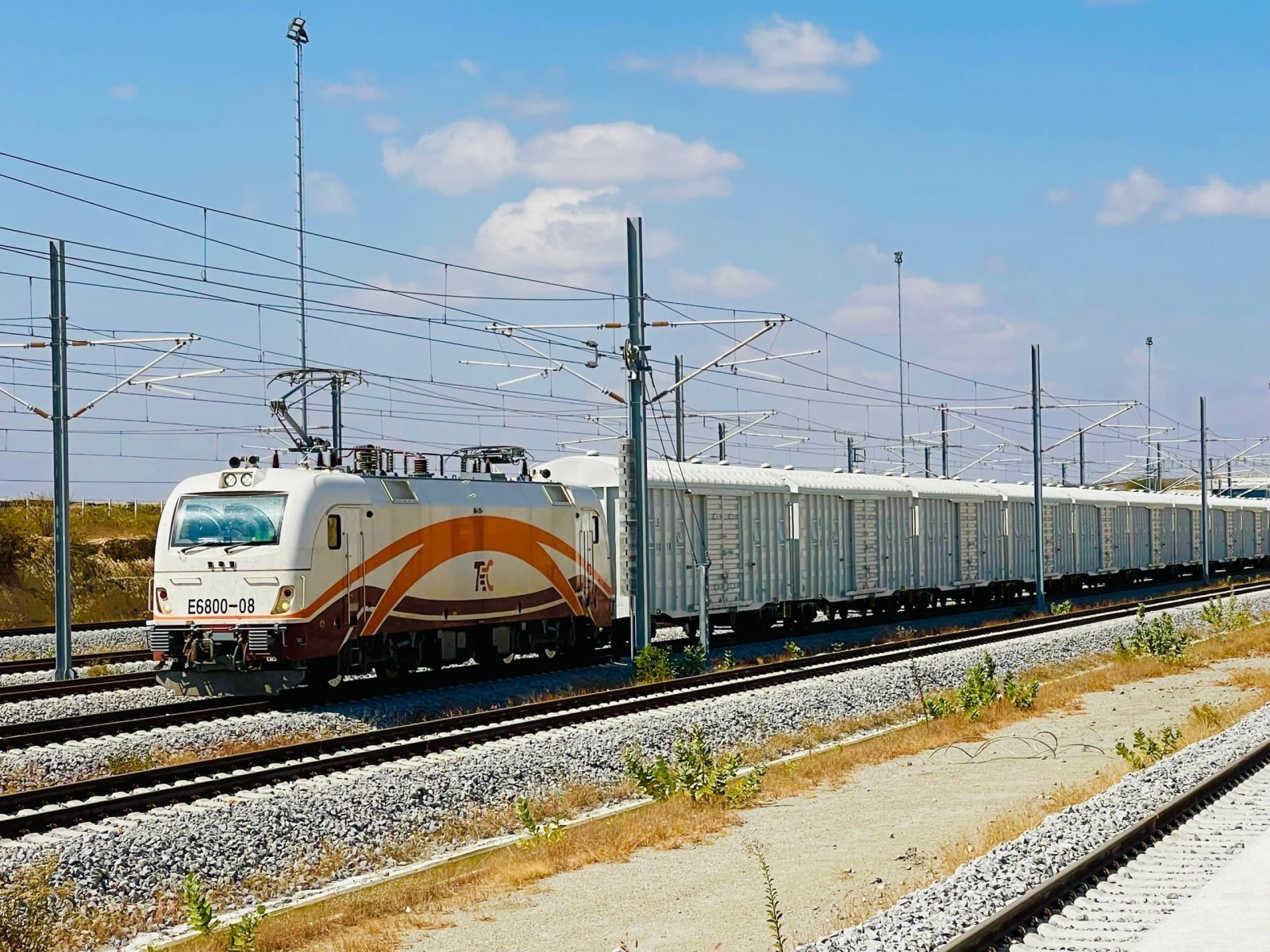
Tanzania has closed a USD 2.33 billion financing facility to advance two sections of its Standard Gauge Railway linking Dar es Salaam to Mwanza. The financing structure, syndicated by Standard Chartered and drawing on export credit agencies, development finance institutions, and commercial lenders, is technically credible. The harder question is what fills the trains once they run. East Africa's rail history offers a precise and uncomfortable answer to that question, and Tanzania has not yet addressed the conditions that determine whether this railway becomes a productive asset or a sovereign liability measured in decades.
Tanzania's USD 2.33 billion SGR financing is structurally sound but analytically incomplete: the project's sovereign-debt logic assumes freight volumes that no corridor in East Africa has yet generated at scale. Kenya's SGR, projected to carry 22 million tonnes of freight annually, has consistently moved fewer than 5 million, converting a national infrastructure ambition into a USD 5 billion debt load serviced through port levies. Tanzania's railway will be built and the trains will run; the question this article answers is what conditions must hold for that investment to generate economic returns rather than fiscal drag, and which of those conditions Tanzania currently meets.
The financing is not the risk. Tanzania secured a USD 2.33 billion syndicated facility arranged by Standard Chartered to fund two additional sections of its Standard Gauge Railway, extending the planned 1,219-kilometre line from Dar es Salaam toward Mwanza, and the deal's structure, drawing on export credit agencies, development finance institutions, commercial lenders, and contractors Yapi Merkezi and China Civil Engineering Construction Corporation, is a well-worn template for African infrastructure at this scale. The risk is a different kind entirely: it is the risk that a railway built to move goods across a logistics-constrained economy ends up moving mostly passengers through an economy that has not yet generated the industrial freight base to justify its cost.
That distinction matters because railways do not produce value by existing. They produce value by carrying volume, specifically freight volume, at a cost per tonne-kilometre low enough to make downstream economic activity viable that was previously unviable. Tanzania's SGR is explicitly designed to do that: to lower the cost of moving commodities and manufactured goods across a geographically large economy, to connect Dar es Salaam port to inland agricultural and industrial zones, and by extension to capture transit trade from landlocked neighbours including Rwanda, Burundi, Uganda, and the eastern regions of the Democratic Republic of Congo. The logic is coherent. The execution gap, however, is the same gap that has defined East African rail investment for two decades, and Tanzania has not yet closed it.
Kenya's SGR is the answer Tanzania has not yet given
The Kenya Standard Gauge Railway, which links Mombasa to Naivasha with an eventual extension toward Uganda, was projected to carry approximately 22 million tonnes of freight annually once operational at scale. According to Kenya Railways Corporation data, actual freight throughput has consistently fallen below 5 million tonnes per year since commercial operations began in 2017. Kenya financed the line primarily through Chinese Exim Bank loans totalling approximately USD 5 billion, repayment of which has become one of the more visible fiscal pressure points in its public debt portfolio, eventually requiring a dedicated 1.5% railway development levy imposed on cargo handled at Mombasa port. The railway runs and it carries passengers reasonably well, but it has not transformed the freight economics it was built to transform, and the sovereign repayment obligation continues regardless of what moves on the tracks.
This is the precedent Tanzania's SGR enters. The financing structure is different, syndicated rather than bilateral and with a more diversified lender base, but the underlying economic logic is identical, and the question of freight utilisation is unresolved in the same way. Tanzania's freight base along the SGR corridor currently depends on a combination of agricultural produce, mining output, and transit cargo destined for landlocked neighbours. None of those demand sources is trivial. What is uncertain is whether they exist at volumes sufficient to generate the tonne-kilometre revenue required to make the railway financially self-sustaining rather than an indefinite call on sovereign resources.
The port problem the railway cannot solve alone
Tanzania's competitive case for the SGR rests partly on Dar es Salaam's position as the preferred port for central and east African landlocked trade, and that case is real but partial. Dar es Salaam port has faced chronic congestion, handling efficiency constraints, and dwell times that have historically undermined its competitive position relative to Mombasa, and more recently relative to Lamu under Kenya's LAPSSET corridor development. According to the Tanzania Ports Authority, the port handled approximately 18 million tonnes of cargo in the 2022/23 financial year, with container throughput recovering post-COVID but operational throughput per berth still lagging comparable regional facilities. The SGR's commercial logic assumes that improving the inland leg of the trade corridor is sufficient to attract additional freight, and it is not sufficient if the port leg remains a bottleneck, because shippers optimise across the full corridor and not individual segments of it.
This is a structural constraint that the USD 2.33 billion financing cannot address. Port reform in Tanzania requires a separate programme of investment, institutional change, and private sector participation in terminal operations at a scale the country has moved toward but not completed. The Julius Nyerere Port expansion project is underway, but the timeline for those improvements to translate into competitive handling capacity is measured in years and not months, and the SGR's early operational years will coincide with a port still in transition. In that window, the railway's freight potential will be partly capped by the infrastructure it feeds into, regardless of how efficiently the trains run.
Industrial demand is the variable nobody is publishing projections for
The strongest version of Tanzania's SGR argument is not that the railway will capture existing road freight, though it should capture some of it, but that lower transport costs will induce industrial activity that currently does not exist along the corridor. This is the supply-side infrastructure hypothesis: build reliable, low-cost logistics and production follows. The hypothesis is not wrong in principle, but it is empirically selective. Infrastructure can catalyse industrial clustering when other locational conditions are met, specifically land tenure security, energy access, labour market depth, regulatory predictability, and access to finance for productive investment. The SGR corridor from Dar es Salaam to Mwanza passes through areas where some of those conditions hold reasonably well and others remain significant constraints.
Tanzania's Special Economic Zones and Export Processing Zones have attracted investment more slowly than comparable programmes in Ethiopia, Rwanda, and parts of Kenya, primarily because of energy reliability and the pace of regulatory approvals. According to the Tanzania Investment Centre, approved investments have grown in headline value but the conversion rate from approval to active production remains below targets. The SGR does not resolve those constraints; it changes the cost structure of one input, transport, among many that determine whether production at scale makes economic sense in any given location. The industrial demand that would make the railway a freight success story has to be created through a wider policy agenda that the railway financing does not fund and that the contractors cannot deliver.
The regional corridor competition is not about railways; it is about total logistics cost
Tanzania's SGR competes with Kenya's SGR and Northern Corridor for the same landlocked trade, and the competition is decided not by which country has the newer railway but by which corridor offers the lowest total landed cost from ocean to destination. That calculation includes port charges, handling time, inland transport tariff, border crossing efficiency, and the reliability premium that shippers apply to corridors with a track record of delays. On most of those variables, Tanzania and Kenya are relatively evenly matched for different segments of the landlocked market, with Rwanda and eastern DRC trade capable of being served from either Dar es Salaam or Mombasa depending on the specific origin-destination pair, and actual corridor selection reflecting shipper calculations that shift with tariff structures and operational reliability over time.
Uganda is an instructive case within this competition. The Northern Corridor through Kenya currently handles the majority of Uganda's import cargo, but Tanzania has been making a credible case for the Central Corridor as a viable alternative, particularly for western Uganda and the mining regions of DRC. Burundi and Rwanda present similar corridor choice dynamics. The SGR, once it reaches Mwanza and connects to lake transport north, makes the Central Corridor geometrically competitive for a material share of that trade, but the question is whether Tanzania can also close the border efficiency and port reliability gaps that have historically made shippers prefer the Northern Corridor despite the longer routing for some destinations. That is a customs and institutional reform agenda, and not a railway construction agenda, which means it falls entirely outside the scope of what the financing facility can deliver.
What the financing structure actually signals
The involvement of export credit agencies alongside development finance institutions and commercial lenders in a syndicated structure is analytically significant for two reasons. First, it diversifies Tanzania's lender exposure relative to the bilateral Chinese Exim Bank model Kenya used, which reduces the political economy risk of a single creditor holding disproportionate leverage over debt restructuring conversations if utilisation falls short of projections. Second, it signals that the project has passed credit assessment by institutions that formally evaluate both technical and macroeconomic risk, though it is worth noting that multilateral and bilateral ECAs have historically approved projects with optimistic freight projections that were subsequently not realised, and their participation is not equivalent to an independent validation of the demand assumptions underlying the project.
Tanzania's external debt position, as reported by the Bank of Tanzania, has been rising alongside its infrastructure programme, and the SGR represents the country's largest single sovereign infrastructure commitment. The government's ability to service that commitment without imposing the kind of cargo levies Kenya has had to introduce depends on the railway generating revenue from freight operations, which depends on freight volumes, which depends on the industrial and trade demand conditions discussed above. The financing structure manages the creditor-side risk. It does not manage the utilisation-side risk, which is the risk that actually determines whether this investment generates a net return or a net fiscal burden across a 20 to 30 year repayment horizon.
The conditions under which this bet pays off
Tanzania's SGR becomes economically productive under a specific and demanding set of conditions, none of which is guaranteed and some of which are outside the government's direct control. Port efficiency at Dar es Salaam must improve materially in the window between now and the SGR reaching operational scale, so that the corridor as a whole is competitive rather than the railway being an efficient segment attached to a bottlenecked port. Industrial investment along the corridor must translate into actual production at scale, meaning the Special Economic Zone programme must accelerate and the conditions that have constrained it, including energy reliability, regulatory speed, and cost of finance, must improve in parallel. Transit trade from landlocked neighbours must shift toward the Central Corridor in volumes sufficient to generate tonne-kilometre revenue, which requires border efficiency reforms and competitive tariff structures that make the routing commercially rational for shippers making decisions on individual cargo movements.
If those three conditions converge, the SGR becomes one of the more significant pieces of economic infrastructure built in East Africa in this generation. The Dar es Salaam to Mwanza corridor would connect the continent's second-largest lake economy to a deep-water port via a modern railway, with the capacity to handle mining output from Tanzania's growing critical minerals sector, agricultural produce from the lake regions, and transit cargo from three or four landlocked neighbours simultaneously. The economic multiplier from that connectivity is real and has been modelled by institutions including the African Development Bank and the World Bank, though those models are consistently sensitive to the freight demand assumptions that feed into them, and the assumptions are precisely what Tanzania has not yet publicly stress-tested.
If those conditions do not converge, the SGR joins a long list of African infrastructure investments that were built on sound engineering, financed on defensible sovereign credit, and then underutilised because the demand-side ecosystem was not developed in parallel with the physical asset. Tanzania has seen that outcome before, most visibly with the TAZARA railway, which connected Dar es Salaam to Zambia's Copperbelt in the 1970s as a Cold War infrastructure project and has operated well below its freight capacity for most of its operational life, requiring repeated injections of concessional support from both Tanzania and Zambia to maintain basic service levels. TAZARA is not a perfect analogy, because the SGR's corridor conditions and regional trade context are meaningfully different, but it is Tanzania's own precedent for exactly this failure mode, and it cannot be dismissed as another country's problem.
The USD 2.33 billion Tanzania has secured is not a guarantee of economic transformation. It is an option on transformation, contingent on policy choices and institutional reforms that exist entirely outside the financing agreement. Standard Chartered can arrange the syndication. Yapi Merkezi and CCCC can lay the track. No lender, contractor, or export credit agency can generate the freight demand that makes a railway worth building. That part of the work is Tanzania's, and it is the part that will determine whether this investment is remembered as the infrastructure that repositioned the Central Corridor or as a sovereign obligation that cost more than it returned.
FAQ
What is Tanzania's Standard Gauge Railway and what does the USD 2.33 billion finance?
The SGR is a planned 1,219-kilometre modern railway linking Dar es Salaam port to Mwanza on Lake Victoria, with eventual extensions connecting to Rwanda, Burundi, Uganda, and the DRC. The USD 2.33 billion facility, syndicated by Standard Chartered and drawing on export credit agencies, development finance institutions, and commercial lenders, funds two additional construction sections extending the line toward Mwanza.
How does Tanzania's SGR compare to Kenya's?
Kenya built its SGR linking Mombasa to Naivasha, financed primarily through bilateral Chinese Exim Bank loans totalling approximately USD 5 billion. Projected at 22 million tonnes of annual freight, the line has consistently moved fewer than 5 million tonnes per year, requiring a port cargo levy to service the debt. Tanzania's financing structure is more diversified, but the fundamental freight utilisation challenge is identical.
What freight would make the SGR economically viable?
A combination of Tanzania's agricultural and mining exports moving toward Dar es Salaam, transit cargo from Rwanda, Burundi, Uganda, and eastern DRC moving through the Central Corridor, and manufactured goods from industrial zones developing along the corridor. The specific tonne-kilometre threshold for financial viability depends on the tariff structure and operating cost model, which has not been publicly released in detail and should be requested from Tanzania Railways Corporation before publication.
Why is Dar es Salaam port a constraint on the SGR's success?
Shippers optimise across the full trade corridor from ocean to inland destination and not individual segments. If the port leg is congested or expensive relative to alternatives, the railway's efficiency on the inland segment does not translate into corridor competitiveness. Port reforms under the Julius Nyerere expansion project are underway but will take years to deliver competitive handling capacity, and the SGR's early operational period overlaps directly with that transition.
Is the SGR a debt risk for Tanzania?
It is a conditional debt risk. If freight utilisation reaches commercially productive levels, the railway generates revenue to offset debt service. If utilisation falls well short of projections, as Kenya's SGR did, the repayment obligation falls on the sovereign regardless, adding to Tanzania's external debt load at a time when that load is already rising. Tanzania's more diversified lender base reduces single-creditor political economy risk but does not change the fundamental utilisation equation.
 Uchumi360
Business Intelligence
Uchumi360
Business Intelligence
Standard Chartered Bank, press release on Tanzania SGR syndicated financing facility, 2024. Verify exact date and facility terms against official release before publication.
Kenya Railways Corporation, annual freight throughput data, 2017 to 2023. The sub-5 million tonne figure is consistent with multiple secondary reports but should be confirmed against primary KRC statistical releases before publication.
Kenya National Treasury, public debt reports referencing Exim Bank of China loan terms for SGR Phase 1 and Phase 2, various years. The USD 5 billion aggregate figure requires verification against the official debt schedule.
Tanzania Ports Authority, cargo throughput statistics 2022/23, tanzaniaports.go.tz. The 18 million tonne figure requires confirmation against TPA's most recent annual statistical bulletin.
Bank of Tanzania, Annual Report and Financial Stability Report, 2023.
Tanzania Investment Centre, investment approvals data. The conversion rate claim from approval to active production requires specific TIC data before publication.
African Development Bank, East Africa Regional Integration Strategy Paper, 2021 to 2025.
World Bank, Tanzania Economic Update series, transport and logistics cost analysis for the Central Corridor.
TAZARA Railway Authority, historical freight utilisation data. Utilisation claims require verification against TAZARA official records or peer-reviewed sources with primary data access before publication.
Uchumi360 covers business, investment, and economic policy across East, Central, and Southern Africa.
For the serious reader
You read to the end. That places you in a small group.
Uchumi360 is built for readers who demand precision over speed, structure over sentiment, and analysis that holds uncomfortable conclusions rather than softening them. If this work sharpens how you think about Africa's economy, help us keep building the infrastructure behind it.
Institutional Partners
Commission intelligence. Shape the conversation.
Uchumi360 works with development finance institutions, investment firms, sovereign bodies, and strategic organisations across the coverage region. Institutional partnership unlocks:
- Commissioned sector and country intelligence reports
- Branded research series under your institution's authority
- Exclusive data briefings for internal strategy teams
- Speaking and editorial presence at Uchumi360 events
- Co-published investment outlooks for your markets
Support Our Work
Independent analysis has a cost. Help us bear it.
Uchumi360 does not carry advertising. It does not take editorial direction from sponsors. Every article is produced without commercial compromise. Your contribution funds the reporting, research, and editorial infrastructure that keeps this analysis free from influence.
Secure checkout: One-time and monthly support are processed securely.
Stay Connected
Keep up with every new insight.
Follow our latest analysis, policy coverage, and market intelligence as soon as it is published. If you need something specific, reach out directly and we will point you to the right research.
