
Dar es Salaam Is Getting a Luxury Waterfront Mall in Masaki. The Building Is Not the Story. What It Signals About the City's Economic Trajectory Is.
Ready
Large-scale private commercial development does not happen speculatively. It happens when capital has assessed an economy's trajectory and concluded that the consumer base, the disposable income, and the urban density required to sustain a premium mixed-use destination are either already present or sufficiently close to arriving that the risk of early commitment is justified by the return of first-mover positioning. Ocean Galleria in Masaki is that assessment made physical, and reading it analytically rather than architecturally reveals more about where Dar es Salaam is in its development trajectory than any single macroeconomic statistic.
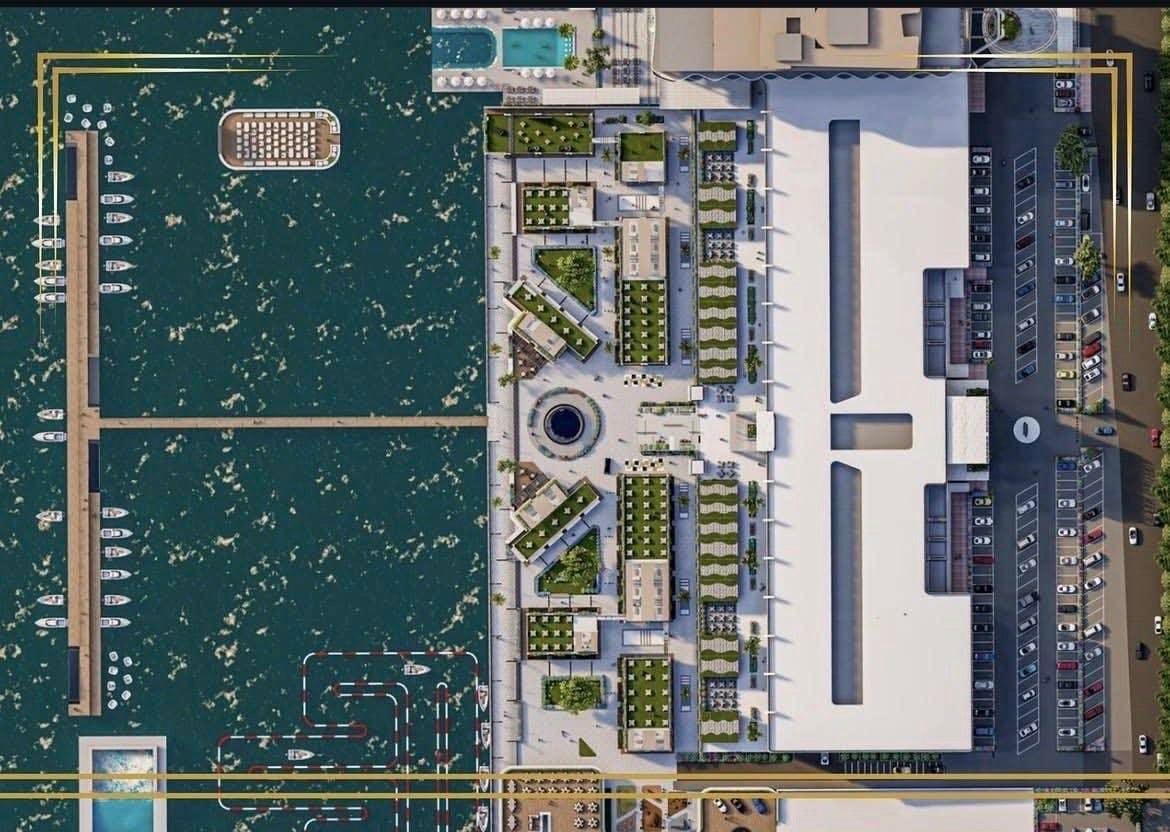
There is a category of infrastructure investment that governments announce and development finance institutions fund, whose significance is immediately legible because the public capital behind it signals state commitment, and there is a category of investment that private capital makes when it has reached a conclusion about an economy's direction that no policy document requires it to reach, whose significance is often more analytically revealing precisely because it is commercially motivated rather than politically directed. Ocean Galleria, the premium waterfront lifestyle development under construction in Masaki by Afrostruct Company Ltd, belongs unambiguously to the second category, and the argument for reading it carefully as an economic signal rather than simply as a real estate announcement is grounded in the specific mechanism through which private retail and commercial real estate investment responds to urban economic trajectories.
Large-scale premium commercial development is among the most demand-sensitive investment categories available to private capital, because its returns depend entirely on the spending power, the consumer preferences, and the sustained economic activity of the population whose proximity the development is designed to serve. A logistics warehouse can be built speculatively because its utility is independent of the income level of the surrounding population. A premium waterfront lifestyle destination cannot. The decision to commit capital to a project of Ocean Galleria's ambition in Masaki in 2026 is a decision that requires the developer and any financing partners to believe that Dar es Salaam's upper-income consumer base, its expatriate population, its tourism inflows, and the commercial activity that the city's investment surge is generating are already sufficient or sufficiently close to arriving to justify the construction commitment. That belief, expressed in construction rather than in commentary, is the signal worth examining.
What Masaki Actually Is and Why It Matters for This Project
Masaki and the adjacent Oyster Bay corridor are not simply Dar es Salaam's most expensive residential addresses, though they are that, with prime coastal property in these districts commanding among the highest per-square-metre valuations in the country and attracting the concentration of embassies, international organisations, multinational corporate headquarters, and upper-income residential demand that defines the geography of a city's wealthiest enclave. They are the specific urban geography in which the economic activity generated by Tanzania's investment surge is most directly visible at the consumer level, because the manufacturing investors, the logistics operators, the financial services firms, and the diplomatic community whose combined presence constitutes the demand base for a premium commercial destination are disproportionately concentrated in the northern peninsula corridor that runs through Masaki and Oyster Bay toward Msasani.
The location of Ocean Galleria directly on the Indian Ocean waterfront in Masaki is therefore not simply an aesthetic decision about the desirability of an ocean view, though that desirability is commercially real and materially affects the pricing power of the retail and dining tenants the development will attract. It is a positioning decision that places the project at the intersection of three demand streams whose combined scale makes the premium waterfront destination format commercially viable in a way that a comparable development in a less concentrated location would not be: the resident upper-income and expatriate consumer base whose daily spending patterns the retail and dining component requires, the tourism and hospitality demand whose Indian Ocean waterfront orientation attracts, and the corporate and diplomatic community whose demand for premium office and meeting environments the commercial component serves.
The Slipway, Dar es Salaam's existing waterfront commercial destination in the adjacent Msasani Peninsula, has demonstrated for more than two decades that the waterfront lifestyle format generates sustained commercial demand in Dar es Salaam's northern peninsula that outlasts individual economic cycles and tourism seasons, because it serves a resident upper-income population whose spending is anchored in employment and residential tenure rather than in visitor arrivals alone. Ocean Galleria's positioning along the same coastal corridor, at a more ambitious scale and with a more explicitly premium positioning, reflects a developer's reading of the trajectory rather than the current state: not simply that The Slipway's format works, but that the economic growth Dar es Salaam is generating has expanded the addressable market for a more ambitious version of the same proposition.
The Retail Gap That Ocean Galleria Is Entering
Tanzania's formal retail landscape has been defined for most of the past two decades by a small number of established mall developments whose scale, tenant mix, and positioning were calibrated for a market that was substantially smaller, less affluent, and less internationally connected than the market that Tanzania's current investment surge is generating. Mlimani City, with approximately 30,000 square metres of gross leasable area, has served as the benchmark for modern retail in Tanzania since its opening and has attracted the anchor tenants, the footfall, and the commercial relationships that its first-mover positioning in the formal mall category enabled. The question that Ocean Galleria's emergence raises is not whether Mlimani City's model worked, because it did and its sustained commercial performance is evidence of that, but whether the consumer base that Tanzania's economic growth has been producing over the past decade has moved beyond what the existing retail infrastructure was designed to serve.
The consumer segment that Ocean Galleria is targeting, upper-income Tanzanian professionals whose disposable income and lifestyle preferences have been shaped by international exposure, expatriate residents whose consumption patterns reflect income levels and brand expectations established in global markets, and international visitors whose spending in Dar es Salaam is partially constrained by the absence of retail and dining destinations that meet the quality standard they would access in Nairobi, Cape Town, or Dubai, is a segment whose growth rate has been outpacing the formal retail infrastructure designed to serve it for several years. The evidence for this is visible in the proliferation of informal premium dining, the expansion of international brand presence outside formal mall formats, and the sustained demand for high-quality commercial real estate in the Masaki and Oyster Bay corridor that has driven annual appreciation rates of 6 to 10 percent in prime commercial property even as broader market conditions have been mixed.
Ocean Galleria's entry into this gap, with a waterfront positioning and a mixed-use format that combines retail, dining, office, and leisure within a single destination, is a commercial proposition whose logic is grounded in the specific characteristics of the consumer segment it is targeting rather than in a general bet on Tanzania's retail market as a whole. A mixed-use waterfront destination in Masaki is not competing with the established inland malls for the mass-market consumer whose spending anchors those developments. It is competing for the upper-income and expatriate consumer whose spending has been served inadequately by the existing infrastructure and whose willingness to pay a quality premium is the commercial foundation on which the destination format's economics depend.
The Developer and What Its Profile Reveals
Afrostruct Company Ltd, the developer behind Ocean Galleria, is a construction and development firm operating from Chole Road in Masaki whose team profile reveals the international construction expertise that a project of this ambition requires. The leadership includes professionals with experience spanning Russia's NEVA Towers, the Palm Tower in Doha, a 1,200-building residential development in Bursa, and major high-rise construction programmes across international markets, whose collective technical depth in large-scale, complex building construction is directly relevant to the engineering demands of a premium waterfront development on Dar es Salaam's coastal geology.
The Turkish and Japanese construction and management expertise represented in the Afrostruct team is a specific signal about the project's international orientation that goes beyond its architectural ambitions. International construction expertise operating in Tanzania in 2026 is not operating in a vacuum but in the context of a broader wave of international professional and commercial engagement with Tanzania's economy that the USD 10.95 billion investment approval figure that Uchumi360 documented in March 2026 represents in aggregate. The same investment environment that has made Tanzania attractive to manufacturing capital from China, logistics capital from the UAE, and financial services capital from Europe is also attracting the construction and development expertise that the urban infrastructure of a growing investment destination requires. Ocean Galleria is part of that broader pattern rather than an isolated development decision.
The project's positioning as the new heart of Masaki reflects a developer's understanding that destination commercial real estate in a rapidly growing city does not simply serve existing demand but participates in shaping the urban geography within which future demand develops. A successfully executed waterfront destination in Masaki would not simply capture the spending of the existing upper-income population but would reshape the commercial gravity of the northern peninsula corridor, attracting additional residential investment, drawing international brand presence, and creating the concentration of premium commercial activity that makes Masaki a destination rather than simply an address. That ambition, if it materialises, has real estate value implications for the surrounding corridor that extend well beyond Ocean Galleria's own commercial performance.
What Tanzania's Investment Surge Has Made Possible
The analytical connection between Tanzania's macroeconomic investment trajectory and the emergence of Ocean Galleria as a private commercial development is not metaphorical but mechanistic, operating through the specific channels through which large-scale industrial and commercial investment generates the consumer demand that retail destinations require.
Manufacturing investment, which constituted 51 percent of Tanzania's USD 10.95 billion in approved investment capital for 2025, generates formal employment at salary levels that create the disposable income that premium retail requires. The 62,000 jobs that the manufacturing sector's 417 approved projects in 2025 are expected to generate are not uniformly distributed across income levels, but the managerial, technical, and professional roles that manufacturing investment at this scale creates are precisely the employment categories whose income levels make upper-income consumer spending possible at the scale that a premium waterfront destination requires to reach commercial viability. Logistics and services investment, the second-ranked category in Tanzania's 2025 investment distribution, creates the international commercial relationships and the expatriate professional presence that generates the brand-conscious consumer demand that premium retail tenants require to justify their leasing commitments.
The joint venture structure that characterises 52 percent of Tanzania's registered investment, documented by Uchumi360 as one of the most structurally significant features of the investment surge, is directly relevant to the Ocean Galleria story because joint venture investment generates a specific category of demand that wholly foreign-owned investment does not: Tanzanian business partners in joint ventures accumulate commercial relationships, management incomes, and equity stakes whose combined effect on personal disposable income at the upper end of the distribution is more sustained and more locally embedded than the income of expatriate employees whose spending is partially repatriated to their home countries. The growing Tanzanian upper-income consumer class that joint venture investment is generating is the domestic demand anchor that makes a premium commercial destination in Masaki commercially viable across economic cycles rather than dependent on expatriate spending that fluctuates with the international investment environment.
The Urban Economics of Destination Retail
The economic literature on retail real estate in rapidly growing emerging market cities identifies a consistent pattern in the relationship between city income growth and the emergence of destination commercial formats that goes beyond the simple observation that richer cities support more sophisticated retail. The pattern is specifically about the threshold at which the addressable premium consumer market reaches the critical mass that makes destination format economics viable, because destination retail requires not just wealthy consumers but enough of them within a reasonable travel radius to generate the footfall that anchor tenants, international brands, and premium dining operators require as a condition of their leasing commitments.
Dar es Salaam's trajectory toward 10 million people by 2030, documented by Uchumi360 in its urban infrastructure coverage, is the demographic dimension of this threshold argument. A city growing at Dar es Salaam's rate is not simply adding consumers in aggregate but adding the specific consumer segments, upper-income professionals, international business visitors, and the expatriate community that Tanzania's investment surge is expanding, whose spending patterns support destination retail formats in ways that population growth alone does not. The Masaki and Oyster Bay corridor's concentration of this demographic, whose real estate values reflect the sustained premium that scarcity and location quality generate in a market where this concentration is difficult to replicate elsewhere in the city, is the specific geographic expression of the threshold that Ocean Galleria's developer has assessed as having been reached.
The East African retail comparison is analytically useful here not as a benchmark that Dar es Salaam is trying to match but as a trajectory indicator. Nairobi's premium retail landscape, including The Village Market, Garden City, and Two Rivers Mall, developed in response to a demographic and income threshold that Nairobi crossed earlier than Dar es Salaam because of Kenya's earlier economic liberalisation and the deeper penetration of the professional services economy in Nairobi's consumer base. That Dar es Salaam is now generating its own premium destination retail investment reflects not that it is following Nairobi's template but that its economic trajectory has reached an analogous threshold through a different route, one driven by manufacturing and logistics investment rather than by financial services and technology, and expressed in the Indian Ocean waterfront format that Dar es Salaam's geography makes available in ways that Nairobi's inland positioning does not.
The Verification Gap and the Honest Limits of This Analysis
Uchumi360's editorial standard requires naming the limits of available data alongside the analytical argument that the available data supports, and the Ocean Galleria coverage is no exception. The specific project parameters that would allow precise financial analysis of the development's economic impact, the confirmed gross leasable area, the total investment value, the confirmed tenant commitments, and the financing structure, are not publicly available in the sources accessible to Uchumi360's research at the time of publication.
What is verifiable is the developer's identity and profile, the Masaki waterfront location, the mixed-use premium positioning, the 2026 opening projection, and the broader urban economic context in which the project sits. The analytical argument this article makes about what the project signals rests on those verifiable elements rather than on the unverified project specifications, which is the editorial approach that allows the argument to be made honestly rather than inflated by figures whose accuracy cannot be confirmed.
Readers and investors who require the specific project parameters, including GLA, investment value, tenant mix, and financing details, should contact Afrostruct Company Ltd directly at info@afrostruct.co.tz or through their offices at Chole Road, Plot No. 372 Block B, Masaki, Dar es Salaam. The analytical signal that the project represents is readable from its existence and positioning. The commercial detail that investment due diligence requires is appropriately sourced from the developer.
The Bottom Line
Ocean Galleria is not a story about a mall. It is a story about what private capital concludes when it looks at Dar es Salaam's economic trajectory and decides that the upper-income consumer market, the expatriate professional community, and the international commercial activity that Tanzania's investment surge is generating have reached the threshold that justifies committing to a premium waterfront destination in the city's most valuable commercial corridor.
That conclusion, reached by private investors responding to commercial signals rather than government incentives or development finance mandates, is one of the most credible available indicators of where Dar es Salaam stands in its development trajectory because it represents capital at risk rather than analysis on paper. When developers with international construction expertise choose Masaki as the site for a premium mixed-use destination in 2026, they are expressing a view about Tanzania's economic direction that is worth taking seriously precisely because they are expressing it with their own capital rather than with a forecast.
The building will define a corner of Masaki's waterfront. The decision to build it defines something more consequential: the moment at which Dar es Salaam crossed the threshold from a city that investors monitor to a city that investors commit to.
 Uchumi360
Business Intelligence
Uchumi360
Business Intelligence
Afrostruct Company Ltd Project Portfolio and Team Profile afrostruct.co.tz 2026. Ocean Galleria Instagram Profile @oceangalleria Dar es Salaam 2026. Uchumi360 Tanzania Investment Surge Analysis March 2026. Uchumi360 Tanzania TISEZA Sectoral Investment Analysis April 2026. Uchumi360 Dar es Salaam Urban Infrastructure Coverage April 2026. Knight Frank Tanzania Prime Real Estate Market Data 2025. The Africanvestor Dar es Salaam Real Estate Market Analysis 2026. Mlimani City Wikipedia Entry.
Uchumi360 covers business, investment, and economic policy across East, Central, and Southern Africa.
For the serious reader
You read to the end. That places you in a small group.
Uchumi360 is built for readers who demand precision over speed, structure over sentiment, and analysis that holds uncomfortable conclusions rather than softening them. If this work sharpens how you think about Africa's economy, help us keep building the infrastructure behind it.
Institutional Partners
Commission intelligence. Shape the conversation.
Uchumi360 works with development finance institutions, investment firms, sovereign bodies, and strategic organisations across the coverage region. Institutional partnership unlocks:
- Commissioned sector and country intelligence reports
- Branded research series under your institution's authority
- Exclusive data briefings for internal strategy teams
- Speaking and editorial presence at Uchumi360 events
- Co-published investment outlooks for your markets
Support Our Work
Independent analysis has a cost. Help us bear it.
Uchumi360 does not carry advertising. It does not take editorial direction from sponsors. Every article is produced without commercial compromise. Your contribution funds the reporting, research, and editorial infrastructure that keeps this analysis free from influence.
Secure checkout: One-time and monthly support are processed securely.
Stay Connected
Keep up with every new insight.
Follow our latest analysis, policy coverage, and market intelligence as soon as it is published. If you need something specific, reach out directly and we will point you to the right research.
