
Tanzania and Egypt Pledge an Indian Ocean Trade Corridor Linking Africa, Europe and Asia
Ready
President Samia Suluhu Hassan hosted Egyptian President Abdel Fattah El-Sisi for a one-day state visit to Dar es Salaam on 18 July 2026, during which the two leaders witnessed the signing of two memoranda of understanding, covering electricity and renewable energy, and transport, and closed the Egypt-Tanzania Business Forum attended by roughly 35 Egyptian and 120 Tanzanian business leaders. The centrepiece of the discussions was a proposed logistics corridor linking Tanzania's ports through the Indian Ocean, the Red Sea and the Suez Canal to Egypt and onward to Europe, the Middle East and Asia, including a possible direct shipping route between Dar es Salaam Port and Egypt's Safaga Port. Tanzania invited Egyptian investors into the Port of Dar es Salaam, the roughly $10-11 billion Bagamoyo Port project, which is designed to eventually handle 20 million containers a year, and a rail link connecting Bagamoyo to the Kwala Special Economic Zone and the SGR network. On agriculture, President Hassan pointed to Tanzania's 29 million hectares suitable for irrigation and its position as Africa's second-largest livestock producer, inviting Egyptian investment in Ruvu Ranch and land held by the National Service, the Prisons Service and the National Ranching Company, drawing on Egypt's Nile-based irrigation expertise. Egypt is currently Tanzania's eighth-largest foreign investor, with 61 registered projects worth approximately $1.5 billion employing more than 4,000 Tanzanians across energy, manufacturing, construction, agriculture and tourism. Against that base, Egypt's own trade data shows bilateral trade running at just $12.3 million in the first quarter of 2026, with Egyptian exports of $11.1 million dwarfing Tanzanian exports to Egypt of $1.2 million. Both leaders cited the Julius Nyerere Hydropower Project, built with Egyptian contractors, as proof the two countries can execute large projects together, and Egypt separately committed to expanding the Samia Scholarship Programme and supporting a referral hospital with specialist training in cardiac, kidney, liver and cancer care.
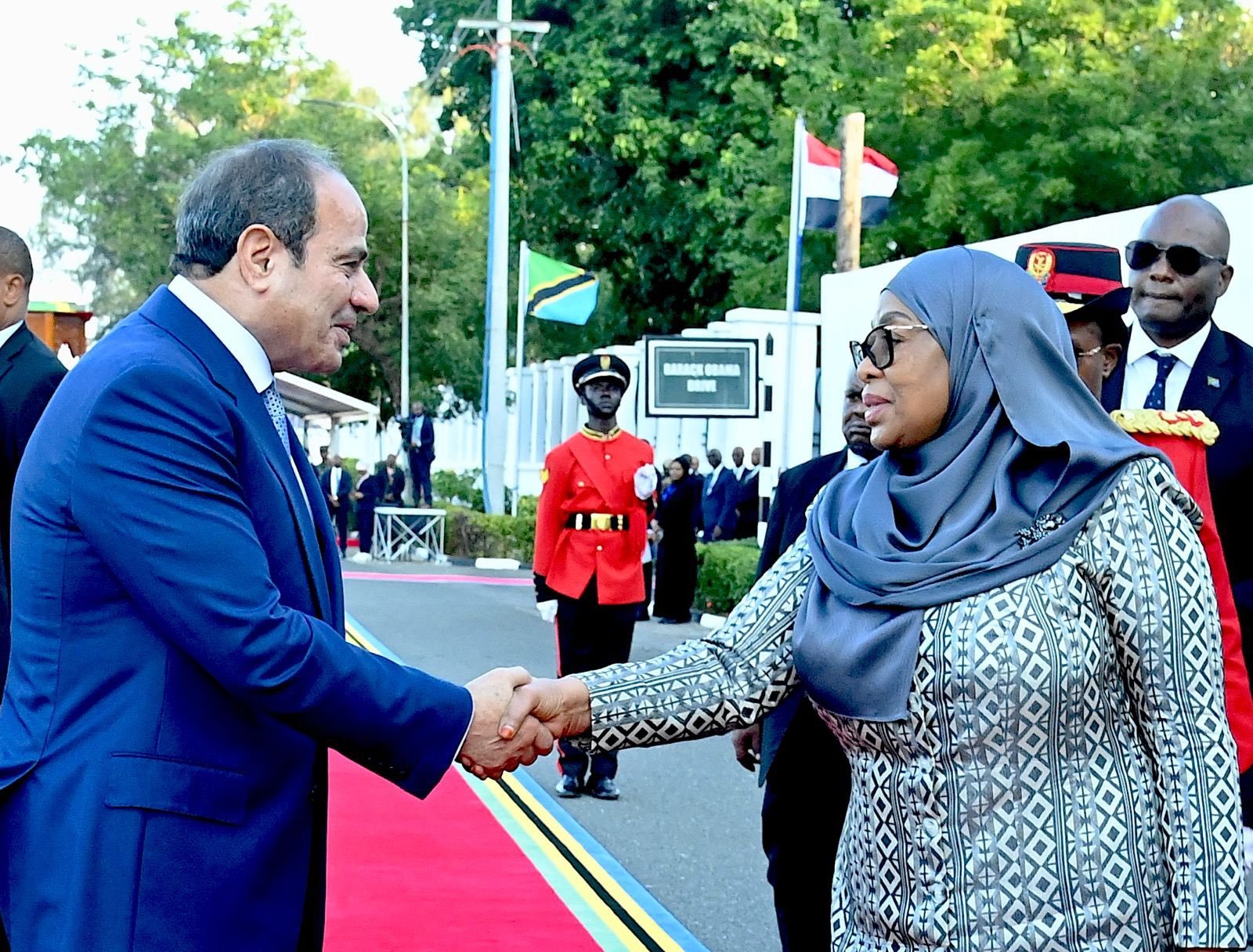
DAR ES SALAAM — Egyptian President Abdel Fattah El-Sisi arrived in Tanzania on Saturday, 18 July 2026, for a one-day state visit that produced two signed memoranda of understanding and a joint commitment to build what both governments are calling an integrated logistics corridor linking East Africa to Egypt, the Red Sea and global shipping lanes. President Samia Suluhu Hassan received El-Sisi at the State House with a full ceremonial welcome, a 21-gun salute among it, before the two presidents moved into closed and then expanded bilateral talks.
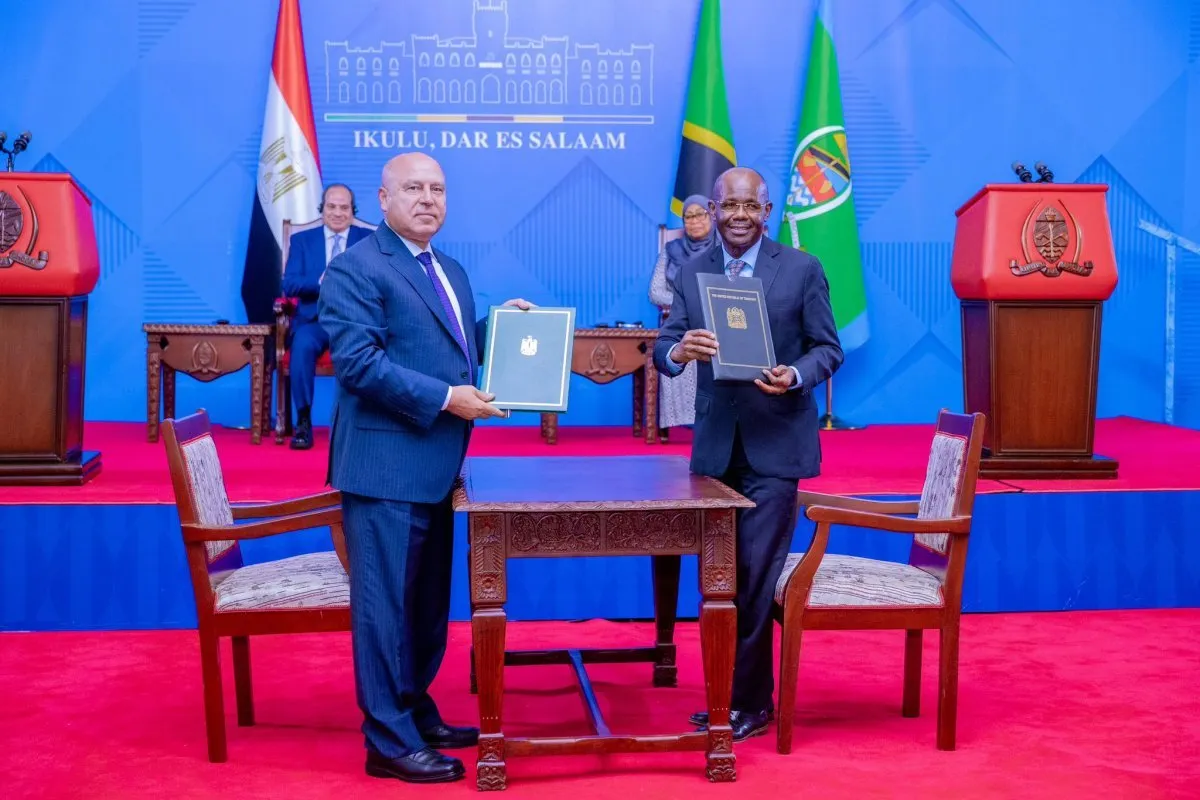 The President of the United Republic of Tanzania, H.E. Dr. Samia Suluhu Hassan, together with her guest, the President of the Arab Republic of Egypt, H.E. Abdel Fattah El-Sisi, as they witnessed the signing of Agreements and Instruments of Ratification in the electricity sector, renewable energy, as well as various transport-related matters between Tanzania and Egypt. The event took place at the State House in Dar es Salaam on 18 July, 2026.
The agreements themselves were modest in number. The two leaders witnessed the signing of MoUs covering electricity and renewable energy, and transport, before closing the Egypt-Tanzania Business Forum, attended by roughly 35 Egyptian and around 120 Tanzanian business leaders. The more consequential part of the visit was not what was signed but what was proposed: a corridor concept that would route Tanzanian and regional trade through Dar es Salaam, across the Indian Ocean and the Red Sea, through the Suez Canal, and into Egyptian, European and Asian markets. El-Sisi told the joint press conference that the two governments had discussed launching a direct shipping route between Dar es Salaam Port and Egypt's Safaga Port on the Red Sea.
The Number That Undercuts the Ambition
Egyptian government trade data puts bilateral trade between the two countries at $12.3 million in the first quarter of 2026, of which Egyptian exports to Tanzania accounted for $11.1 million and Tanzanian exports to Egypt just $1.2 million. That is not a rounding error against the scale of the corridor being proposed. It is roughly the value of a single mid-sized shipping consignment, spread across three months of trade between two of Africa's more established economies.
President Hassan herself acknowledged the gap without disguising it, telling reporters after the talks that despite vast opportunities, trade between the two countries remains well below its potential. That kind of direct acknowledgment is unusual in state-visit communications, and it is the clearest signal in the entire visit that both governments understand the distance between what has been proposed and what currently exists.
What Egypt Is Actually Being Invited Into
Tanzania's invitation to Egyptian investors centres on three connected pieces of infrastructure. The first is the existing Port of Dar es Salaam, where Tanzania is seeking capacity expansion partners. The second is Bagamoyo Port, a project valued at roughly $10 to $11 billion that has spent a decade moving in and out of active construction and is designed, once complete, to handle around 20 million containers annually, a scale roughly 25 times larger than Dar es Salaam's current capacity. Dredging and construction work tied to the port's Eco Maritime City special economic zone was set to resume in December 2025 after years of delay. The third is a planned rail connection linking Bagamoyo Port to the Kwala Special Economic Zone, a roughly 100-hectare logistics hub already connected to both the Standard Gauge Railway and the older Meter Gauge Railway, with President Hassan indicating a dedicated logistics hub would be established there for Egyptian traders and containers specifically.
Layered onto the ports and rail is a maritime shipping link, direct services between Dar es Salaam and Safaga, that would give the corridor concept an actual physical route rather than remaining a description of adjacent infrastructure projects.
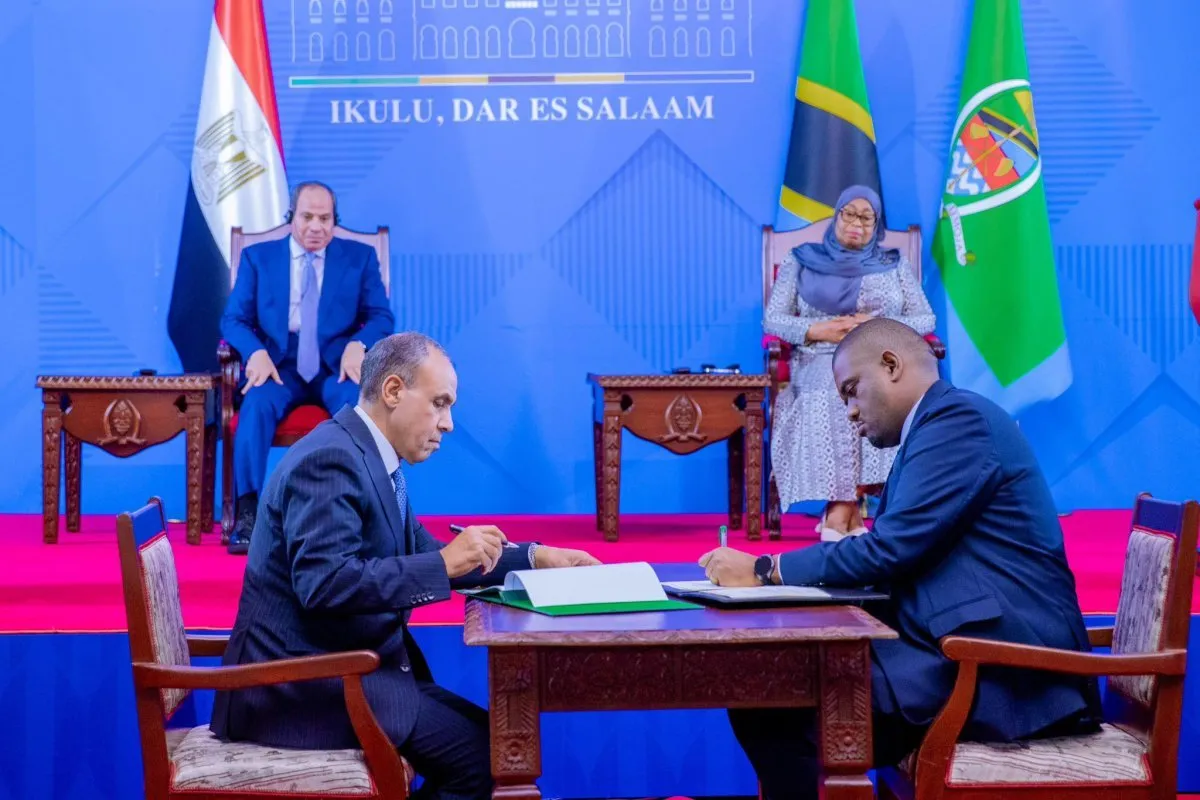 The President of the United Republic of Tanzania, Dr. Samia Suluhu Hassan, together with her guest, the President of the Arab Republic of Egypt, Abdel Fattah El-Sisi, as they witnessed the signing of Agreements and Instruments of Ratification in the electricity sector, renewable energy, as well as various transport-related matters between Tanzania and Egypt. The event took place at the State House in Dar es Salaam on 18 July, 2026.
Agriculture Is the Other Half of the Pitch
Beyond logistics, President Hassan pitched Tanzania's agricultural potential directly to Egyptian investors, citing 29 million hectares of land suitable for irrigation and Tanzania's position as Africa's second-largest livestock producer. The two countries agreed to cooperate on irrigation technology, crop production and livestock development, with Tanzania inviting investment in Ruvu Ranch and in land held by the National Service (JKT), the Prisons Service, the National Ranching Company and Zanzibar's agricultural authorities. The appeal to Egypt specifically is not incidental: Egypt has developed extensive irrigation expertise managing agriculture along a river system with a fraction of Tanzania's arable land, and Tanzanian officials are betting that expertise transfers more directly than capital from investors without that specific water-management experience.
The Existing Base the Corridor Would Build On
Egypt is not a new entrant to Tanzania's investment landscape. President Hassan noted that Egypt already ranks as Tanzania's eighth-largest source of foreign direct investment, with 61 registered projects worth approximately $1.5 billion, creating employment for more than 4,000 Tanzanians across energy, manufacturing, construction, agriculture, tourism and other services. Both leaders repeatedly pointed to the Julius Nyerere Hydropower Project, built with Egyptian contracting involvement, as evidence the two countries can deliver large infrastructure together, with President Hassan describing it as a positive model of cooperation.
Egypt separately committed to non-infrastructure cooperation: expanding the Samia Scholarship Programme to cover science, medicine, artificial intelligence, ICT and cybersecurity, and offering to support construction or rehabilitation of a referral hospital along with specialist training in cardiac, kidney, liver and cancer care.
Reading the Visit Against the Numbers
Set against the $1.5 billion Egypt has already invested and the $12.3 million quarterly trade figure, the corridor proposal is best read as an attempt to convert an investment relationship that already exists into a trade relationship that barely does. Ports, rail links and shipping routes are the infrastructure that trade requires, but infrastructure does not generate trade volume on its own; it removes a constraint on trade that would otherwise happen anyway. Whether Egyptian and Tanzanian private firms actually move goods through a Dar es Salaam-Safaga route once it exists depends on factors the state visit did not address: tariff structures, shipping frequency, demand on both ends, and whether either country's exporters see the other as a priority market relative to the trade partners they already have.
President Hassan's own framing captured the gap between the visit's ambition and what would need to happen next. What we need now, she said, is trust, decisive action and timely implementation of what we have agreed on. That framing puts the burden on execution over the coming months and years, not on the memoranda signed in Dar es Salaam on 18 July. The MoUs create no binding commitment to build anything. The $12.3 million trade figure is the baseline against which any future claim of progress on this corridor will have to be measured.
FAQ
What did Egypt and Tanzania actually agree to during the July 2026 state visit? The two governments signed two memoranda of understanding, covering electricity and renewable energy, and transport. Beyond those, the visit produced a shared statement of intent to build a logistics corridor linking Tanzania to Egypt and global markets, along with invitations for Egyptian investment in specific projects like Bagamoyo Port, but no binding financial commitments were announced.
How much trade currently happens between Egypt and Tanzania? According to Egypt's official statistics agency CAPMAS, bilateral trade totalled $12.3 million in the first quarter of 2026, with Egyptian exports to Tanzania at $11.1 million and Tanzanian exports to Egypt at just $1.2 million, a heavily one-sided and relatively small trade relationship given the scale of the infrastructure ambitions discussed.
How much has Egypt already invested in Tanzania? President Hassan said Egypt has 61 registered investment projects in Tanzania worth approximately $1.5 billion, making it the country's eighth-largest source of foreign direct investment, with those projects employing more than 4,000 Tanzanians across energy, manufacturing, construction, agriculture and tourism.
What is Bagamoyo Port and why does it matter to this partnership? Bagamoyo Port is a long-delayed Tanzanian mega-port project valued at roughly $10 to $11 billion, designed to eventually handle around 20 million containers a year, about 25 times the capacity of the current Dar es Salaam port. Tanzania has invited Egyptian investors to participate in its development and in the rail link connecting it to the Kwala Special Economic Zone.
What role does agriculture play in the Egypt-Tanzania cooperation? Tanzania is positioning itself around 29 million hectares of land suitable for irrigation and its status as Africa's second-largest livestock producer, inviting Egyptian investment and irrigation expertise into projects like Ruvu Ranch and land managed by Tanzania's National Service, Prisons Service and National Ranching Company.
Is there a track record of Egypt and Tanzania delivering major projects together? Yes. Both leaders pointed to the Julius Nyerere Hydropower Project, which involved Egyptian contracting expertise, as an existing example of successful large-scale cooperation between the two countries, and used it as a reference point for what the newly proposed corridor and port investments could achieve.
 Uchumi360
Business Intelligence
Uchumi360
Business Intelligence
Uchumi360 covers business, investment, and economic policy across East, Central, and Southern Africa.
For the serious reader
You read to the end. That places you in a small group.
Uchumi360 is built for readers who demand precision over speed, structure over sentiment, and analysis that holds uncomfortable conclusions rather than softening them. If this work sharpens how you think about Africa's economy, help us keep building the infrastructure behind it.
Institutional Partners
Commission intelligence. Shape the conversation.
Uchumi360 works with development finance institutions, investment firms, sovereign bodies, and strategic organisations across the coverage region. Institutional partnership unlocks:
- Commissioned sector and country intelligence reports
- Branded research series under your institution's authority
- Exclusive data briefings for internal strategy teams
- Speaking and editorial presence at Uchumi360 events
- Co-published investment outlooks for your markets
Support Our Work
Independent analysis has a cost. Help us bear it.
Uchumi360 does not carry advertising. It does not take editorial direction from sponsors. Every article is produced without commercial compromise. Your contribution funds the reporting, research, and editorial infrastructure that keeps this analysis free from influence.
Secure checkout: One-time and monthly support are processed securely. Add payment credentials to enable checkout here.
Stay Connected
Keep up with every new insight.
Follow our latest analysis, policy coverage, and market intelligence as soon as it is published. If you need something specific, reach out directly and we will point you to the right research.
