
Fastjet Came to Democratize Flying in Tanzania, Promising $20 Flights. It Took Seven Years To Go Bankrupt. Why Did It Fail?
Ready
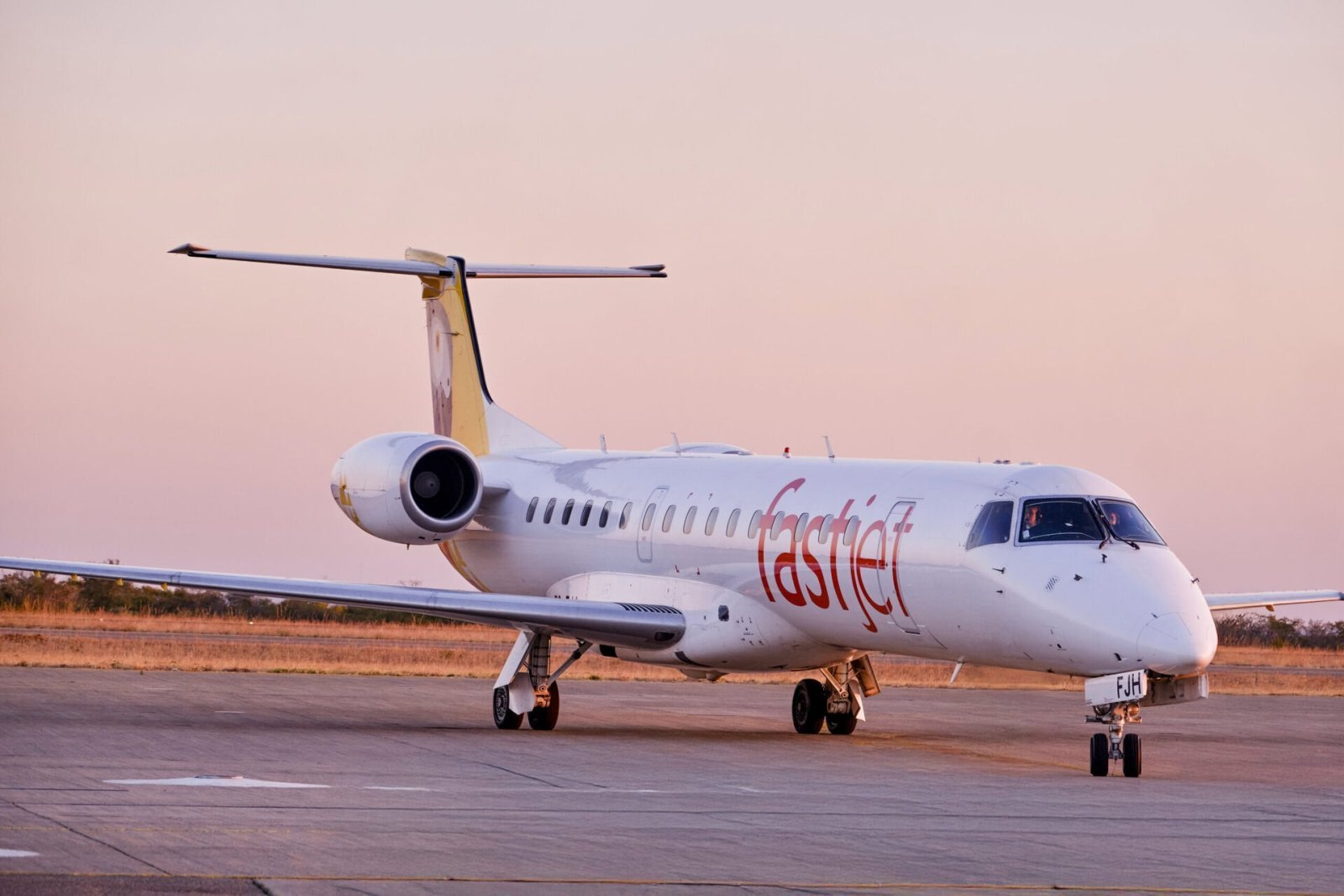
Fastjet launched scheduled flights from Dar es Salaam on 29 November 2012, promising to bring Ryanair-style low fares, some advertised from $20, to Tanzanian aviation. It carried more than 350,000 passengers in its first year and sold its one-millionth seat by December 2014. It never turned a profit. By December 2018, the Tanzania Civil Aviation Authority had grounded the airline over unpaid debts and an insufficient number of airworthy aircraft, and on 25 November 2019, Tanzania's High Court ordered Fastjet Airlines Ltd into liquidation. The airline's failure was not proof that Tanzanians would not fly for cheap fares. It was proof that low fares alone cannot cover the cost structure African aviation actually imposes.
DAR ES SALAAM — Fastjet launched its first scheduled flights from Dar es Salaam to Mwanza and Kilimanjaro on 29 November 2012, at a ceremony built around a single promise: flying in Tanzania was about to become dramatically cheaper. Some fares were advertised from as little as $20, and for many Tanzanians, air travel started to look like a realistic alternative to long-distance bus journeys for the first time.
The early numbers supported the optimism. Fastjet carried more than 350,000 passengers in its first year of operations and sold its one-millionth seat by December 2014. The airline expanded its domestic network and added international routes to Harare, Lusaka, Entebbe, Johannesburg and Lilongwe. Seven years after that launch ceremony, almost to the month, Tanzania's High Court ordered the airline into liquidation.
Passenger Growth Never Solved the Profitability Problem
The low-cost airline model that Fastjet imported is not complicated in theory. Airlines cut costs by flying aircraft as many hours a day as possible, standardising on a single aircraft type, simplifying onboard service, selling directly online, and pushing seat occupancy as high as possible. Lower costs allow lower fares, lower fares stimulate demand, and higher demand improves aircraft utilisation further, a cycle that has produced some of the most profitable airlines in the world elsewhere.
Fastjet's own results showed that cycle breaking down in Tanzania. The company's 2014 interim results reported that Tanzanian revenues had nearly doubled in the first half of the year, while the operation still recorded substantial trading losses. Passenger growth and financial sustainability were moving in opposite directions, a distinction that matters because an airline can fill more seats and still lose more money if fares do not cover the underlying cost of flying them.
Africa's Cost Structure Works Against Ultra-Low Fares
Much of that gap traces back to structural differences between African and European aviation economics. Fuel prices in many African markets run higher, maintenance facilities are scarcer, aircraft leasing costs remain significant, insurance premiums can be elevated, and navigation charges and airport fees make up a larger share of the ticket price than they do in Europe's more competitive, higher-volume airport market. Many of these costs stay largely fixed whether an aircraft carries 40 passengers or 100, which makes genuinely ultra-low fares far harder to sustain once volume dips on any given route.
Tanzania's geography compounded the problem rather than solving it. The country's nearly 950,000 square kilometres make air travel a natural substitute for long, difficult road journeys, which was part of Fastjet's original appeal. But that same geography means population and demand are dispersed across smaller markets rather than concentrated in the dense metropolitan corridors that make European low-cost networks work, making it structurally harder to keep aircraft consistently full on any single route, every day of the week.
The Business Itself Came Apart in Stages
Fastjet's difficulties were not only structural. Leadership changes, repeated strategic pivots, and expansion into multiple African markets before establishing profitability in any one of them added financial strain on top of the cost-structure problem. By late 2018, London-listed Fastjet Group had sold its 49% stake in the Tanzanian operating company to former Home Affairs Minister Lawrence Masha, effectively divesting from the market it had entered with such ambition six years earlier.
The end came quickly after that. In December 2018, the Tanzania Civil Aviation Authority grounded the airline, citing an insufficient number of airworthy aircraft, frequent flight cancellations, and unpaid debts, including roughly $606,000 owed to the regulator itself for services such as security. The TCAA gave the airline 28 days, until 14 January 2019, to submit a viable turnaround plan and settle outstanding obligations. The airline's air services permit expired on 3 January 2019 and was not renewed, and despite a partial debt repayment that briefly revived hope of a comeback, ground handler Swissport Tanzania petitioned the courts over roughly $878,000 in unpaid fees. Tanzania's High Court declared Fastjet Airlines Ltd insolvent and ordered its liquidation on 25 November 2019.
A Network Problem, Not Just a Tanzanian One
Fastjet's ambition was never limited to Tanzania. The airline aimed to build a pan-African low-cost network, where each additional destination strengthens the value of every other one by giving passengers more connection options. That ambition ran directly into Africa's fragmented aviation regulatory environment: cross-border restrictions, bilateral air service agreements negotiated country by country, and inconsistent market access made continental expansion slower and more capital-intensive than the model assumed. Without a large enough network, the economies of scale the low-cost model depends on become difficult to reach, a structural constraint that continues to shape African aviation today.
What Has and Hasn't Changed Since 2012
Many of the conditions Fastjet hoped to exploit have shifted since its 2012 launch. Tanzania's economy is larger, disposable incomes have risen, domestic tourism and business travel have both grown, airport infrastructure has seen significant investment, and regional trade integration has advanced under the African Continental Free Trade Area. The relevant question is no longer whether price-sensitive demand exists in Tanzania, Fastjet's own passenger numbers answered that, but whether an airline can build a model that reflects Africa's actual cost structure rather than importing one built for a different continent's airports, fuel prices and population density.
FAQ
When did Fastjet Tanzania actually stop flying? Its domestic operations were effectively grounded in December 2018 after the Tanzania Civil Aviation Authority found it lacked sufficient airworthy aircraft, and its air services permit expired on 3 January 2019 without renewal. The airline was formally declared insolvent and ordered into liquidation by Tanzania's High Court on 25 November 2019.
Was Fastjet ever profitable in Tanzania? No. Despite carrying more than 350,000 passengers in its first year and selling its one-millionth seat by December 2014, the airline's own 2014 interim results showed substantial trading losses even as Tanzanian revenues nearly doubled.
Why couldn't Fastjet sustain its advertised low fares? Africa's aviation cost structure, higher fuel prices, fewer maintenance facilities, significant aircraft leasing costs and airport fees that remain largely fixed regardless of passenger load, made the ultra-low fares that work in Europe's high-volume, competitive airport market much harder to sustain in Tanzania.
Did Fastjet fail because Tanzanians wouldn't pay for air travel? No. The airline's own passenger numbers show clear demand for lower-cost flying. What proved unsustainable was generating enough revenue from those fares to cover Africa's higher underlying operating costs, not a lack of interest from travellers.
What role did the Tanzanian regulator play in the airline's collapse? The Tanzania Civil Aviation Authority grounded Fastjet in December 2018 over unpaid debts and insufficient airworthy aircraft, gave it 28 days to submit a turnaround plan, and ultimately did not renew its air services permit after it expired in January 2019, a regulatory sequence that preceded the formal liquidation order later that year.
Could a similar low-cost model succeed in Tanzania today? The underlying market conditions have improved, a larger economy, higher disposable incomes, more airport infrastructure and regional trade integration, but the fundamental cost structure that undid Fastjet has not disappeared. Success would depend on a business model built around those costs rather than one imported from a different aviation market.
 Uchumi360
Business Intelligence
Uchumi360
Business Intelligence
- Wikipedia, "Fastjet Tanzania," accessed July 2026
- Founding as Fly540 Tanzania in 2011, 350,000 first-year passengers, one-millionth seat by December 2014, and 25 November 2019 liquidation date
- fastjet plc, Interim Results for the six months ended 30 June 2014
- Tanzanian revenue growth and trading loss figures for the first half of 2014
- The Citizen, "The rise and fall of Fastjet Tanzania," 2019 (updated)
- Launch ceremony details (29 November 2012) and TCAA's December 2018 grounding notice
- eTurboNews, "Suspended! Fastjet airline services in Tanzania," 19 December 2018
- TCAA debt figures, international routes unaffected by the domestic suspension
- ch-aviation, "Fastjet Tanzania's operating licence expires," 5 February 2019, and "TCAA Pull Fastjet Tanzania AOC," January 2019
- Air services permit expiry on 3 January 2019 and total creditor debt figures
- The Citizen, "Tanzania's low-cost airline, Fastjet, declared insolvent, dims revival hope," 2019
- High Court liquidation ruling and background on the licence renewal failure
- ch-aviation, "Tanzania's Fastjet Airlines Ltd goes into liquidation," 25 November 2019
- Swissport Tanzania's creditor petition, 49% stake sale to Lawrence Masha in late 2018, and the court's liquidation order
- fastjet plc, Annual Report and Financial Statements 2021
- Confirmation of the group's 2018 divestment from its Tanzanian business
Uchumi360 covers business, investment, and economic policy across East, Central, and Southern Africa.
For the serious reader
You read to the end. That places you in a small group.
Uchumi360 is built for readers who demand precision over speed, structure over sentiment, and analysis that holds uncomfortable conclusions rather than softening them. If this work sharpens how you think about Africa's economy, help us keep building the infrastructure behind it.
Institutional Partners
Commission intelligence. Shape the conversation.
Uchumi360 works with development finance institutions, investment firms, sovereign bodies, and strategic organisations across the coverage region. Institutional partnership unlocks:
- Commissioned sector and country intelligence reports
- Branded research series under your institution's authority
- Exclusive data briefings for internal strategy teams
- Speaking and editorial presence at Uchumi360 events
- Co-published investment outlooks for your markets
Support Our Work
Independent analysis has a cost. Help us bear it.
Uchumi360 does not carry advertising. It does not take editorial direction from sponsors. Every article is produced without commercial compromise. Your contribution funds the reporting, research, and editorial infrastructure that keeps this analysis free from influence.
Secure checkout: One-time and monthly support are processed securely. Add payment credentials to enable checkout here.
Stay Connected
Keep up with every new insight.
Follow our latest analysis, policy coverage, and market intelligence as soon as it is published. If you need something specific, reach out directly and we will point you to the right research.
