
South Africa Commits to 5.2 GW of New Nuclear Capacity. Koeberg Just Had Three Radiation Scares in Three Weeks.
Ready
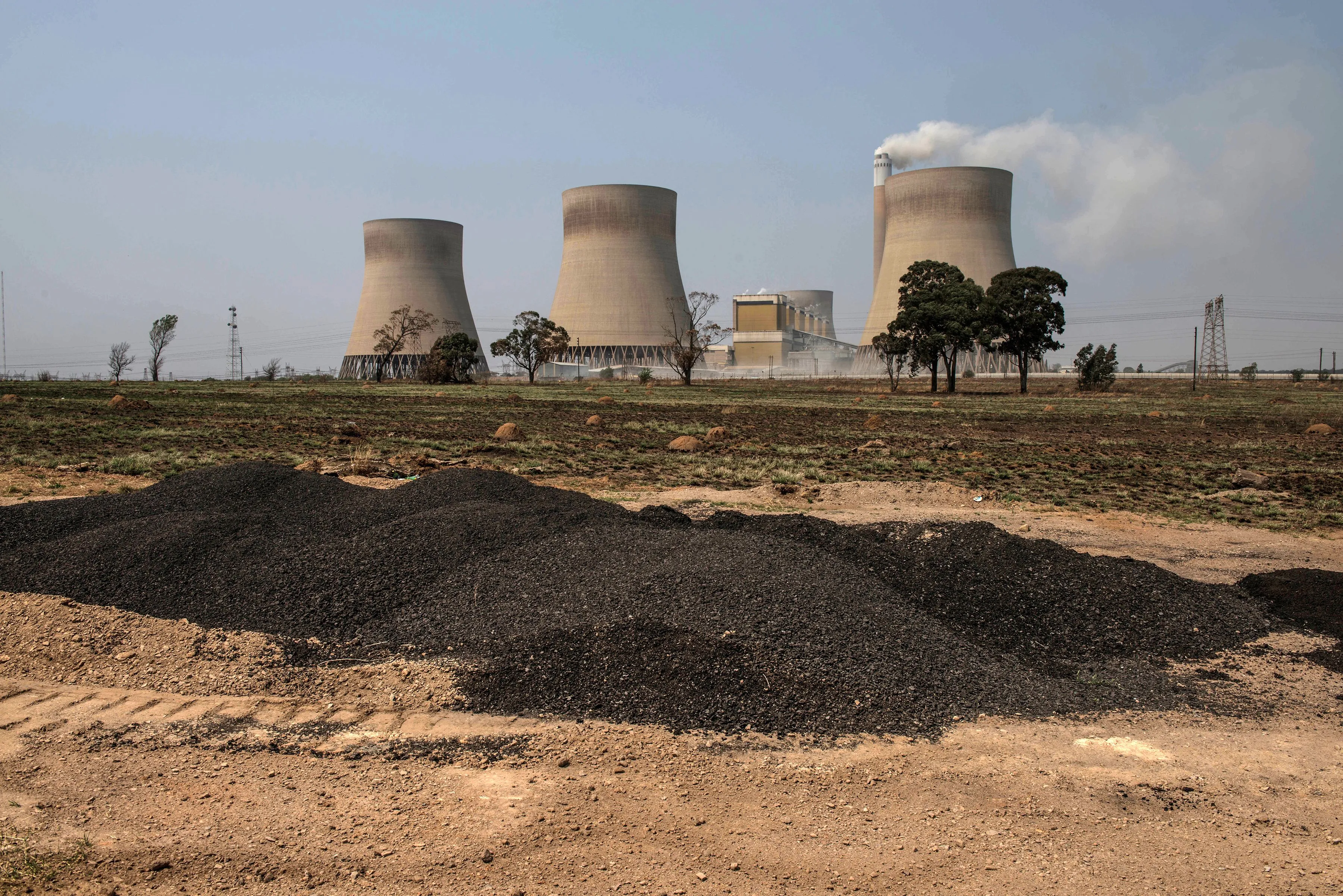
Dr Kgosientsho Ramokgopa, South Africa's Minister of Electricity and Energy, told a media briefing in Pretoria on 19 July 2026 that government remains committed to procuring 5.2 GW of new nuclear capacity by 2039, with an initial 1,200 MW targeted by 2036 and the remainder built out under a broader Nuclear Industrialisation Plan aiming for roughly 10 GW over the next decade, including small modular reactors. The commitment sits within the Integrated Resource Plan 2025 (IRP 2025), adopted by Cabinet in October 2025 as a R2.2 trillion (US$95.4 billion) blueprint for South Africa's electricity mix through 2039, targeting more than 105 GW of new generation capacity overall. The briefing followed three airborne contamination events recorded at Koeberg's Unit 2 between 30 June and 7 July 2026 during post-maintenance steam generator testing, caused by a ventilation power outage affecting temporary maintenance tents inside the reactor building; Eskom and the National Nuclear Regulator confirmed no radioactive material was released and no one was exposed to risk. Koeberg's two units, which together supply roughly 1,830 MW and about 5% of South Africa's electricity, have operated for more than 40 years; Unit 1 received a 20-year licence extension to 2044 in 2024, while Unit 2's long-term extension remains under regulatory review. The new-build programme centres on Duynefontein, adjacent to Koeberg, where an environmental authorisation for up to 4,000 MW of capacity, originally granted in 2017, was upheld in August 2025 after appeals from Greenpeace Africa, Earthlife Africa and the Southern African Faith Communities' Environment Institute were dismissed. This is not South Africa's first attempt at nuclear procurement: a 2,500 MW determination announced in December 2023 was withdrawn by Ramokgopa in August 2024 after the same environmental and faith-based groups challenged it in court over inadequate public consultation. In March 2026, South Africa became the 34th country to endorse the global Declaration to Triple Nuclear Energy Capacity by 2050. Nuclear currently supplies about 4% of South Africa's energy mix, against coal's more than 80% share, which is the imbalance the new build programme is meant to correct.
PRETORIA — South Africa's Electricity and Energy Minister, Dr Kgosientsho Ramokgopa, told journalists on Sunday, 19 July 2026, that government remains committed to procuring 5.2 gigawatts of new nuclear capacity, describing it as one pillar of an Integrated Resource Plan Cabinet adopted roughly a year earlier. The plan sets out to procure 5.2 gigawatts of nuclear capacity, with the intention of eventually supporting a nuclear programme of around 10 gigawatts once a broader industrialisation strategy is factored in.
The timing of the briefing was not incidental. It came days after Koeberg's Unit 2 recorded three airborne contamination events during planned maintenance between 30 June and 7 July 2026, an episode that Eskom attributed to a power outage affecting the ventilation units serving temporary maintenance tents inside the reactor building. No radioactive material was released into the environment, and no nearby communities faced any risk, officials said, while Eskom's Chief Nuclear Officer explained the incidents occurred during steam generator testing, a routine process following life-extension work.
What the IRP 2025 Actually Commits South Africa To
The Integrated Resource Plan 2025 calls for 5,200 MW of new nuclear capacity by 2039, with the first 1,200 MW expected online by 2036 and a further 4,800 MW potentially added afterward. The plan is not a nuclear-only document. It calls for the addition of more than 105 GW of new generation capacity across all technologies by 2039, and represents a ZAR 2.23 trillion (roughly US$95.4 billion) investment that will shape South Africa's electricity mix for the coming decades.
Nuclear's current share of that mix is small. Nuclear power accounts for about 4% of South Africa's energy mix, generated primarily at Koeberg, while the country continues to rely on coal for more than 80% of its electricity. That imbalance, rather than any single incident at Koeberg, is the structural problem the new-build programme is meant to address: a grid that has spent much of the past decade managing rolling blackouts because its baseload capacity has not kept pace with demand or the retirement schedule of its ageing coal fleet.
Duynefontein: A Site With a Long, Contested History
The government's new-build plans centre on Duynefontein, on the coast adjacent to Koeberg. Environmental authorisation for the site was originally granted in 2017 for up to 4,000 MWe of new pressurised water reactor capacity, but was contested through appeals from Greenpeace Africa, Earthlife Africa and the Southern African Faith Communities' Environment Institute, which argued the process raised affordability, safety and procedural concerns. Those appeals were formally dismissed in a ministerial decision in August 2025. By November 2025, Ramokgopa was describing the site as fully permitted, telling an industry audience that the IRP empowers the programme to proceed. In April 2026, Eskom published a draft environmental scoping report covering further expansion, and the utility has separately begun environmental assessment work on two additional candidate sites in the Eastern Cape, Thyspunt and Bantamsklip, both previously considered before Duynefontein was selected in 2017.
The Procurement Process Has Failed Before
South Africa's current nuclear commitment is not its first attempt at this scale. Government announced a 2,500 MW procurement round in December 2023 and published a formal Section 34 determination in January 2024. That process collapsed in August 2024, when Ramokgopa withdrew the determination ahead of a scheduled court hearing brought by the same two environmental and faith-based organisations, SAFCEI and Earthlife Africa Johannesburg, which argued the National Energy Regulator of South Africa had failed to consult the public before concurring with the determination. Ramokgopa's own explanation at the time was that the withdrawal would delay the process, but that the delay was worth allowing every interested party the opportunity to make submissions.
That history is the backdrop against which the current 5.2 GW commitment should be read. The Duynefontein authorisation surviving legal appeal in August 2025, and the IRP 2025 clearing Cabinet two months later, are the first indications that this round of nuclear procurement may avoid the fate of the last one. Whether an actual construction licence, technology and vendor selection, and financing structure follow at the pace the 2036 and 2039 targets require remains to be tested.
Koeberg Is the Foundation the New Build Depends On
Koeberg's two existing units together supply roughly 1,830 to 1,860 MW, about 5% of South Africa's electricity, and have operated for more than four decades. Unit 1 received a 20-year licence extension from the National Nuclear Regulator in July 2024, permitting operation until 2044, while Unit 2 was re-synchronised to the grid in December 2024 after extended life-extension work, with its own long-term licence decision still under regulatory review. Ramokgopa used the July briefing to frame the plant's safety record as the foundation the new-build programme rests on, noting that Koeberg has operated safely for over four decades and that the government intends to add both an extension of the existing units' life and 5 GW of new capacity on top of it.
The early-July contamination events do not appear to have altered that trajectory, at least publicly. But they land at a delicate moment, just as South Africa is trying to demonstrate to financiers, technology vendors and a public still wary after the last procurement collapse that this nuclear programme can execute cleanly. Officials were explicit that the briefing itself was intended to pre-empt speculation before it could take hold.
South Africa's Wider Nuclear Ambition
The 5.2 GW target sits inside a larger, longer-dated ambition. Government's Nuclear Industrialisation Plan aims to build toward roughly 10 GW of total nuclear capacity over the next decade, combining large reactors with small modular reactors (SMRs). Necsa, the state nuclear agency, invited expressions of interest from SMR technology partners in March 2026 and is due to break ground this year on a new multipurpose research reactor at Pelindaba to replace the ageing SAFARI-1 facility.
In March 2026, South Africa became the 34th country to endorse the global Declaration to Triple Nuclear Energy Capacity by 2050, a pledge first launched at COP28 in Dubai in 2023. Ramokgopa told the Africa Energy Indaba in Cape Town that nuclear power is a structural necessity for South Africa's future energy mix, while flagging fairer financing from international lenders as the biggest constraint facing African countries seeking to expand nuclear capacity. South Africa remains the only country on the continent operating a commercial nuclear plant; Egypt's El Dabaa facility is under construction.
The Comparison the Programme Will Be Judged Against
South Africa's other major power procurement track record offers a useful benchmark for what nuclear is being asked to match. Under the Renewable Energy Independent Power Producer Procurement Programme, running since 2011, private developers have built more than 6,280 MW of wind and solar capacity, attracting roughly $15 billion in investment and driving an 88% fall in solar tariffs and a 70% fall in wind tariffs. Nuclear procurement has no comparable delivery record yet: only Koeberg exists, built in the 1980s, and the last attempt to add new capacity did not survive its own legal process.
That is the gap the 5.2 GW commitment now has to close, on a technology with a fifteen-year build timeline, a financing structure not yet finalised, and a public that watched the previous procurement round withdrawn under legal pressure. The Koeberg incidents in early July changed none of the underlying numbers. They did put a sharper point on the question every large infrastructure commitment eventually faces: whether the institutions responsible can execute at the pace the plan on paper describes.
FAQ
What did Minister Ramokgopa actually announce on 19 July 2026? He did not announce anything new. He reaffirmed an existing commitment, first set out when Cabinet adopted the Integrated Resource Plan 2025, to procure 5.2 gigawatts of new nuclear capacity by 2039, and used the briefing primarily to reassure the public about safety incidents at Koeberg's Unit 2 earlier in the month.
What happened at Koeberg in early July 2026? Three airborne contamination events were recorded at Unit 2 between 30 June and 7 July, caused by a power outage that affected ventilation to temporary maintenance tents inside the reactor building during post-maintenance steam generator testing. Eskom and the National Nuclear Regulator confirmed no radioactive material was released and no one, on-site or in surrounding communities, was exposed to risk.
Where will South Africa's new nuclear capacity be built? The primary site is Duynefontein, adjacent to the existing Koeberg plant, where an environmental authorisation for up to 4,000 MW was originally granted in 2017 and upheld against legal appeal in August 2025. Eskom is also conducting environmental assessments at two further candidate sites in the Eastern Cape, Thyspunt and Bantamsklip.
Has South Africa tried to build new nuclear capacity before? Yes, and it did not succeed. A 2,500 MW procurement determination announced in December 2023 was withdrawn by Ramokgopa in August 2024 after environmental and faith-based organisations challenged it in court, arguing the regulator had not properly consulted the public before approving it.
How does nuclear fit into South Africa's overall electricity mix? Nuclear currently supplies about 4% of South Africa's energy, almost entirely from Koeberg's two units, against a mix still dominated by coal at more than 80%. The Integrated Resource Plan 2025 envisions more than 105 GW of new generation capacity across all technologies by 2039, with 5.2 GW of that total earmarked for nuclear.
Is South Africa alone in pursuing nuclear expansion in Africa? No, but it remains the only African country currently operating a commercial nuclear power plant. Egypt's El Dabaa nuclear plant is under construction. In March 2026, South Africa became the 34th country worldwide to endorse a nonbinding global declaration to triple nuclear energy capacity by 2050.
 Uchumi360
Business Intelligence
Uchumi360
Business Intelligence
- eNCA, "Ramokgopa reaffirms nuclear plans," 19 July 2026
- Direct quotes on the IRP adoption timeline and the 5.2 GW procurement commitment
- Available at enca.com
- The Citizen, "'No risk to the public': Ramokgopa defends Koeberg Nuclear safety," 19–20 July 2026
- Details of the three airborne contamination events at Unit 2 between 30 June and 7 July 2026, cause, and officials' safety assurances
- Eyewitness News (EWN), "Government pushes forward with nuclear expansion plans despite Koeberg safety concerns," 19 July 2026
- R2.2 trillion energy transition figure and IRP implementation timeline to 2039
- Fullview, "Ramokgopa assures the public Koeberg Nuclear Power Station is safe," 19–20 July 2026
- Chief Nuclear Officer Velaphi Ntuli's explanation of the steam generator testing incident
- World Nuclear Association, "Nuclear Power in South Africa," updated 2026
- IRP 2025 nuclear capacity phasing (1,200 MW by 2036, 5,200 MW by 2039), Duynefontein authorisation history, and prior procurement timeline back to 2017
- Nuclear Engineering International, "South Africa declares 'new era' for nuclear power," 19 November 2025
- R2.23 trillion / $95.4 billion IRP 2025 investment figure and Duynefontein authorisation confirmation
- Africa Sustainability Matters, "South Africa upholds Duynefontein environmental approval," 14 August 2025
- August 2025 dismissal of Greenpeace Africa, Earthlife Africa and SAFCEI appeals
- Koeberg capacity and licence extension details
- Moneyweb / GroundUp, "Eskom commences environmental assessment for a third nuclear power station," December 2025
- 105 GW total new generation target under IRP 2025 and additional candidate sites (Thyspunt, Bantamsklip)
- Engineering News, "Ramokgopa withdraws 2.5 GW nuclear-procurement determination citing lack of public consultation," 16 August 2024
- Withdrawal of the 2023–24 procurement round and the SAFCEI/Earthlife Africa legal challenge
- World Nuclear Association, "South Africa endorses global declaration to triple nuclear energy by 2050," 5 March 2026
- South Africa's endorsement as the 34th signatory at the Africa Energy Indaba
- EnviroLink Network, "South Africa Joins 33 Nations in Pledge to Triple Nuclear Energy by 2050," 14 March 2026
- Current energy mix shares: nuclear ~4%, coal >80%, renewables ~10%
- U.S
- Department of Commerce, International Trade Administration, "South Africa – Energy," updated June 2026
- REIPPPP delivery record: 6,280 MW built, $15 billion invested, tariff reductions
Uchumi360 covers business, investment, and economic policy across East, Central, and Southern Africa.
For the serious reader
You read to the end. That places you in a small group.
Uchumi360 is built for readers who demand precision over speed, structure over sentiment, and analysis that holds uncomfortable conclusions rather than softening them. If this work sharpens how you think about Africa's economy, help us keep building the infrastructure behind it.
Institutional Partners
Commission intelligence. Shape the conversation.
Uchumi360 works with development finance institutions, investment firms, sovereign bodies, and strategic organisations across the coverage region. Institutional partnership unlocks:
- Commissioned sector and country intelligence reports
- Branded research series under your institution's authority
- Exclusive data briefings for internal strategy teams
- Speaking and editorial presence at Uchumi360 events
- Co-published investment outlooks for your markets
Support Our Work
Independent analysis has a cost. Help us bear it.
Uchumi360 does not carry advertising. It does not take editorial direction from sponsors. Every article is produced without commercial compromise. Your contribution funds the reporting, research, and editorial infrastructure that keeps this analysis free from influence.
Secure checkout: One-time and monthly support are processed securely. Add payment credentials to enable checkout here.
Stay Connected
Keep up with every new insight.
Follow our latest analysis, policy coverage, and market intelligence as soon as it is published. If you need something specific, reach out directly and we will point you to the right research.
