
Kenya vs Tanzania: The Real Contest Behind East Africa's Refinery Race
Ready
Kenya beat Tanzania for Dangote's 700,000 bpd, $15-17 billion East African refinery, on the strength of Mombasa's port, Kenya's larger fuel market, and a regional distribution network already reaching four neighbouring countries. Tanzania had the geographic argument, EACOP's pipeline lands at Tanga, and lost anyway. Three weeks later, Tanzania signed a separate $20 billion refining and logistics deal at Tanga with Vitol Bahrain and Uganda. The two countries aren't done competing for East Africa's downstream oil economy; Kenya just proved its system works, and Tanzania is now trying to build one fast enough to matter for the next contest.
Two countries spent most of this year positioning for the same prize. Only one of them got it, and the loser didn't concede so much as immediately open a second front.
Aliko Dangote confirmed his 700,000 barrel-per-day, $15-17 billion regional refinery would be built in Kenya, not Tanzania, ending months of public speculation over which country would anchor East Africa's largest downstream oil investment. Three weeks later, Tanzania signed its own $20 billion refining and logistics deal at Tanga with Vitol Bahrain E.C. and Uganda. Taken separately, these read as two unrelated infrastructure stories. Taken together, they're a single competition that didn't end when Dangote made his call. It just moved to a different court.
Round one: Tanzania had the better geography argument
For most of this year, Tanzania looked like the natural winner. EACOP, the pipeline carrying Ugandan crude to the coast, terminates at Tanga. Proximity to the crude supply is usually decisive in refinery siting decisions, and Tanzania's pitch leaned on exactly that logic: the oil is already coming here, so refine it here.
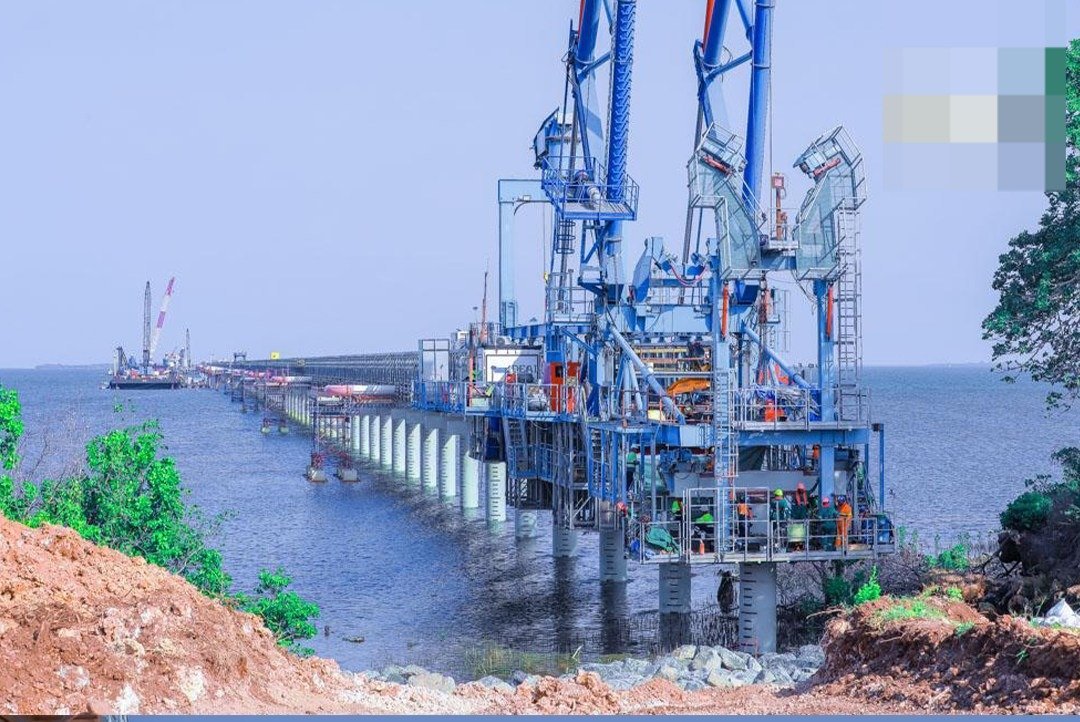
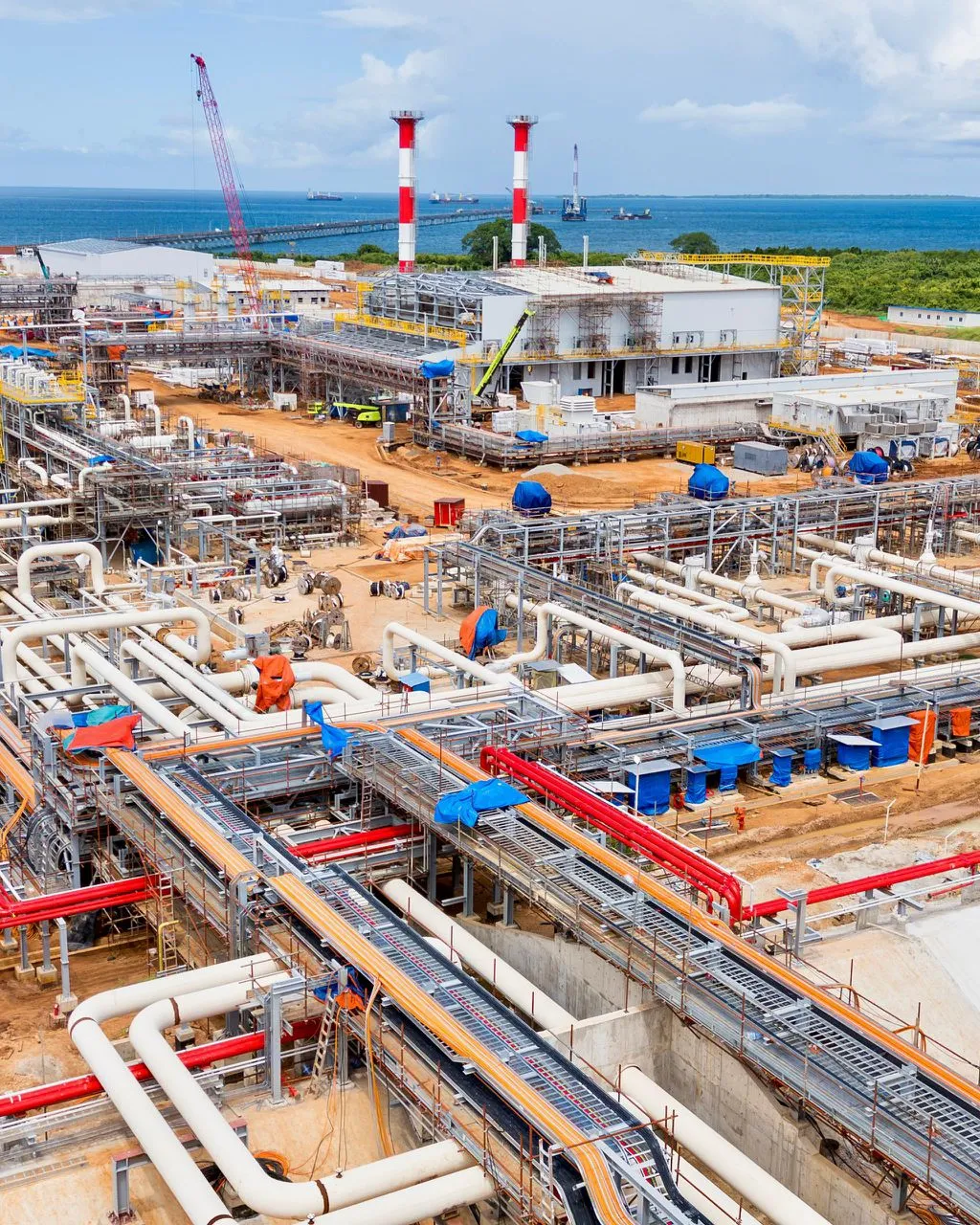 Ongoing construction of EACOP terminal in Tanga, Tanzania
Kenya's counter-argument wasn't about crude proximity at all. It was about everything downstream of proximity. Dangote's own explanation, delivered to the Financial Times, cut straight past the pipeline question: "Kenyans consume more. It's a bigger economy." Mombasa offered a deeper port. Kenya already ran the petroleum distribution network reaching Uganda, Rwanda, South Sudan and eastern DRC, the same customers Tanzania's refinery would have needed to win over from scratch. Kenya wasn't competing on where the oil sits. It was competing on where the oil goes afterward, and it already had that infrastructure built.
Kenya also backed its bid with money on the table, seed capital through its National Infrastructure Fund, according to Business Daily, signalling political commitment an investor could underwrite against for the decades a project like this requires. Tanzania's pitch was the resource. Kenya's pitch was the resource plus the market plus the machinery to move it. That's not a close contest once an investor is optimising for the whole chain rather than one link in it.
Round two: Tanzania didn't wait to lose again
This is where the story usually ends in most coverage: Kenya won, Tanzania learned something, moving on. It didn't end there. Three weeks after Dangote's decision, Tanzania, Uganda and Vitol Bahrain signed an MoU for the Tanga Regional Energy Hub, a $20 billion complex combining a crude refinery, a storage tank farm, a marine jetty and a products pipeline back to Uganda, signed at State House in Dar es Salaam before Presidents Samia Suluhu Hassan and Yoweri Museveni.
Read against the Dangote outcome, the timing isn't incidental. Tanzania just watched Kenya win a regional refinery contest on the strength of an integrated system Tanzania didn't have. The Vitol deal is Tanzania attempting to build that system on its own terms, with its own partner, rather than wait for the next Dangote-scale decision to expose the same gap a second time.
That's a meaningfully different response than simply losing gracefully. Kenya proved its platform works by winning the bigger prize. Tanzania's answer isn't to argue the decision was wrong. It's to go build the thing Dangote said it was missing.
What each country is actually competing on now
The contest has shifted from "who gets the refinery" to "who builds the more complete downstream platform first," and the two countries are running different plays.
Kenya's advantage is inherited: decades of accumulated port capacity, pipeline infrastructure and distribution relationships that took years to build and can't be replicated on a five-year timeline. Dangote's decision didn't create that advantage. It confirmed one that already existed and handed Kenya the project that will deepen it further, since a 700,000 bpd refinery at Mombasa reinforces exactly the network effects that won it the bid in the first place. Every year that refinery runs, Kenya's system gets harder to compete with, not easier.
Tanzania's advantage is different in kind: it isn't trying to out-build Mombasa's existing network. It's trying to establish a second, smaller, functioning system fast enough that the region has two real options instead of one. The Tanga hub doesn't need to hit 700,000 barrels a day or serve five countries to matter. It needs to prove Tanzania can execute an integrated refining-and-logistics project at all, something the Dangote analysis suggested Tanzania hadn't yet demonstrated. Winning that argument is a lower bar than winning the next Dangote contest outright, but it's the bar Tanzania actually has to clear first.
Uganda: the customer both countries are competing for
Uganda sits at the centre of this rivalry without having to choose a side, and that's worth being direct about. Uganda backed Kenya's refinery bid because Kenya's distribution network already serves Uganda more efficiently than Tanzania's does today. Uganda also signed onto the Tanga hub with Tanzania days later. Neither position is contradictory from Uganda's side: cheaper refined fuel is cheaper refined fuel, regardless of which coast it comes from, and Uganda has crude to sell into either system.
But it does mean Uganda's loyalty in this contest is conditional, not fixed, and both Kenya and Tanzania know it. Whichever platform actually delivers cheaper, more reliable fuel to Kampala over the next several years wins Uganda's crude on better terms going forward. That's the real prize neither side has said out loud yet.
Why this isn't over
A single site-selection decision rarely settles a regional competition this size, and this one hasn't. Kenya has the stronger position today: a bigger, proven system, a marquee investor already committed, and a network that gets more valuable the longer it runs uncontested. Tanzania has the weaker position but the faster clock, a live $20 billion project now under construction pressure to prove the Dangote verdict wasn't the final word.
The next data point that matters isn't another refinery announcement. It's whether the Tanga hub gets built on anything close to schedule, and whether it's actually integrated, ports, pipeline, storage, distribution, working as one system, or ends up as another set of impressive but disconnected assets, which is precisely the failure mode that cost Tanzania the bigger prize the first time.
FAQ
Why did Kenya beat Tanzania for the Dangote refinery? Kenya offered a deeper port at Mombasa, a larger domestic fuel market, and an existing distribution network already reaching Uganda, Rwanda, South Sudan and eastern DRC. Tanzania had pipeline proximity via EACOP but lacked the downstream system to match.
Is the Tanga hub deal Tanzania's direct response to losing the Dangote bid? It wasn't announced as one, but the timing, three weeks after Dangote's decision, and the substance, a refining and logistics platform in the exact area Tanzania was criticised for lacking, make it read as a direct answer.
Does Uganda's involvement in both deals create a conflict? Not for Uganda. It backed Kenya's refinery for better current distribution and signed onto Tanzania's Tanga hub separately. Uganda benefits either way; the competition is really between Kenya and Tanzania for Uganda's long-term crude and fuel relationship.
Is the Tanga hub comparable in scale to Kenya's Dangote refinery? No. Kenya's project runs 700,000 barrels a day at $15-17 billion. The Tanga MoU doesn't specify throughput and, at $20 billion for a narrower scope, is a different-sized bet, not a like-for-like rematch.
What determines who actually wins this competition long-term? Not the refinery announcements themselves, but which country builds a genuinely integrated system, port, pipeline, storage, distribution, functioning together. Kenya already has one. Tanzania is now racing to build one.
 Uchumi360
Business Intelligence
Uchumi360
Business Intelligence
Uchumi360 covers business, investment, and economic policy across East, Central, and Southern Africa.
For the serious reader
You read to the end. That places you in a small group.
Uchumi360 is built for readers who demand precision over speed, structure over sentiment, and analysis that holds uncomfortable conclusions rather than softening them. If this work sharpens how you think about Africa's economy, help us keep building the infrastructure behind it.
Institutional Partners
Commission intelligence. Shape the conversation.
Uchumi360 works with development finance institutions, investment firms, sovereign bodies, and strategic organisations across the coverage region. Institutional partnership unlocks:
- Commissioned sector and country intelligence reports
- Branded research series under your institution's authority
- Exclusive data briefings for internal strategy teams
- Speaking and editorial presence at Uchumi360 events
- Co-published investment outlooks for your markets
Support Our Work
Independent analysis has a cost. Help us bear it.
Uchumi360 does not carry advertising. It does not take editorial direction from sponsors. Every article is produced without commercial compromise. Your contribution funds the reporting, research, and editorial infrastructure that keeps this analysis free from influence.
Secure checkout: One-time and monthly support are processed securely. Add payment credentials to enable checkout here.
Stay Connected
Keep up with every new insight.
Follow our latest analysis, policy coverage, and market intelligence as soon as it is published. If you need something specific, reach out directly and we will point you to the right research.
