
Africa's 25 Most Wealthiest Cities in 2026: Johannesburg Still Leads, But East Africa Is Rewriting the Rankings
Ready
Africa's private wealth stood at approximately USD 2.5 trillion in investable assets in 2026, distributed across 135,200 millionaires and 21 billionaires concentrated overwhelmingly in a handful of cities whose financial infrastructure, governance quality, and economic scale have compounded wealth in ways that most of the continent has not yet replicated. This ranking, drawn from New World Wealth and Henley and Partners data, measures millionaire populations in dollar terms, which means it systematically understates wealth in economies whose currencies have depreciated significantly against the dollar regardless of underlying asset quality. Nigeria, Egypt, Angola, and Zambia all saw currencies fall over 75 percent in the last decade, meaning thousands of individuals lost millionaire status in dollar terms without losing productive assets. Read the numbers with that caveat in mind.
1. Johannesburg, South Africa Millionaires: 12,300 | Centi-millionaires: 25 | Billionaires: 2 | Metro GDP: ~USD 76 billion | Decade growth: -20%
Africa's undisputed wealth capital, anchored by the Johannesburg Stock Exchange, Africa's largest by significant margin, and by Sandton, whose concentration of banking, mining, professional services, and telecommunications corporate headquarters has earned it the designation of the richest square mile in Africa. The 20 percent decade decline in millionaire count reflects South Africa's currency depreciation and economic stagnation rather than any reversal of Johannesburg's structural institutional depth, which remains without equal in Sub-Saharan Africa. The Waterfall-Midrand area is emerging as a new HNWI residential cluster alongside the established Sandton enclaves of Sandhurst, Hyde Park, and Inanda.
Uchumi360 read: Johannesburg is the continent's primary capital market and the benchmark against which every other African financial centre's ambition is measured. Its relative decline is South Africa's problem. Its absolute leadership remains East Africa's aspiration.
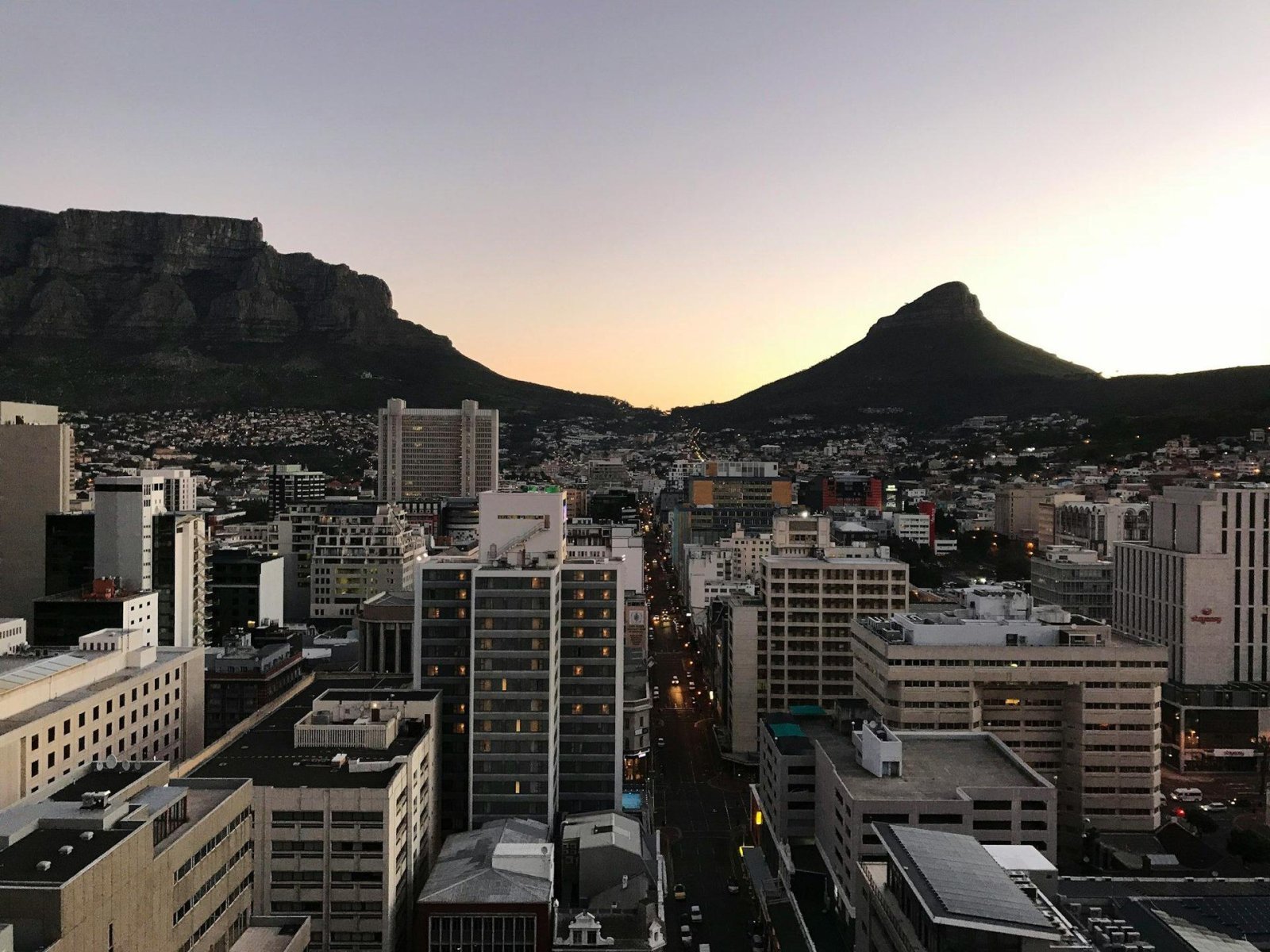
2. Cape Town, South Africa Millionaires: 7,400 | Centi-millionaires: 28 | Billionaires: 1 | Metro GDP: ~USD 33 billion | Decade growth: +33%
Cape Town has emerged as Africa's leader in centi-millionaires and is on track to overtake Johannesburg in total millionaire count by 2030, driven by the semigration of wealthy South Africans from Johannesburg and Pretoria toward its coastal amenities, relative safety, and quality of life. Prime real estate in Clifton and Bantry Bay averages USD 5,800 per square metre, the most expensive on the continent. The 33 percent decade growth against Johannesburg's 20 percent decline describes two cities moving in opposite directions within the same national economy. The Africa Wealth Report 2025 updates Cape Town's millionaire count to 8,500, reflecting continued strong inflows.
Uchumi360 read: Cape Town's rise is primarily a redistribution of existing South African wealth rather than the creation of new wealth. It is a lesson in the economics of quality of life as a wealth magnet, not a replicable model for wealth generation from a lower base.
3. Cairo, Egypt Millionaires: 7,200 | Centi-millionaires: 30 | Billionaires: 4-5 | Metro GDP: ~USD 80-100 billion
Cairo holds more billionaires than any other African city, reflecting the concentration of Egypt's family conglomerate wealth in telecommunications, construction, and consumer goods whose scale has produced ultra-high-net-worth individuals disproportionate to the country's GDP per capita. The millionaire count has been suppressed by Egyptian pound depreciation in dollar measurement terms, meaning the underlying asset base is larger than the ranking suggests. The USD 45 billion New Administrative Capital project east of Cairo is the most ambitious urban development on the continent and will extend the city's commercial geography substantially when completed. Affluent districts include Zamalek, Garden City, and Newgiza.
Uchumi360 read: Cairo's billionaire concentration relative to its millionaire count is the most extreme ratio on the list, describing wealth that is extraordinarily concentrated at the very top of the distribution, a structural characteristic of state-adjacent family conglomerate wealth that East African economies have not yet replicated.
4. Nairobi, Kenya Millionaires: 4,400 | Centi-millionaires: 10 | Billionaires: 0 | Metro GDP: ~USD 30 billion | Decade growth: +25%
East Africa's wealth capital and the region's only entry in the continental top five, Nairobi accounts for approximately 48 percent of Kenya's total private wealth and over 60 percent of the country's millionaires, reflecting the degree to which it functions as the commercial, financial, diplomatic, and technology hub for a region extending well beyond Kenya's borders. The Silicon Savannah designation is earned rather than aspirational, with over USD 1 billion in venture capital deployed into its technology ecosystem in recent years. The 25 percent decade millionaire growth is the East African benchmark. Established luxury residential neighbourhoods include Karen and Muthaiga.
Uchumi360 read: Nairobi is the reference point for what East African wealth concentration looks like when financial services, governance quality, and technology converge in a single city. The absence of dollar billionaires reflects a stage of capital accumulation rather than a ceiling.
5. Lagos, Nigeria Millionaires: 4,200 | Centi-millionaires: 12 | Billionaires: 3 | Metro GDP: ~USD 100 billion+ | Decade growth: -47% in dollar terms
The most analytically distorted entry in the ranking. Lagos has the largest metro GDP in Sub-Saharan Africa, hosts Aliko Dangote's industrial empire, Africa's largest banks, and a fintech ecosystem that has produced a new generation of entrepreneurs, yet its millionaire count has fallen from over 6,000 to 4,200 almost entirely because of naira depreciation rather than genuine wealth destruction. The three billionaires Lagos hosts, more than Nairobi, Dar es Salaam, Kigali, and Kampala combined, reflect the depth of wealth concentration at the very top that the millionaire count alone understates. Affluent neighbourhoods include Ikoyi, Victoria Island, and Banana Island.
Uchumi360 read: Lagos is more economically dynamic than its ranking suggests. The 47 percent decade decline is the naira's story. The USD 100 billion metro GDP is Lagos's story.
6. Cape Winelands, South Africa Millionaires: 3,600 | Centi-millionaires: 16 | Billionaires: 2 | Key Economy: Wine, Tourism, Education | Decade growth: +42%
The Cape Winelands, encompassing Stellenbosch, Paarl, and Franschhoek, is a lifestyle wealth cluster whose 42 percent decade growth reflects the redistribution of South African wealth toward semi-rural premium residential environments. Stellenbosch University has produced 28 centi-millionaires and 5 billionaires, giving the Winelands an unusual depth of intellectual and entrepreneurial capital alongside its wine estate lifestyle assets. Val de Vie and De Zalze are among its most exclusive residential estates.
7. Umhlanga and Ballito, South Africa Millionaires: 3,500 | Centi-millionaires: 11 | Billionaires: 0 | Metro GDP: ~USD 20 billion (Durban metro)
KwaZulu-Natal's Dolphin Coast corridor hosts world-class eco-estates including Zimbali, Simbithi, Izinga, and Hawaan Forest Estate. Durban's port anchors the industrial and logistics wealth that funds the coastal residential lifestyle, creating a commercial-residential dynamic that gives the region more economic depth than a pure lifestyle destination. The area's comparison to Miami reflects the successful combination of business infrastructure and coastal living that characterises both.
8. The Garden Route, South Africa Millionaires: 3,200 | Centi-millionaires: 5 | Billionaires: 0 | Key Economy: Tourism, Real Estate, Agriculture
South Africa's 300-kilometre coastal stretch from Mossel Bay to Storms River, with Beachy Head Drive in Plettenberg Bay carrying a strong claim to being Africa's Millionaire Row for its concentration of ultra-wealthy coastal properties. A retirement and second-home wealth cluster whose ranking reflects wealth redistribution from South Africa's urban centres rather than independent economic generation. George, Knysna, and Wilderness are the main towns.
9. Casablanca, Morocco Millionaires: 2,800 | Centi-millionaires: 10 | Billionaires: 1 | Metro GDP: ~USD 30 billion
Africa's most significant financial hub outside South Africa, anchored by the Casablanca Stock Exchange, OCP Group, and Attijariwafa Bank, whose pan-African expansion across Francophone West and Central Africa makes Casablanca a genuine regional financial centre. The Casablanca Finance City development has attracted international financial services firms seeking a European-African gateway position. Morocco's automotive and aerospace manufacturing investment has generated an industrialist wealth class that distinguishes the city from purely commodity or trading wealth centres. Affluent districts include Anfa and Californie.
Uchumi360 read: Attijariwafa Bank's continental footprint makes Casablanca a financial architecture story as much as a Moroccan wealth story. Its pan-African banking network gives it relevance for East and Central Africa that its geographic distance obscures.
10. Pretoria, South Africa Millionaires: 2,100 | Centi-millionaires: 5 | Billionaires: 1 | Metro GDP: ~USD 20 billion
South Africa's administrative capital whose wealth is government-adjacent in character, generated through public sector executive incomes, government contracting, and the diplomatic community that an administrative capital attracts. Suburbs like Waterkloof and Silver Lakes Golf Estate are among South Africa's more expensive residential addresses. Key business districts include Brooklyn, Hatfield, Menlyn, and Centurion. Its ranking reflects Gauteng's economic cluster rather than independently generated commercial dynamism.
11. Accra, Ghana Millionaires: 1,900 | Centi-millionaires: 4 | Billionaires: 0 | Metro GDP: ~USD 25 billion
West Africa's second wealth centre after Lagos and the most governance-stable major economy in the sub-region, where Ghana's political transition track record has made it the preferred regional headquarters location for multinational firms whose risk frameworks cannot accommodate Lagos's regulatory complexity. Gold and oil commodity wealth, financial services expansion, and technology sector development drive its millionaire base. Currency depreciation has suppressed Accra's dollar count relative to its underlying asset base. Upscale areas include Cantonments, Labone, and East Legon.
12. Luanda, Angola Millionaires: 1,500 | Centi-millionaires: 3 | Billionaires: 0 | Metro GDP: ~USD 20-25 billion | Decade growth: -36%
Briefly the world's most expensive city for expatriates during Angola's oil boom, now declining in dollar-denominated millionaire count as kwanza depreciation erodes apparent wealth whose underlying productive base in hydrocarbons remains substantial. Angola's active economic diversification programme is the correct policy response to petrostate wealth concentration, but its results are not yet visible in the millionaire trajectory. Exclusive neighbourhoods include Cidade Alta and Talatona.
Uchumi360 read: Luanda is the cautionary comparison for resource-dependent development models that the coverage region's critical minerals economies must avoid replicating.
13. Marrakech, Morocco Millionaires: 1,400 | Centi-millionaires: 12 | Billionaires: 2 | Decade growth: +65% | Projected: 100%+ to 2035
Africa's fastest-growing major wealth centre over the past decade after Mauritius, driven by European and Middle Eastern second-home buyers and luxury tourism infrastructure including Royal Mansour and La Mamounia. The 100 percent plus millionaire growth projected to 2035 makes Marrakech, alongside South Africa's Whale Coast, the top-ranked projected growth destination on the continent. Prime property at approximately USD 2,200 per square metre. The Palm Grove and Hivernage districts host the city's wealthiest residents.
14, 15, and 16: Three-Way Tie at 1,200 Millionaires
The Whale Coast, Windhoek, and Dar es Salaam are each reported at 1,200 millionaires. The citizenx.com source orders them as follows, based on a combination of per capita wealth, regional significance, and investment trajectory. That ordering is preserved here.
14. Whale Coast, South Africa Millionaires: 1,200 | Centi-millionaires: ~3 | Billionaires: 0 | Decade growth: +50% | Projected: 100%+ to 2035
South Africa's fastest-growing region for high-net-worth individuals, encompassing Hermanus, Rooi Els, and Betty's Bay on the Western Cape coast. The Hermanus suburbs of Voëlklip, Kwaaiwater, Eastcliff, and Fernkloof Estate are among its most affluent areas. The 100 percent plus projected growth to 2035 makes the Whale Coast, alongside Marrakech, the top-ranked projected growth destination in the Africa Wealth Report 2025. A retirement and second-home cluster rather than a commercial wealth centre, placed above Windhoek at the same millionaire count on the basis of per capita wealth density and South Africa's overall wealth concentration.
15. Windhoek, Namibia Millionaires: 1,200 | Centi-millionaires: ~4 | Billionaires: 0 | Metro GDP: ~USD 5 billion | Projected: 85%+ to 2033
Namibia's capital whose wealth per capita is among the highest in Africa, driven by diamond and uranium mining revenues concentrated in a small population. Namibia's projected 85 percent plus millionaire growth to 2033 is partly driven by the green hydrogen sector whose investment potential has attracted significant international attention. Windhoek and Swakopmund are explicitly named by New World Wealth as high-growth projected wealth destinations in the Africa Wealth Report 2025. Affluent suburbs include Ludwigsdorf and Klein Windhoek. Placed above Dar es Salaam at the same millionaire count on the basis of Namibia's higher per capita wealth, which produces a denser millionaire concentration relative to population.
Uchumi360 read: Namibia's green hydrogen development is the most directly relevant element of Windhoek's economic story for the broader Southern African region's energy transition positioning.
16. Dar es Salaam, Tanzania Millionaires: 1,200 | Centi-millionaires: 1 | Billionaires: 1 | Metro GDP: ~USD 15 billion
Tanzania's commercial capital and East Africa's second wealth centre, whose sole confirmed dollar billionaire Mohammed Dewji, estimated at USD 1.5 to 1.8 billion net worth, is one of the few pan-African industrialists whose manufacturing empire spanning food processing, packaging, textiles, and beverages across multiple African markets reflects the value-addition economic model that Tanzania's Vision 2050 is attempting to replicate at national scale. The 1,200 millionaire count is broadly proportionate to Tanzania's current development stage but is a current position rather than a settled state, given the USD 10.95 billion in approved investment capital in 2025 and USD 1.2 billion in Q1 2026, whose manufacturing concentration and joint venture structure are generating the commercial and industrial activity from which the next tier of Tanzanian millionaires will emerge. Upmarket areas include Oyster Bay and Masaki. Placed third in the three-way tie on the basis of a lower per capita wealth density relative to Windhoek's smaller population and South Africa's higher baseline.
Uchumi360 read: Dar es Salaam's 16th place is a current position in an upward trajectory. The investment data, the port expansion, the SGR logistics corridor, and the mineral formalisation achievements documented across Uchumi360's April 2026 coverage describe an economy whose millionaire production rate is accelerating. Watch this position over the next five years.
17. Tangier, Morocco Millionaires: 1,000 | Centi-millionaires: 6 | Billionaires: 1
Morocco's northern industrial wealth centre, anchored by the Tangier-Med port, one of Africa's largest and most modern, and free zone manufacturing in automotive, aerospace, and textiles. The most industrially grounded of Morocco's three wealth centres, distinguished from Casablanca's financial services wealth and Marrakech's tourism and lifestyle wealth by its manufacturing and logistics economic base. Explicitly named by New World Wealth as a projected 85 percent plus growth destination. Morocco's royal investment in Tangier's infrastructure has made it a deliberate industrial policy project rather than an organic wealth formation.
18. Algiers, Algeria Millionaires: 1,000 | Centi-millionaires: 4 | Billionaires: 0 | Decade growth: -23%
Algeria's capital concentrates the country's considerable but opaque oil and gas wealth in ways that the official millionaire count almost certainly understates, because historical socialist political economy and the preference of Algeria's wealthy for holding assets abroad depress the official figure. A 23 percent decade decline reflects currency effects and capital flight rather than genuine wealth destruction. Affluent areas include Hydra and El Biar. Tied with Tangier at 1,000 millionaires, ranked below on the basis of the declining trajectory against Tangier's growing one.
19. Grand Baie, Mauritius Millionaires: 900 | Centi-millionaires: 5 | Billionaires: 0 | Decade growth: +95%
The fastest-growing wealth destination in Africa over the past decade, driven entirely by inbound wealth migration from South Africa, France, India, and China attracted by Mauritius's tax efficiency, political stability, and investment residency programmes. Prime beachfront property exceeds USD 5,000 per square metre. A demonstration that institutional quality and targeted policy can attract wealth that other jurisdictions have created. Many of Mauritius's wealthiest business leaders who work in Port Louis reside in Grand Baie.
Uchumi360 read: Grand Baie is the offshore financial architecture through which East African investment connects to global capital markets. Its growth is Mauritius's governance premium made visible in migration statistics.
20. Kigali, Rwanda Millionaires: 800 | Centi-millionaires: 3 | Billionaires: 0 | Decade growth: +43% | Projected: 80%+ to 2033
The most analytically important entry in the East African portion of the ranking, where a 43 percent decade growth rate from a low base in an economy with no dollar billionaires demonstrates what sustained governance quality, strategic urban development, and human capital investment produce in wealth accumulation terms when applied consistently over a decade. Kigali accounts for over 60 percent of Rwanda's millionaires and approximately 52 percent of national wealth. The 80 percent plus projected millionaire growth to 2033 would push Kigali toward 1,440 millionaires, approaching Dar es Salaam's current level from below and making it one of the continent's most significant rising wealth centres. Upscale neighbourhoods include Nyarutarama and Rebero.
Uchumi360 read: Kigali's trajectory is governance-driven rather than resource-driven, making it the cleanest available demonstration of the institutional quality-to-wealth relationship that the full dataset supports. Rwanda's April 2026 World Bank HCI+ top performer recognition is the human capital expression of the same underlying institutional quality generating its millionaire growth.
21. Alexandria, Egypt Millionaires: ~1,000 declining toward low hundreds | Billionaires: 1
Egypt's second city and primary port, whose millionaire count has fallen from approximately 1,700 in 2022 toward the 1,000 range as Egyptian pound depreciation erodes dollar-denominated wealth whose local asset values in petrochemicals, shipping, and tourism remain largely intact. Placed at 21st on the basis of the downward trajectory from a confirmed higher historical base, sitting below Grand Baie and Kigali despite a higher current estimate because the directional momentum of those cities is upward while Alexandria's is downward.
22. Abuja, Nigeria Millionaires: 600-800 | Centi-millionaires: 3 | Billionaires: 0
Nigeria's planned administrative capital whose wealth is government-adjacent in character, generated through public sector executive incomes, government contracting, and real estate appreciation in a city where land scarcity is institutionally managed. Districts of Maitama, Asokoro, and Guzape host Nigeria's political and business elite in some of the country's most expensive residential properties. The absence of large-scale industry means most wealth is state-redistribution-driven rather than productively generated.
23. Kampala, Uganda Millionaires: Low hundreds | Billionaires: 0 | Projected: 80%+ to 2033
Uganda's capital and the East African wealth centre in the earliest stage of its growth trajectory, where oil discovery in the Albertine region, growing fintech activity, and regional trade anchoring are creating the conditions for the 80 percent plus projected millionaire growth to 2033. Kololo, Nakasero, and Munyonyo host Uganda's business and political elite. Its inclusion at 23rd reflects the projection data and emerging commercial momentum as much as the current millionaire count.
24. Lusaka, Zambia Millionaires: 800-1,000 | Billionaires: 0 | Projected: 80%+ to 2033
Zambia's capital whose copper-driven wealth concentration has been suppressed by currency depreciation but whose underlying trajectory, supported by the April 2026 Ndola refinery groundbreaking, copper price cycles, and debt restructuring resolution, positions it among the faster-rising Southern African wealth centres. The 80 percent plus projected millionaire growth to 2033 reflects Zambia's commodity-driven development momentum being converted into broader commercial wealth creation. Affluent neighbourhoods include Leopards Hill and Kabulonga.
25. Port Louis, Mauritius Millionaires: Significant | Billionaires: 0 | Key Economy: Offshore Finance, Investment Management, Trade
Mauritius's financial and business capital, hosting the Stock Exchange of Mauritius and the offshore banking institutions whose architecture connects East African and pan-African investment flows to global capital markets. Port Louis's economic influence extends vastly beyond its millionaire count through its role as a holding company jurisdiction, fund domicile, and wealth management centre for pan-African investors. Alongside Grand Baie at 19th, it makes Mauritius the only country with two entries in the top 25, reflecting the extraordinary governance premium that a small, well-run island economy can generate in wealth attraction terms.
Data note: Entries 1 through 20 follow the citizenx.com source ordering, which draws on New World Wealth and Henley and Partners data. The three-way tie at entries 14, 15, and 16, involving the Whale Coast, Windhoek, and Dar es Salaam, is resolved following the citizenx.com source ordering, which places South African lifestyle enclaves above Windhoek and Windhoek above Dar es Salaam at the same 1,200 millionaire count, with per capita wealth density as the implied tiebreaker. The Africa Wealth Report 2025, published August 2025, updates several figures including Johannesburg to 11,700, Cape Town to 8,500, Cairo to 6,800, Nairobi to 4,200, and Lagos to 3,400, reflecting annual restatements. The citizenx.com figures are used as the primary source for consistency. Entries 21 through 25 are ordered by best available estimate with trajectory noted where counts are declining or imprecise. All figures refer to individuals with liquid investable wealth of USD 1 million or more.
The Uchumi360 Read
Three conclusions emerge from the corrected and complete ranking.
The currency distortion is the most important analytical tool for reading this data honestly. Lagos from peak 3rd to current 5th, Alexandria declining from 13th, Algiers at 18th with a 23 percent decade decline: none of these represent genuine wealth destruction. They represent dollar threshold erosion from currency collapse. Investors reading the declines as economic deterioration are misreading the data.
The governance-to-wealth correlation is the most consistent pattern across the full 25 entries. Kigali at 43 percent decade growth, Mauritius at 63 to 105 percent, Morocco at 40 percent, Cape Town at 33 percent: the fastest-growing wealth centres share institutional quality, regulatory reliability, and political stability as their common characteristic rather than resource endowment or geographic advantage.
East Africa's wealth geography is moving faster than the current ranking reflects. Nairobi at 4th, Dar es Salaam at 16th, Kigali at 20th, and Kampala at 23rd describe a region whose investment momentum, infrastructure pipeline, and governance trajectory are generating the next tier of millionaires at rates that will materially shift these rankings within the decade. The 2033 projection data, with Kenya, Rwanda, and Uganda all in the 80 percent plus millionaire growth category, is the more consequential intelligence for investors whose horizon extends beyond the current snapshot.
 Uchumi360
Business Intelligence
Uchumi360
Business Intelligence
- citizenx.com Top 25 Wealthiest Cities in Africa 2026 March 2026
- Henley and Partners Africa Wealth Report 2025 August 2025
- Henley and Partners Africa Wealth Report 2024
- New World Wealth Africa Wealth Data
- Africa Briefing Nairobi East Africa Wealthiest Cities March 2025
- TRT Afrika Top 20 African Cities Millionaires
- Pulse Kenya Top Cities Countries Millionaires 2025
- Uchumi360 Tanzania Investment Surge Analysis April 2026
- Uchumi360 Rwanda HCI+ World Bank Recognition April 2026
- Uchumi360 Zambia Ndola Refinery Analysis April 2026
- Uchumi360 Africa PPP GDP Rankings Analysis April 2026
Uchumi360 covers business, investment, and economic policy across East, Central, and Southern Africa.
For the serious reader
You read to the end. That places you in a small group.
Uchumi360 is built for readers who demand precision over speed, structure over sentiment, and analysis that holds uncomfortable conclusions rather than softening them. If this work sharpens how you think about Africa's economy, help us keep building the infrastructure behind it.
Institutional Partners
Commission intelligence. Shape the conversation.
Uchumi360 works with development finance institutions, investment firms, sovereign bodies, and strategic organisations across the coverage region. Institutional partnership unlocks:
- Commissioned sector and country intelligence reports
- Branded research series under your institution's authority
- Exclusive data briefings for internal strategy teams
- Speaking and editorial presence at Uchumi360 events
- Co-published investment outlooks for your markets
Support Our Work
Independent analysis has a cost. Help us bear it.
Uchumi360 does not carry advertising. It does not take editorial direction from sponsors. Every article is produced without commercial compromise. Your contribution funds the reporting, research, and editorial infrastructure that keeps this analysis free from influence.
Secure checkout: One-time and monthly support are processed securely. Add payment credentials to enable checkout here.
Stay Connected
Keep up with every new insight.
Follow our latest analysis, policy coverage, and market intelligence as soon as it is published. If you need something specific, reach out directly and we will point you to the right research.
