
Kagame's Dar es Salaam Visit Was Not a Diplomatic Courtesy. Tanzania and Rwanda Are Building a Single Economic System Along the Central Corridor.
Ready
Tanzania and Rwanda are advancing beyond trade volume growth toward the removal of the non-tariff barriers and logistics inefficiencies that impose a hidden tax on Central Corridor commerce more damaging than formal tariffs. With Rwanda routing 70% of its external trade through Tanzanian infrastructure and bilateral investment flows deepening across manufacturing, services, and logistics, the two countries are building the enabling layers of a regional economic system rather than negotiating individual trade deals. This article identifies what the Kagame visit actually advanced, why the non-tariff barrier agenda is the highest-leverage intervention available to both governments, how the Tanzania-Rwanda axis fits within the broader Dar es Salaam-Kigali-Nairobi power triangle, and what the execution gap between policy commitment and operational reality means for the corridor's economic potential.
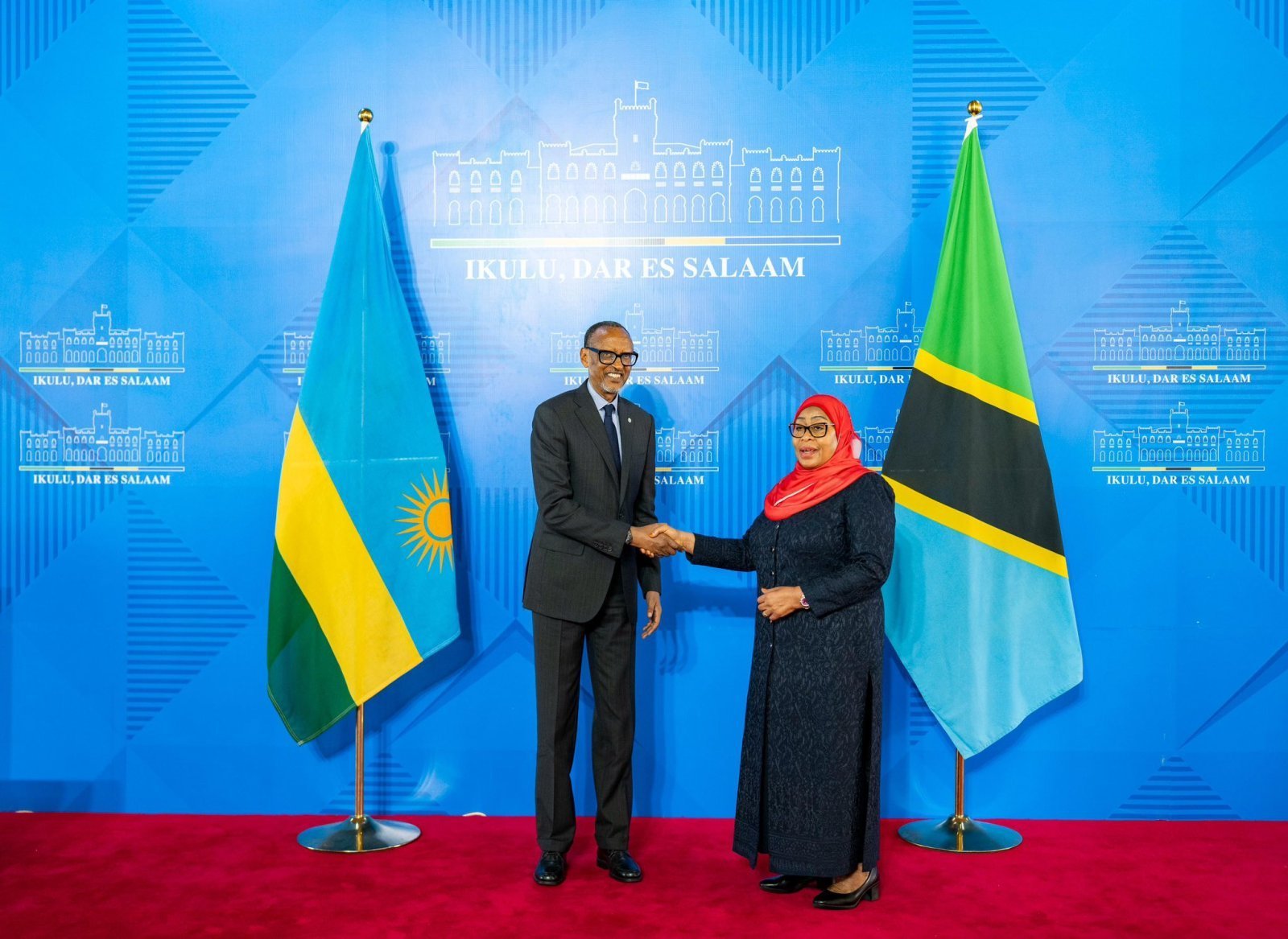
The most important number from President Paul Kagame's May 2026 visit to Dar es Salaam is not the trade volume or the investment figure, though both are significant. It is 70%. According to KT Press, nearly 70% of Rwanda's imports and exports move through Tanzanian infrastructure, primarily the Port of Dar es Salaam and the road and rail networks of the Central Corridor. That single statistic defines the structural character of the Tanzania-Rwanda relationship more precisely than any diplomatic communiqué, because it establishes that Rwanda's external economic connectivity is not merely influenced by Tanzania's infrastructure performance but is fundamentally dependent on it. A landlocked economy routing the majority of its trade through a single gateway partner is not conducting bilateral trade in the conventional sense. It is operating as an inland node within a logistics system whose performance it can influence but whose infrastructure it does not control.
This dependency is the foundation on which the Kagame-Samia agenda in Dar es Salaam was built, and understanding it as a dependency rather than a partnership of equals is the analytical starting point for reading what the visit actually advanced. According to The Respondents, Rwanda has invested over USD 325 million in Tanzania across 42 registered projects spanning manufacturing, services, and logistics, a capital commitment that reflects Kigali's deliberate strategy of embedding Rwandan economic interests within the gateway economy that its external trade depends on. According to KT Press, bilateral trade reached approximately TZS 644 billion in 2025 with consistent year-on-year growth, and Tanzania ranks among Rwanda's top three global trading partners. These are not the indicators of a relationship that either government needs to stimulate. They are the indicators of a relationship that both governments need to systematise, because the infrastructure and policy architecture that currently supports these flows is not yet efficient enough to reflect the economic potential of the corridor it serves.
The non-tariff barrier agenda is worth more than a new road
Both governments committed during the May 2026 visit to eliminating non-tariff barriers and accelerating cross-border coordination, according to SWI Swissinfo's reporting on the bilateral agreements signed in Dar es Salaam. This commitment is routinely recorded in diplomatic coverage as procedural progress and routinely underanalysed in economic terms. Non-tariff barriers, covering border delays, inconsistent product standards, administrative duplication, customs procedure misalignment, and logistics inefficiencies at crossing points, impose a cost on Central Corridor trade that in several documented cases exceeds the cost of formal tariffs by a multiple. According to the World Bank's Africa Trade Policy Notes series, non-tariff barrier costs on East African regional trade corridors have historically added between 10% and 40% to the effective price of goods moving between origin and destination, depending on the specific route and product category. Removing those barriers does not require capital investment at the scale that road or rail infrastructure demands. It requires regulatory alignment, institutional coordination, and political will sustained across multiple budget cycles, all of which are harder to maintain than construction contracts but whose economic return per unit of effort is higher than any comparable infrastructure investment.
The practical significance of this agenda for the Central Corridor specifically is visible in the truck transit time data that the Northern Corridor Transit and Transport Coordination Authority and the Central Corridor Transit Transport Facilitation Agency publish periodically. According to CCTTFA data cited in World Bank corridor performance assessments, average transit times from Dar es Salaam to Kigali have improved over the past decade but remain substantially longer than the physical distance and infrastructure quality would imply if border procedures were efficient. The gap between actual transit time and optimal transit time on the Central Corridor is a measure of the economic value that non-tariff barrier removal would unlock, and at the trade volumes Tanzania and Rwanda are currently moving, closing even a portion of that gap compounds into significant annual cost savings for Rwandan importers and Tanzanian exporters whose competitive position in each other's markets depends partly on logistics cost.
The SGR creates a structural upgrade to the corridor's capacity
The Central Corridor's evolution from a road-dominated route into a multimodal system is the infrastructure dimension of the Tanzania-Rwanda integration agenda that gives the Kagame visit its medium-term economic significance. According to Reuters, Standard Chartered arranged USD 2.33 billion in financing for the expansion of Tanzania's Standard Gauge Railway toward western Tanzania in April 2026, with the SGR designed to connect inland production zones to the Port of Dar es Salaam through a modern rail link whose freight economics are substantially better than road transport at volume. The SGR's western extension, when operational, will reduce the cost per tonne-kilometre of moving goods along the Central Corridor in a way that directly benefits Rwanda's import and export economics, since Rwanda's 70% routing dependency means that corridor cost improvements translate immediately into Rwandan price competitiveness improvements.
Rail freight economics are not merely about cost per kilometre. They are about reliability, load consistency, and the reduction of the damage and spoilage rates that road freight imposes on agricultural and processed goods, which constitute a significant share of the trade moving between Tanzania and Rwanda. According to the Tanzania Railways Corporation's operational projections cited in the Standard Chartered financing documentation, the SGR is designed to carry freight volumes that road infrastructure cannot accommodate at equivalent unit cost, and the corridor's capacity to handle growing trade flows without proportional cost increases is a prerequisite for the trade volume growth that both governments are targeting. Rwanda, as the landlocked partner in this system, has the stronger incentive to see the SGR freight capacity realised quickly, and its investment in Tanzanian logistics and manufacturing infrastructure reflects a strategic recognition that the gateway economy's performance is Rwanda's infrastructure problem as much as Tanzania's.
The Dar es Salaam-Kigali-Nairobi triangle and what each node actually contributes
The Tanzania-Rwanda bilateral relationship exists within a regional architecture that KT Press has described as East Africa's emerging power triangle, connecting Dar es Salaam, Kigali, and Nairobi as the three nodes whose economic policy decisions are increasingly defining the region's trajectory. Each node occupies a structurally distinct position in that triangle, and understanding the division of function is more analytically useful than treating the triangle as a cooperative arrangement among equals.
Tanzania provides scale, natural resources, port access, and the territorial geography through which central African landlocked trade must move. Its USD 87 to 95 billion GDP base, its 57 trillion cubic feet of offshore gas reserves documented by the Tanzania Petroleum Development Corporation, its expanding critical minerals sector, and its SGR investment represent the physical and resource foundation of the triangle. Kenya, as documented in Uchumi360's April 2026 analysis of East Africa's financial hub competition, provides financial depth, institutional infrastructure, and the mobile money ecosystem whose 91% penetration rate according to the Central Bank of Kenya creates the digital payments foundation that regional commerce increasingly depends on. Rwanda contributes execution speed, governance quality, and the coordination efficiency that the Rwanda Development Board's investment facilitation record reflects, with the RDB Annual Report 2025 documenting 799 registered investment projects generating 38,151 projected jobs across priority sectors including agro-processing, textiles, and logistics.
The competitive tension within this cooperative triangle is real and should not be obscured by the diplomatic framing that bilateral visits produce. Tanzania and Kenya are competing for the same regional logistics hub position, with Kenya's Northern Corridor and Tanzania's Central Corridor serving overlapping landlocked markets including Rwanda, Burundi, Uganda, and eastern DRC. Rwanda manages that competition by deepening relationships with both simultaneously, investing in Tanzania's manufacturing and logistics sector while maintaining Kigali's position as the region's governance and coordination benchmark that both corridor operators want to attract as a client. According to KT Press, Rwanda's bilateral engagement with Tanzania is explicitly framed by Rwandan officials as part of a broader strategy of economic corridor positioning rather than simple bilateral trade promotion, which is the analytically more honest framing of what the Kagame visit to Dar es Salaam represented.
Investment flows are the indicator that integration is becoming structural
The direction and composition of investment flows between Tanzania and Rwanda matters more than trade volumes for assessing whether integration is becoming structurally embedded or remaining at the policy commitment stage. According to The Respondents, Rwanda's USD 325 million in investment across 42 registered projects in Tanzania spans manufacturing, services, and logistics, a sectoral spread that reflects investment in productive capacity rather than simply portfolio or real estate exposure. According to Upendo News, Tanzanian firms are active in Rwanda across equivalent sectors, creating the cross-border firm presence that embeds economic relationships in operational reality rather than trade statistics. Investment across borders creates supply chain continuity, production linkages, and long-term capital commitment that makes economic integration self-reinforcing in ways that trade agreements and diplomatic visits cannot replicate, because firms with cross-border assets have a commercial incentive to sustain and deepen the regulatory and logistical environment that protects those assets regardless of the political cycle.
The sectoral alignment that both governments identified as priorities during the May 2026 visit, covering transport, energy, telecommunications, and logistics according to SWI Swissinfo, reflects an understanding of integration logic that goes beyond the commodity trade framing that most East African bilateral agreements produce. These are the enabling layers of trade rather than trade categories themselves, and investment in enabling infrastructure compounds across every sector that uses it. A telecommunications investment that standardises payment systems across the Tanzania-Rwanda border reduces friction for every trader, manufacturer, and logistics operator moving goods across that border simultaneously, which is why the return on enabling layer investment is structurally higher than equivalent investment in specific commodity trade facilitation.
The execution gap is where the agenda will succeed or fail
The policy commitments that emerged from the Kagame-Samia meeting in May 2026 are analytically sound and operationally demanding. Non-tariff barrier elimination requires sustained institutional coordination between customs authorities, standards bodies, and transport regulators in both countries across a timeframe that extends well beyond the political visibility of the visit that produced the commitment. The Central Corridor Transit Transport Facilitation Agency provides the institutional vehicle for that coordination, but its effectiveness depends on the political priority that both governments assign to its mandate when competing budget and regulatory demands arise, as they consistently do in the months and years after high-profile bilateral summits. According to the CCTTFA's own corridor performance reports, the gap between the agency's mandate and its operational achievements reflects the classic implementation challenge of regional coordination institutions: they are given responsibility without the enforcement authority or the dedicated financing that sustained progress requires.
The measurement framework that both governments should commit to publicly is specific and simple: the average transit time for a fully documented truck from Dar es Salaam port to the Rusumo border crossing, and from Rusumo to Kigali, reported quarterly and published by both the CCTTFA and the Rwanda Development Board. That single metric captures more information about the real state of Central Corridor integration than any volume of diplomatic communiqués, because it measures what traders actually experience rather than what governments have agreed to pursue. If that number is falling consistently quarter on quarter, the Tanzania-Rwanda integration agenda is working. If it is stable or rising, the commitments made in Dar es Salaam in May 2026 have not yet translated into the operational reality that a functional economic system requires.
The potential of the Central Corridor as an economic system is not in dispute. Tanzania's port infrastructure, its SGR investment, its natural resource base, and its geographic position as the gateway to central Africa's landlocked markets represent a combination of assets whose development into a high-throughput economic corridor would generate returns for both Tanzania and its landlocked partners that current trade volumes only partially reflect. Rwanda's governance quality, its investment in Tanzanian productive capacity, and its positioning as the corridor's most efficient inland node make it the most commercially serious partner Tanzania has for the Central Corridor development agenda. The question that the May 2026 visit advanced but did not resolve is whether both governments will sustain the institutional investment, the regulatory discipline, and the enforcement consistency that converting a transport route into a functional economic system actually requires, measured not in agreements signed but in minutes saved at the border.
FAQ
What did President Kagame's May 2026 visit to Dar es Salaam actually achieve? Beyond the diplomatic reaffirmation of bilateral ties, the visit produced commitments from both governments to eliminate non-tariff barriers, accelerate cross-border coordination, and prioritise joint investment in transport, energy, telecommunications, and logistics, according to SWI Swissinfo's reporting on the agreements signed. The economic significance lies in the non-tariff barrier agenda, which, if implemented, would reduce the hidden logistics costs that currently constrain Central Corridor trade volumes below their potential.
Why does Rwanda route 70% of its trade through Tanzania?
Rwanda is landlocked, and the Central Corridor through Tanzania offers the most direct route to deep-water port access for a significant share of Rwanda's import and export trade. According to KT Press, approximately 70% of Rwanda's imports and exports move through Tanzanian infrastructure, primarily the Port of Dar es Salaam. This routing dependency makes Tanzania's port performance, customs efficiency, and corridor logistics directly material to Rwanda's trade competitiveness in global markets.
What is the Central Corridor and why does it matter for East Africa?
The Central Corridor is the transport and logistics system connecting the Port of Dar es Salaam through Tanzania to Rwanda, Burundi, and eastern DRC, running via road and increasingly via the Standard Gauge Railway whose western extension is being funded by the USD 2.33 billion facility arranged by Standard Chartered in April 2026, according to Reuters. It is one of two major trade arteries serving East and Central Africa's landlocked markets, competing with Kenya's Northern Corridor for the same freight flows.
How significant is Rwanda's investment in Tanzania?
According to The Respondents, Rwanda has invested over USD 325 million in Tanzania across 42 registered projects spanning manufacturing, services, and logistics. This level of cross-border investment embeds Rwandan economic interests in Tanzania's productive capacity in a way that makes the bilateral relationship structurally self-reinforcing beyond diplomatic agreements, because Rwandan firms with assets in Tanzania have a commercial incentive to sustain the regulatory and logistics environment that protects those assets.
What would successful Central Corridor integration actually look like in practice? The most direct operational measure is the average transit time for a fully documented truck from Dar es Salaam port to Kigali, reported consistently over time. If that number is falling quarter on quarter, the integration agenda is producing real results. If it is stable or rising despite policy commitments, the gap between diplomatic intent and operational delivery that has historically characterised East African regional integration remains unresolved. The CCTTFA publishes corridor performance data that provides the primary measurement framework for tracking this outcome.
 Uchumi360
Business Intelligence
Uchumi360
Business Intelligence
- KT Press, reporting on the Kagame-Samia bilateral meeting and trade figures, May 2026
- Available at ktpress.rw
- The Respondents, reporting on Rwandan investment in Tanzania, May 2026
- Available at therespondents.co.tz
- SWI Swissinfo, reporting on Tanzania-Rwanda sectoral agreements, May 2026
- Reuters, reporting on Standard Chartered's USD 2.33 billion SGR financing facility, April 2026
- Available at reuters.com
- Upendo News, reporting on President Kagame's arrival in Tanzania, May 2026
- Available at upendomedia.co.tz
- World Bank, Africa Trade Policy Notes, non-tariff barrier cost estimates on East African corridors
- Central Corridor Transit Transport Facilitation Agency, corridor performance reports
- Rwanda Development Board, RDB Annual Report 2025
- Investment project and employment projection data
- Tanzania Petroleum Development Corporation, gas reserve documentation
- 57 trillion cubic feet figure cited as established context from prior Uchumi360 LNG article
- Central Bank of Kenya, mobile money penetration data
- 91% figure cited from prior Uchumi360 financial hub analysis
Uchumi360 covers business, investment, and economic policy across East, Central, and Southern Africa.
For the serious reader
You read to the end. That places you in a small group.
Uchumi360 is built for readers who demand precision over speed, structure over sentiment, and analysis that holds uncomfortable conclusions rather than softening them. If this work sharpens how you think about Africa's economy, help us keep building the infrastructure behind it.
Institutional Partners
Commission intelligence. Shape the conversation.
Uchumi360 works with development finance institutions, investment firms, sovereign bodies, and strategic organisations across the coverage region. Institutional partnership unlocks:
- Commissioned sector and country intelligence reports
- Branded research series under your institution's authority
- Exclusive data briefings for internal strategy teams
- Speaking and editorial presence at Uchumi360 events
- Co-published investment outlooks for your markets
Support Our Work
Independent analysis has a cost. Help us bear it.
Uchumi360 does not carry advertising. It does not take editorial direction from sponsors. Every article is produced without commercial compromise. Your contribution funds the reporting, research, and editorial infrastructure that keeps this analysis free from influence.
Secure checkout: One-time and monthly support are processed securely. Add payment credentials to enable checkout here.
Stay Connected
Keep up with every new insight.
Follow our latest analysis, policy coverage, and market intelligence as soon as it is published. If you need something specific, reach out directly and we will point you to the right research.
