
10 Years Of Tanzania's Mobile Wars: Who Won, Who Lost And How The Market Changed
Ready
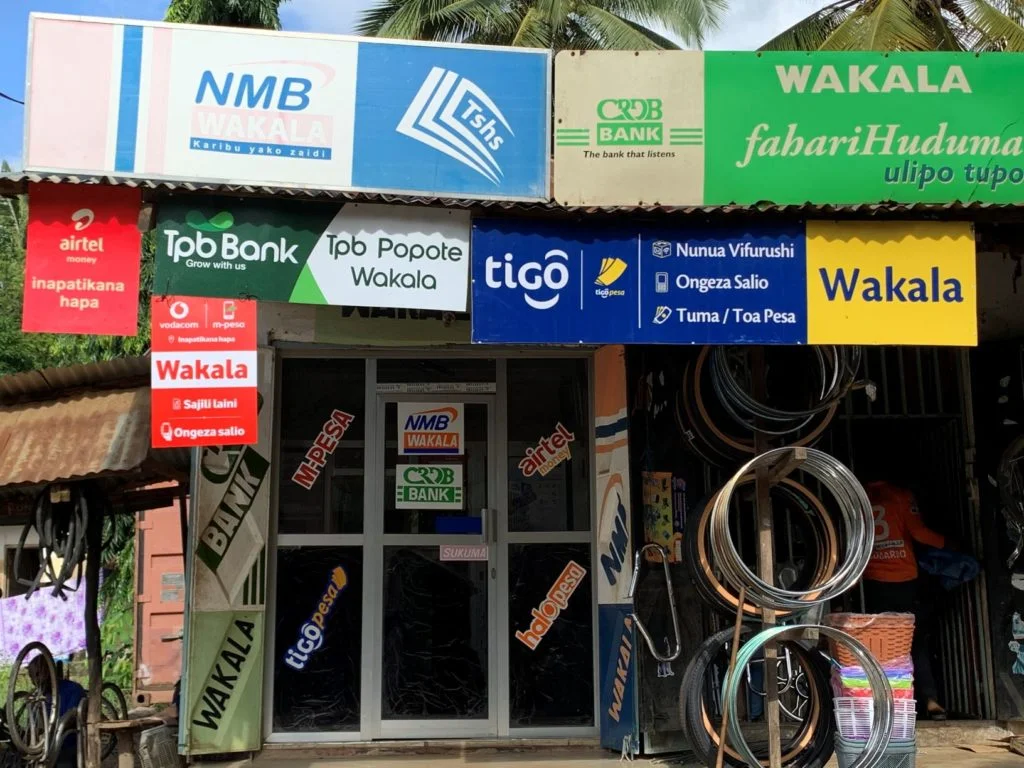
Tanzania's telecom subscriber base roughly tripled between 2015 and 2026, from around 40 million to 117 million, while the number of real network operators fell from seven to five as Zantel was absorbed into Tigo and Smile/Smart faded out. Vodacom held the top spot throughout the decade, but its lead narrowed as Halotel, a 2015 market entrant, grew into the fourth-largest operator. The two moments that most changed how Tanzanians actually use their phones weren't competitive launches: they were the 2020 biometric SIM registration drive, which deactivated over 650,000 lines overnight, and the 2021 mobile money levy, which cut peer-to-peer mobile money transactions by 38% in three months. Tigo's ownership churn, sold by Millicom to Axian in 2022, rebranded to Yas in 2024, shows that brand and ownership changed hands more than market position did.
Rank Tanzania's mobile operators today and you get a fairly boring list: Vodacom first, Yas second, Airtel third, Halotel fourth, TTCL a distant fifth. What's more interesting is that this order has barely moved since around 2018, even though almost every name on it has changed. Tigo became Yas. Zantel disappeared into Tigo. Halotel didn't exist at all in 2014. And the biggest swings in how people actually used their phones came not from any operator's marketing but from two government interventions three years apart.
This is an attempt to reconstruct that decade from Tanzania Communications Regulatory Authority (TCRA) data and public record, and to ask a sharper question than "who's winning now": which events actually changed the structure of the market?
The starting point: 2015
At the start of the period, Tanzania had roughly 40 million mobile subscriptions and 79% teledensity, following five years in which mobile subscriptions had grown 89%, from about 21 million in 2010. It was already the second-largest telecoms market in East Africa behind Kenya. Landline subscriptions, by contrast, were shrinking fast over the same five years, a preview of how thoroughly mobile would eclipse fixed infrastructure.
Seven or eight operators were competing for that base: Vodacom, Tigo, Airtel, TTCL, Zantel, plus smaller players Smile and Smart. Two events that year would define the next decade.
First, in June 2015, Millicom (Tigo's parent) announced it was buying an 85% stake in Zanzibar's Zantel from Etisalat, the start of a process that eventually merged the two networks' operations. Second, in October 2015, Vietnam's Viettel launched Halotel, the market's most consequential new entrant in a decade, and the first operator permitted to build its own fibre-optic infrastructure in Tanzania.
Tigo also opened the country's 4G era that April, ahead of every rival, switching on LTE in Dar es Salaam's Masaki and Mlimani City areas with a wider rollout planned for later that year. Vodacom, Zantel and TTCL followed with their own LTE rollouts over the next two years, while Airtel and Halotel lagged well behind, Airtel wouldn't launch 4G until a provisional licence in November 2019.
2016–2019: consolidation and a slow 4G rollout
Tigo used its early-mover advantage to overtake Airtel as Tanzania's second-largest operator by 2016, a position it never relinquished under any of its later names. Zantel's absorption into Tigo dragged on for years, Millicom didn't secure full ownership and complete the operational merger until around 2019–2020, combining the two companies' operations across both mainland Tanzania and Zanzibar.
4G coverage, meanwhile, spread unevenly and slowly. By 2019, networks reached only about 28% of Tanzania's population, well behind Rwanda (99%), Kenya (61%) and the Sub-Saharan African average of 43%. Spectrum auctions became the real battleground: Vodacom secured 700 MHz spectrum in 2018 with an obligation to cover 60% of the population by 2021, while Airtel didn't secure a proper 4G licence until 2020, when it agreed to pay the government USD 12 million and double its site count.
By December 2018, the whole market had grown to roughly 43.5 million mobile subscribers, 80.8% penetration, with internet subscriptions still comparatively small at 22.3 million, 41.4% penetration. That gap between telecom penetration and internet penetration, more than double, is worth remembering: it's roughly the same gap, at a much larger scale, that persists in 2026.
2020: the year regulation, not competition, moved the market
If one year deserves to be called the structural hinge of the decade, it's 2020. In February that year, new biometric SIM registration rules came into force, requiring every subscriber to link their line to fingerprint data via the national ID system.
The deadline landed hard. On 20 January 2020, TCRA announced that 656,091 mobile users had had their SIM cards deactivated after the biometric registration deadline lapsed. Vodacom alone absorbed a large share of that shock, losing roughly 2.5 million blocked customers, though its revenue kept rising on the back of data and M-Pesa growth.
This is the clearest evidence that Tanzania's subscriber counts don't move in a straight line; they can drop sharply on a single regulatory date, then recover. No operator's marketing campaign in the decade caused a comparable single-quarter swing.
2020 was also the year 5G arrived, years ahead of most of the continent, with Vodacom first to switch it on, in September 2020. It would be more than five years before a second operator matched that milestone at scale; Halotel launched nationwide 5G only in early 2026, capping a decade of infrastructure investment that included more than 18,000 km of fibre and connections to 1,500 previously unserved villages.
2021: the levy that actually changed behaviour
If SIM registration was a supply shock, the mobile money levy introduced in July 2021 was a demand shock, and by most measures the single most disruptive event of the decade for how Tanzanians actually used digital services. The government imposed a tax of between TZS 10 and TZS 10,000 on mobile money transfers and withdrawals, on top of existing VAT and excise duty.
The response was immediate and severe. Between June and September 2021, total peer-to-peer mobile money transactions fell from around 30 million to 18 million per month, a 38% decline while cash-out transactions dropped roughly 25%. Vodacom's own numbers told the same story from the operator side: its mobile money customer count fell 17% over the same three months, and M-Pesa transaction value dropped nearly 25% across 2021 as a whole.
Public pressure forced a partial reversal, the levy was cut by 30% that September, and cut again in 2022, but the episode demonstrated something no competitive dynamic between operators ever had: a single tax policy could move usage more than a decade of operator rivalry. Tanzania's mobile money base didn't stop growing after 2021, but the growth rate visibly cooled, and the shock exposed how price-sensitive even "sticky" digital financial habits really are.
2022–2024: an owner leaves, a brand disappears
Millicom, Tigo's Luxembourg-listed parent, had been quietly exiting Africa for years, selling operations in the DRC, Ghana and elsewhere to focus on Latin America. Tanzania was its last African market, and the exit was announced in April 2021 and completed a year later, when Millicom sold the business to a consortium led by pan-African group Axian for roughly USD 100 million in net cash. At the point of sale, Tigo was Tanzania's third-largest operator by subscribers, holding just over 26% of the market, narrowly behind Airtel's 27% and Vodacom's 29.4%.
Axian, backed by Tanzanian businessman Rostam Aziz, kept the Tigo name for two and a half years before folding it into a pan-African rebrand. In November 2024, Tigo Tanzania became Yas, with its mobile financial services arm, Tigo Pesa, renamed Mixx by Yas, as part of Axian's strategy to unify its subsidiaries' branding across the continent. Airtel, meanwhile, kept building out capacity it had been slow to acquire earlier in the decade, picking up an additional 140 MHz of spectrum across the 2600 MHz band in October 2022.
What's notable is what didn't change through all this ownership churn: Tigo/Yas's market position. The company holding roughly 26–29% of subscriptions in 2021 was, under a new name and new owner, still holding a similar 28–29% share four years later.
2025–2026: the market triples, the ranking barely moves
The most recent stretch is the best-documented, thanks to TCRA's regular quarterly reporting. The trajectory is striking:
| Period | Telecom subscriptions | Internet subscriptions | Leading operator (share) |
| Dec 2015 | ~39.8 million | — | Vodacom |
| Sept 2018 | ~43 million | — | Vodacom |
| Dec 2018 | 43.5 million | 22.3 million | Vodacom |
| Dec 2024 | 86.8 million | 48.0 million | Vodacom |
| Mar 2025 | 90.4 million | 49.3 million | Vodacom (31.9%) |
| Jun 2025 | 92.7 million | 54.1 million | Vodacom |
| Sept 2025 | 99.3 million | 56.3 million | Vodacom |
| Dec 2025 | 106.9 million | 58.1 million | Vodacom |
| Jun 2026 | 117.0 million | 62.8 million | Vodacom (33.0%) |
By March 2025, the market-share order was already set as it stands today, with Vodacom on 31.9%, Yas on 28.5% and Airtel on 23.0%, none of them close to the 35% threshold TCRA treats as the marker of a dominant operator. Fifteen months later, per TCRA's most recent report, the order was identical: Vodacom 33.0%, Yas 28.6%, Airtel 20.5%, Halotel 16.4%, TTCL 1.5%, with only the gaps between operators shifting slightly, mostly in Halotel's favour.
 Tanzania Mobile Money account growth year on year between 2015-2025
Mobile money followed a similar pattern of enormous absolute growth without much reordering: subscriptions rose from 63.2 million in December 2024 to 87.05 million by June 2026, with M-Pesa, Mixx by Yas and Airtel Money consistently controlling around 89% of the market between them, in roughly the same order, the whole way through.
So who actually changed the market's structure?
Rank the decade's events by how much they actually moved the numbers, rather than by how much attention they got, and a clear pattern emerges. The biggest single-quarter shocks weren't competitive at all; they were regulatory: the 2020 SIM registration deadline, which erased over 650,000 lines and 2.5 million Vodacom customers in one stroke, and the 2021 mobile money levy, which cut peer-to-peer transactions by more than a third in three months. Nothing any operator did to a rival came close to that kind of immediate, measurable impact.
Among the operators themselves, three distinct roles stand out. Vodacom was the anchor, first to 4G-grade spectrum, first to 5G, first by subscriber count every single quarter for a decade, yet never once crossing the 35% share regulators treat as market-dominant. Halotel was the disruptor that actually grew the pie, a 2015 entrant with zero subscribers that became the fourth-largest operator by building fibre and towers into places incumbents hadn't bothered to reach, rather than by undercutting them in cities they already served. And Tigo/Yas was proof that ownership and branding are almost decorative next to market position: sold by a Luxembourg multinational to a Malagasy-Tanzanian consortium, stripped of its name entirely, and it barely lost a percentage point of share doing it.
TTCL and Zantel tell the opposite story. TTCL, the state operator, has spent a decade hovering around 1–2% of the market despite consistent government backing, proof that ownership alone doesn't buy relevance. Zantel didn't lose a competitive battle; it was absorbed, its brand retired into Tigo's operations by 2020, one of the clearest examples of consolidation actually reducing the number of real choices available to Tanzanian consumers, from around seven meaningful operators in 2015 to five today.
The picture that emerges is less "mobile wars" and more managed equilibrium: a market where the pecking order was largely locked in by 2018, where absolute growth has been extraordinary, roughly tripling in a decade and where the real turning points came from Dodoma, not from any operator's boardroom.
What this reconstruction doesn't cover
This account draws on TCRA's published quarterly reports, company disclosures and industry press rather than a full archive of every quarterly filing since 2015; TCRA's quarter-by-quarter operator-level breakdowns for 2015–2021 aren't all readily available in one place, so some of the middle years above are anchored on annual or year-end snapshots rather than a continuous quarterly series. A fuller reconstruction, pulling every available TCRA quarterly report to chart operator-by-operator share on a true quarter-by-quarter basis, and pinning down exact dates for smaller shifts, would sharpen several of the transitions described here, particularly the pace of Halotel's climb and the precise quarter Tigo/Yas's share began to narrow against Vodacom's.
FAQ
Who has the largest market share in Tanzania's mobile market? Vodacom, consistently, for at least the past decade. As of June 2026, it held 33.0% of subscriptions, per TCRA.
What happened to Tigo? Millicom, Tigo's Luxembourg-based owner, sold the Tanzanian business to a consortium led by Axian Telecom in 2022. The company kept the Tigo name until November 2024, when it rebranded to Yas as part of Axian's pan-African branding strategy; Tigo Pesa became Mixx by Yas.
What happened to Zantel? Zantel was acquired in stages by Tigo's parent, Millicom, starting with an 85% stake in 2015. The two companies fully merged their operations by around 2020, and Zantel effectively ceased to exist as a separate brand.
Why did mobile money usage drop in 2021? The Tanzanian government introduced a levy on mobile money transfers and withdrawals in July 2021. Peer-to-peer transactions fell 38% within three months, prompting the government to cut the levy by 30% that September and again in 2022.
When did 5G launch in Tanzania? Vodacom was first, in September 2020. Halotel became the most recent major operator to launch a nationwide 5G network, in early 2026.
 Uchumi360
Business Intelligence
Uchumi360
Business Intelligence
- Tanzania Communications Regulatory Authority (TCRA) quarterly Communications Sector Performance Reports (2022–2026)
- TanzaniaInvest
- Millicom International Cellular investor releases
- The Citizen (Tanzania)
- Developing Telecoms
- Connecting Africa
- GSMA
- Business Insider Tanzania
- Wikipedia (List of mobile network operators in Tanzania)
Uchumi360 covers business, investment, and economic policy across East, Central, and Southern Africa.
For the serious reader
You read to the end. That places you in a small group.
Uchumi360 is built for readers who demand precision over speed, structure over sentiment, and analysis that holds uncomfortable conclusions rather than softening them. If this work sharpens how you think about Africa's economy, help us keep building the infrastructure behind it.
Institutional Partners
Commission intelligence. Shape the conversation.
Uchumi360 works with development finance institutions, investment firms, sovereign bodies, and strategic organisations across the coverage region. Institutional partnership unlocks:
- Commissioned sector and country intelligence reports
- Branded research series under your institution's authority
- Exclusive data briefings for internal strategy teams
- Speaking and editorial presence at Uchumi360 events
- Co-published investment outlooks for your markets
Support Our Work
Independent analysis has a cost. Help us bear it.
Uchumi360 does not carry advertising. It does not take editorial direction from sponsors. Every article is produced without commercial compromise. Your contribution funds the reporting, research, and editorial infrastructure that keeps this analysis free from influence.
Secure checkout: One-time and monthly support are processed securely. Add payment credentials to enable checkout here.
Stay Connected
Keep up with every new insight.
Follow our latest analysis, policy coverage, and market intelligence as soon as it is published. If you need something specific, reach out directly and we will point you to the right research.
