Chery's Rwandan Assembly Agreement and the Test of Whether a Landlocked Economy Can Convert Chinese Automotive Relocation Into Regional Industrial Capacity
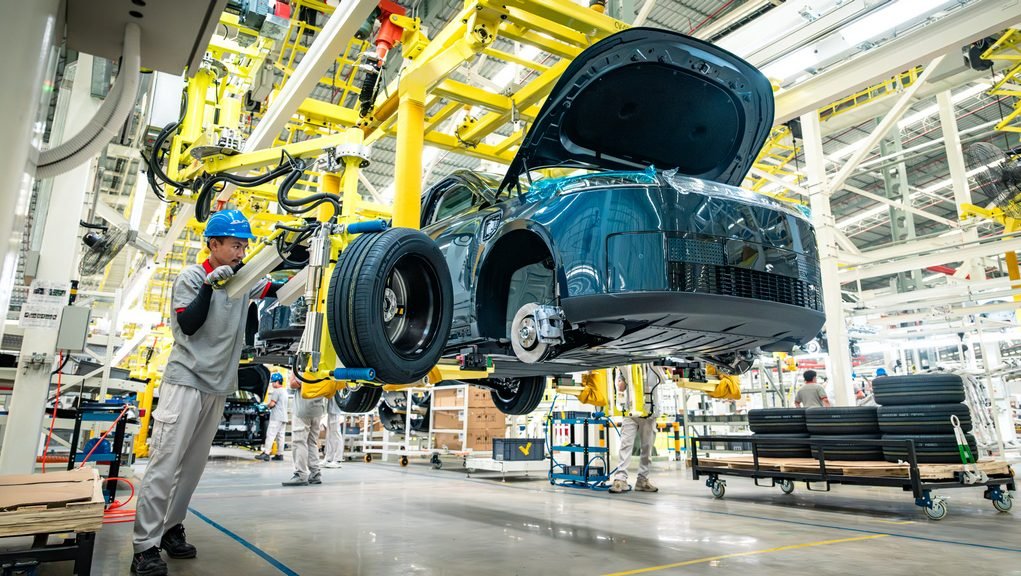
The Cabinet approval on 18 September 2026 of a Strategic Investment Agreement between the Government of Rwanda and Chery Holding Rwanda Ltd extends a sequence of Chinese automotive relocation decisions that has already reached Pretoria, Nairobi, Cairo and Addis Ababa, and it arrives at a moment when China's domestic vehicle market is contracting while its export volumes, at 5.096 million units in the first half of 2026, expand at a pace without recent precedent. African automotive policy has historically oscillated between dependence on used-vehicle imports and low-volume semi-knocked-down assembly, of which Volkswagen's Kigali facility, launched in 2018, remains the nearest local precedent, and neither model produced durable supplier ecosystems outside South Africa, Morocco and Egypt. The structural shift lies in the fact that Chinese manufacturers, facing trade barriers in Europe and North America, are now using local assembly to secure market access, compress logistics costs and align with host-country industrial policy, which converts governments with credible investment frameworks into bargaining counterparties rather than passive export destinations. For Rwanda, the agreement follows the April 2025 memorandum between the Rwanda Development Board and Chery Holding Group, the April 2026 meeting between President Paul Kagame and Chery's vice president and board secretary Xu Hui, and the Ministry of Infrastructure's directive that public institutions procure at least 30 per cent fully electric vehicles, a sequence that suggests demand-side policy and supply-side investment promotion are being deliberately synchronised. The published resolutions disclose no investment value, site, capacity or timeline, and the indicative $39.25 million and 2,000 direct jobs in RDB's electric-car assembly material cannot be attributed to Chery, which places the analytical weight on institutional design rather than announced figures. Ethiopia's prohibition on fossil-fuel vehicle imports and its 17 operating assembly plants, Kenya's CKD partnerships, Uganda's state-backed Kiira Motors programme and Tanzania's import-oriented vehicle market define the regional field in which Rwanda's proposition will be priced. The question that determines the outcome is whether a domestic market of roughly 14 million people, a landlocked supply chain and a modest grid can be converted, through EAC market access, local content rules and supplier development, into a platform that Chery treats as a regional production node rather than a showroom with a workshop attached.