
SabaSaba at 50: Can Tanzania's Biggest Trade Fair Become East Africa's Most Important Business Marketplace?
Ready
SabaSaba has grown into East Africa's largest annual trade exhibition, but size and attendance are not the same as economic impact. This article argues that the fair's next phase requires a deliberate shift from exhibition to commercial infrastructure, measured by export contracts signed, investment deals closed, and regional supply chain relationships formed rather than by visitor numbers. Three structural changes, mandatory business matching, post-fair tracking of commercial outcomes, and integration with AfCFTA market access mechanisms, would determine whether the Golden Jubilee marks a turning point or just a milestone.
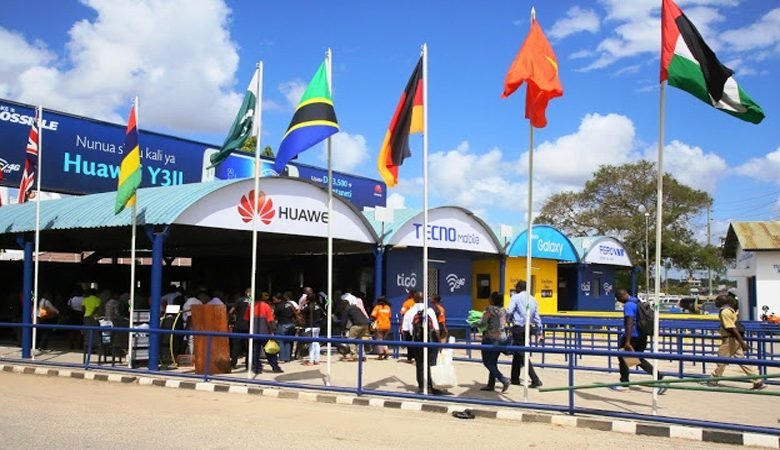
DAR ES SALAAM — Every July, the Dar es Salaam International Trade Fair fills Mnazi Mmoja grounds with millions of visitors, thousands of exhibitors, and enough noise to make it feel like the centre of Tanzania's commercial universe. For five decades, SabaSaba has been exactly that: the country's most visible annual economic event, a shop window for local industry and a signal to foreign companies that Tanzania is open for business.
This year's Golden Jubilee edition is the largest in the fair's history. More than 3,700 exhibitors from over 23 countries are expected to participate. China alone is sending more than 200 companies, according to IPP Media, a figure that reflects both the depth of China-Tanzania commercial ties and the fair's growing international profile.
The milestone deserves recognition. What it should not trigger is a self-congratulatory pause.
The question the attendance numbers do not answer
Visitor counts and exhibitor numbers measure interest. They do not measure economic output. A trade fair that attracts three million visitors but generates no export contracts, no investment commitments, and no lasting commercial relationships is a successful public event and an underwhelming economic instrument.
This distinction is not academic. It is the difference between a festival and infrastructure.
The world's most commercially significant exhibitions are not defined by their crowds. Canton Fair in Guangzhou processes over USD 30 billion in export orders across two sessions annually. Hannover Messe generates billions in technology licensing and industrial partnership agreements. GITEX Global has become the primary venue where global technology companies structure their Middle East and Africa market entry strategies. These events are measured by what leaves with the exhibitors, not by what fills the halls during opening week.
SabaSaba is not yet in that category. The question at 50 is whether it has the intention, and the structural design, to get there.
What Tanzania's geography makes possible
The geographic argument for Tanzania hosting a significant regional trade platform is not promotional language. It is a logistics reality.
Dar es Salaam sits at the head of the Central Corridor, the primary trade route connecting the Indian Ocean to Rwanda, Burundi, Uganda, eastern DRC, Zambia, and Malawi. The Port of Dar es Salaam handled over 32 million tonnes of cargo in FY2024/25. The Standard Gauge Railway carried 102,452 tonnes of freight in nine months of FY2025/26. The corridor's landlocked hinterland represents over 300 million consumers whose import and export needs pass through Tanzania's logistics infrastructure.
A trade fair positioned on that corridor, at the gateway to those markets, has a natural buyer-seller matching function that exhibitions in less geographically strategic locations cannot replicate. Rwandan coffee exporters looking for Chinese buyers, Congolese mining equipment importers seeking competitive suppliers, Zambian agricultural processors looking for regional distributors — these are the commercial relationships that SabaSaba's location could facilitate, if the event is structured to do so.
TanTrade describes SabaSaba as a commercial gateway for East, Central, and Southern Africa. The description is geographically accurate. The event's current structure does not yet fully operationalise it.
Where value actually gets created
A modern trade exhibition creates durable economic value through four mechanisms, none of which is visitor attendance.
The first is transactional. Companies leave with purchase orders, distribution agreements, and export contracts. This requires structured buyer-seller matching before the event, meeting scheduling infrastructure during it, and contract facilitation support throughout.
The second is investment facilitation. Foreign investors use trade fairs to identify local partners, assess market conditions, and initiate due diligence. Tanzania's investment pipeline, with TISEZA approving over 900 manufacturing projects in 2025, gives SabaSaba genuine investment conversations to host. The question is whether those conversations are happening in structured sessions or in corridor exchanges that evaporate after the fair closes.
The third is technology diffusion. For Tanzanian SMEs, physical exposure to production technologies, packaging standards, quality systems, and digital commerce tools can shift competitiveness in ways that advisory programmes cannot. The fair's scale creates a concentrated learning environment whose value is only captured if exhibitors are curated for technology demonstration rather than simply for product display.
The fourth is market intelligence. Observing competitors, understanding buyer preferences, and mapping regional supply chains are legitimate commercial activities that a well-designed exhibition concentrates into a few days. Whether SabaSaba currently delivers this systematically, or whether it is visible to individual firms willing to do their own analysis, is an open question.
The SME problem at the centre of the argument
Tanzania's manufacturing sector employed 397,953 workers in 2025 and contributed 5.9 percent of GDP, below the Vision 2050 target trajectory. The sector's growth constraint is not primarily production capacity. It is market access: the ability of Tanzanian manufacturers to find regional and international buyers at commercial scale.
SabaSaba is theoretically the event where that market access gap closes. A Tanzanian textile manufacturer who cannot afford a trade mission to Germany can, for the cost of exhibition space, put products in front of European importers, regional distributors, and government procurement officers simultaneously.
That potential is real. Whether it is being realised is harder to verify, because SabaSaba does not, to our knowledge, publish data on commercial outcomes. How many export contracts were signed at the 2025 fair? How many investment discussions initiated at SabaSaba converted to registered projects at TISEZA? How many SMEs who exhibited in 2024 reported sustained new commercial relationships twelve months later?
Without that data, the fair cannot honestly assess whether it is creating economic value or curating economic activity that would have occurred anyway.
What structural change looks like
Three changes would materially shift SabaSaba from exhibition to commercial infrastructure.
The first is mandatory business matching with tracked outcomes. Exhibitors should be required to complete buyer or seller profiles before registration closes. TanTrade should operate a meeting scheduling system that connects international buyers with Tanzanian exporters before the fair opens. Meetings held should be logged. Outcomes should be followed up at 90 days and 12 months. The data should be published.
The second is integration with AfCFTA market access mechanisms. The African Continental Free Trade Area creates preferential market access for Tanzanian goods across 54 countries. SabaSaba is the natural annual venue where AfCFTA-eligible exporters meet AfCFTA-market buyers. This requires working with the AfCFTA Secretariat and the Pan-African Payment and Settlement System to embed trade facilitation tools into the fair's commercial infrastructure.
The third is investment deal-flow formalisation. TISEZA, TIC, and TanTrade should jointly publish an annual SabaSaba investment prospectus before the fair, listing specific investment opportunities with project briefs, land availability, infrastructure readiness, and financial projections. International investors attending the fair should have structured access to project owners and government counterparts. Commitments made should be tracked against registration and groundbreaking timelines.
None of this is complex. It is the standard operating architecture of fairs that have made the transition from exhibition to marketplace. The question is whether SabaSaba's organisers have the mandate and the budget to implement it.
The competition Tanzania should be watching
East Africa currently has no single annual commercial event that functions as a definitive regional marketplace. That gap will not remain open indefinitely.
Kigali is building convention and meetings infrastructure at scale. The Kigali Convention Centre and BK Arena have positioned Rwanda as East Africa's MICE capital, and Rwanda's investment in aviation connectivity through Bugesera International Airport is designed to make Kigali easier to reach than Dar es Salaam for some source markets.
Nairobi hosts numerous sector-specific investment forums and has the advantage of being the regional headquarters for more multinational companies than any other East African city.
If SabaSaba does not evolve into a genuine commercial platform, something else will. The region's trade volume is growing, AfCFTA is reducing barriers, and the demand for a regular, high-quality venue where regional commercial relationships are built is real and rising.
Tanzania has the fair, the location, the infrastructure investment, and the political will to fill that gap. The 50th anniversary is the right moment to decide whether to build it.
The verdict at 50
Five decades of SabaSaba have built something genuinely valuable: an annual commercial event with scale, international participation, and national significance that no other East African country has replicated. That foundation is not trivial.
The next phase requires a harder question than the Golden Jubilee encourages. Not: how many exhibitors attended? But: how much trade did they generate, how many investments did they catalyse, and how many Tanzanian manufacturers left with orders that changed their revenue trajectory?
When SabaSaba can answer those questions with published data, it will have become what Tanzania's economy needs it to be.
FAQ
What is SabaSaba and why does it matter? SabaSaba is Tanzania's annual Dar es Salaam International Trade Fair, held each July since 1976. In its 50th year it hosts over 3,700 exhibitors from 23 countries. It is East Africa's largest annual trade exhibition and one of Tanzania's most significant commercial events, but its economic impact beyond attendance has not been systematically measured or published.
How does SabaSaba compare to global trade fairs? By exhibitor count and visitor numbers, SabaSaba is large for Africa. By commercial output, specifically export contracts signed, investment commitments made, and partnerships formed, it has not yet developed the tracking systems or structural business matching that would allow a direct comparison to Canton Fair, Hannover Messe, or GITEX. Those fairs measure their value by transaction volume. SabaSaba currently measures its value by attendance.
What would make SabaSaba a genuine regional trade platform? Three structural changes matter most: mandatory business matching with tracked commercial outcomes, integration with AfCFTA market access tools to facilitate cross-border trade, and a published investment prospectus that connects foreign investors with specific Tanzanian project opportunities before the fair opens. None requires new infrastructure. All require institutional commitment to measuring commercial outcomes rather than visitor numbers.
Why is Tanzania well-positioned to host a major regional trade event? Tanzania sits at the head of the Central Corridor connecting the Indian Ocean to Rwanda, Burundi, Uganda, eastern DRC, Zambia, and Malawi. The Port of Dar es Salaam is the primary import-export gateway for those landlocked economies. The SGR Central Corridor is improving freight economics. No other East African city combines this geographic position with an established annual trade fair of SabaSaba's scale.
Who exhibits at SabaSaba? The fair attracts Tanzanian manufacturers, SMEs, financial institutions, government agencies, and international companies across consumer goods, agriculture, manufacturing, technology, and services. China is the largest single foreign participant, with over 200 companies expected in 2026. More than 23 countries are represented in total.
 Uchumi360
Business Intelligence
Uchumi360
Business Intelligence
Uchumi360 covers business, investment, and economic policy across East, Central, and Southern Africa.
For the serious reader
You read to the end. That places you in a small group.
Uchumi360 is built for readers who demand precision over speed, structure over sentiment, and analysis that holds uncomfortable conclusions rather than softening them. If this work sharpens how you think about Africa's economy, help us keep building the infrastructure behind it.
Institutional Partners
Commission intelligence. Shape the conversation.
Uchumi360 works with development finance institutions, investment firms, sovereign bodies, and strategic organisations across the coverage region. Institutional partnership unlocks:
- Commissioned sector and country intelligence reports
- Branded research series under your institution's authority
- Exclusive data briefings for internal strategy teams
- Speaking and editorial presence at Uchumi360 events
- Co-published investment outlooks for your markets
Support Our Work
Independent analysis has a cost. Help us bear it.
Uchumi360 does not carry advertising. It does not take editorial direction from sponsors. Every article is produced without commercial compromise. Your contribution funds the reporting, research, and editorial infrastructure that keeps this analysis free from influence.
Secure checkout: One-time and monthly support are processed securely. Add payment credentials to enable checkout here.
Stay Connected
Keep up with every new insight.
Follow our latest analysis, policy coverage, and market intelligence as soon as it is published. If you need something specific, reach out directly and we will point you to the right research.
