
Tanzania Has Built the Factories. Now It Needs to Stop Importing the Products Those Factories Already Make.
Ready
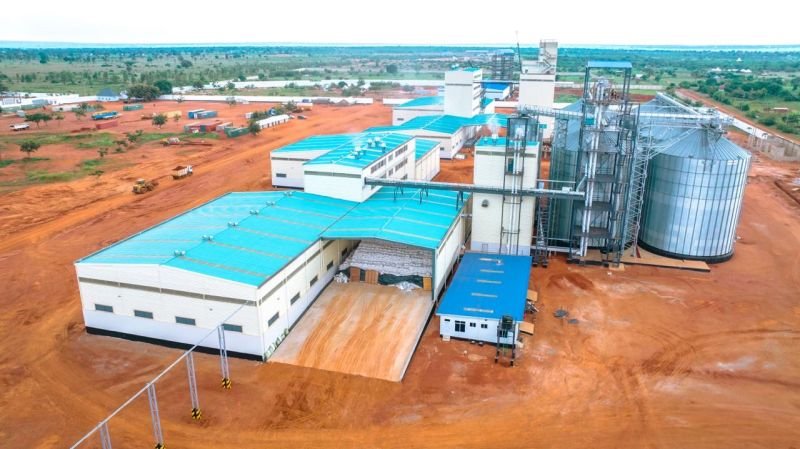
Tanzania has built substantial manufacturing capacity in soap, cooking oil, processed foods, pharmaceuticals, furniture, timber products, packaging, construction materials, and consumer goods, yet continues importing significant volumes of these same products, exporting jobs, foreign exchange, and industrial capability in the process. The solution is not a blanket import ban but a Local Content and Domestic Procurement Act that identifies categories with sufficient domestic production capacity and progressively prioritises locally manufactured alternatives through government procurement requirements, retail sourcing ratios, and project input incentives. AI-powered compliance monitoring can track customs declarations, procurement records, tax filings, and supply chain transactions at a scale that makes enforcement practically achievable for the first time. Companies exceeding local sourcing targets would receive accelerated tax deductions, reduced machinery import duties, and preferential government contract access. Persistent circumvention would face financial penalties and procurement restrictions. Tanzania's development trajectory has three phases: infrastructure, which is substantially delivered; industrialisation, which is underway through TISEZA's manufacturing investment acceleration; and industrial scale, which requires not more factories but more customers for the factories already built. No country has successfully industrialised by relying on imported consumer goods while expecting domestic manufacturers to emerge organically. Markets create national champions when policy, capital, infrastructure, and demand align simultaneously. Tanzania has the capital and the infrastructure. It needs the demand policy. Tanzania does not need to stop importing. It needs to stop importing what it already knows how to make. That distinction is the entire argument.
DAR ES SALAAM — Tanzania has a manufacturing problem that is not about manufacturing.
Over the past two decades, the country has invested billions of shillings building domestic production capacity across categories that once arrived exclusively through the Port of Dar es Salaam. Local firms now manufacture soap and detergents, cooking oil, sugar, beverages, textiles, cement, pharmaceuticals, plastics, furniture, steel products, packaging materials, and a wide range of consumer goods whose domestic production Uchumi360's industrial coverage has documented as the foundation of the manufacturing economy that Vision 2050 requires.
The factories exist. The production lines are running. The workers are employed. The TISEZA manufacturing investment acceleration, confirmed by Director General Gilead Teri at over 900 project approvals in 2025 and running at one new factory per day through 2024, describes an economy whose industrial investment pace has been genuinely impressive by regional and continental standards.
And yet Tanzania continues importing significant volumes of the same products those factories already make.
Every imported bar of soap competing with a Tanzanian-made alternative is a sale the domestic manufacturer did not make. Every imported bottle of cooking oil is foreign exchange that left the country rather than staying in the value chain where it was created. Every imported pharmaceutical that domestic manufacturers could supply is a patient treated with a product whose production employment, tax revenue, and industrial learning accrued to another country's economy.
Tanzania has built the factories. It has not yet built the market conditions those factories need to reach the scale that makes them globally competitive. That is the third stage of the industrialisation challenge, and it is a policy problem rather than a manufacturing problem.
The industrialisation trap that every successful economy has navigated
The development economics literature is unusually consistent on the question of how industrial economies actually emerged versus how liberal trade theory suggests they should have emerged.
South Korea did not build Samsung by immediately exposing it to unrestricted global competition from established consumer electronics manufacturers. It built Samsung through a combination of procurement preferences, market protections, export incentives, and directed credit that gave domestic firms the volume they needed before they could achieve the scale efficiencies that made them globally competitive. Samsung today competes and wins against Sony, Apple, and every other consumer electronics manufacturer on global markets. It reached that position through a protected domestic market that provided the demand base whose scale made the investment in technology and quality economically rational.
China did not become the world's manufacturing centre by allowing unlimited imports of every consumer product during the critical phases of its industrial development. It became the manufacturing centre through a combination of local content requirements, procurement preferences, import restrictions in specific categories, currency management, and state-directed industrial policy whose application shifted as each sector achieved the competitiveness that justified its exposure to global competition.
Ha-Joon Chang's historical documentation in Kicking Away the Ladder is the most rigorous available analysis of how this pattern has repeated across virtually every economy that successfully industrialised: the United States, the United Kingdom, Germany, Japan, South Korea, Taiwan, China, and more recently Vietnam. The market-building phase of industrial development has always involved policy instruments that protected domestic demand for domestic production during the scaling period. The permanent protectionism that critics of industrial policy describe is a caricature of what successful industrial policy actually looked like in practice. The objective was never isolation. The objective was scale.
Tanzania faces exactly the scaling challenge that those economies navigated, in the same product categories, at a similar development stage, and with the same access to the policy tools that the historical record confirms were effective when applied with discipline and a credible commitment to exposing protected industries to competition once they reached viable scale.
The foreign exchange dimension that makes the policy economically urgent
The import substitution argument is sometimes framed purely as an industrial policy question. In Tanzania's case, it is equally a macroeconomic question whose urgency the country's current development investment pace makes acute.
Every imported consumer product requires foreign exchange. Every imported bottle of shampoo, carton of juice, pharmaceutical product, furniture item, processed food, and household detergent increases demand for dollars at the same time Tanzania is deploying foreign exchange on the SGR network expansion, the Bagamoyo SEZ development, the TISEZA manufacturing park infrastructure, and the energy, port, and logistics investments whose combined capital requirement is drawing on the country's foreign exchange reserves and external borrowing capacity.
Tanzania's balance of payments is not in crisis. But the structural pressure of importing consumer goods that domestic manufacturers could supply creates a persistent foreign exchange drag whose reduction through systematic import substitution would directly improve the external account position and reduce the macroeconomic vulnerability that import dependence creates.
The Maersk Peak Season Surcharge analysis Uchumi360 published this month makes the same argument from the shock vulnerability angle: East African economies that depend on imports for consumer goods, energy, and industrial inputs are exposed to external cost shocks they cannot control. The structural solution in every case is the same: build the domestic production capacity that reduces import dependence and with it the foreign exchange drain and the external shock transmission mechanism that import dependence creates.
The products Tanzania should target first
The sequencing of an import substitution strategy matters as much as its content. Beginning with complex manufactured goods that Tanzania genuinely cannot yet produce competitively would be economically damaging and politically unsustainable. The first wave of targeted substitution should be products Tanzania already manufactures at commercial scale, where the question is not whether production is possible but whether the market conditions that would allow domestic manufacturers to compete are present.
Those products are well-documented in Tanzania's manufacturing sector data. Personal care products including soaps, shampoos, and cosmetics. Detergents and cleaning products. Cooking oil and edible fats. Processed and packaged foods. Furniture and timber products. Basic pharmaceuticals including generic medicines whose regional production at quality has been demonstrated by Uganda's Quality Chemical Industries and Dei BioPharma. Packaging materials. Construction materials including cement and steel products. Household consumer goods across multiple categories.
Tanzania already possesses substantial manufacturing capacity in all of these sectors. Companies including MeTL and others who have invested in domestic production lines specifically to replace imports with domestic manufacturing are operating in exactly the product categories where the import substitution case is strongest. The question is not whether Tanzania can manufacture these products. The production records confirm that it can. The question is whether the policy environment creates the demand conditions that allow those manufacturers to operate at volumes whose economics are competitive with the landed cost of equivalent imports.
The pharmaceutical sector presents the most compelling single opportunity within this product universe. Africa imports the overwhelming majority of its medicines despite possessing growing pharmaceutical manufacturing capabilities whose quality and capacity have been demonstrated at scale in multiple countries. Tanzania's pharmaceutical manufacturers are operating well below their potential output because market demand is divided between domestic production and the imported alternatives that procurement systems, institutional buyers, and retail pharmacies continue sourcing from international suppliers. A government procurement requirement specifying domestically manufactured pharmaceuticals where quality equivalence is certified would immediately change the economics of pharmaceutical manufacturing investment in Tanzania without requiring any additional factory construction.
A Local Content and Domestic Procurement Act
The policy instrument Tanzania needs has a clear precedent in comparable economies and a specific design whose elements are well-established in the local content literature.
A comprehensive Local Content and Domestic Procurement Act would not ban imports broadly. It would identify product categories where sufficient domestic production capacity already exists and certified quality standards are met, and progressively prioritise locally manufactured alternatives through binding requirements applied to government procurement, large-scale retail, and major project procurement.
Government agencies would be required to procure locally manufactured products whenever domestic suppliers can meet defined quality and pricing thresholds. The threshold design matters: it should not require government to pay materially more for domestic products in ways that create fiscal costs that undermine the policy's economic logic. It should instead require domestic sourcing when quality-adjusted pricing is competitive, which in the product categories identified above is already the case for most items produced by Tanzania's established manufacturers.
Large retailers operating above defined revenue thresholds would be required to maintain minimum local sourcing ratios in defined product categories, progressively increasing as domestic production capacity scales. The retail requirement is the most commercially powerful element of the Act because it operates through the consumer market whose aggregate volume is the demand base manufacturers need. A retailer required to source 40 percent of its soap and detergent range from domestic manufacturers and progressively increasing toward 60 percent is a retailer creating a procurement signal that justifies domestic manufacturers investing in the capacity expansion that serves the demand the requirement is creating.
Major infrastructure and industrial projects, including the categories that TISEZA's manufacturing park investors are implementing, would receive meaningful incentives for using Tanzanian-produced inputs rather than imported equivalents where domestic production is available. The incentive structure would be transparent, audited, and calibrated to make domestic sourcing economically rational rather than simply patriotically encouraged.
Why AI makes enforcement achievable for the first time
Previous local content policy attempts across Africa have struggled primarily because of enforcement weakness rather than policy design failure. Companies find ways to document nominal compliance while continuing to source imports. Customs declarations are manipulated. Procurement records are falsified. The monitoring systems whose absence allows circumvention require administrative capacity that developing economy regulators have historically not had.
The technology environment has changed materially. An AI-powered compliance platform can monitor customs declarations, procurement records, tax filings, import permits, retail inventories, and supply chain transactions simultaneously across the entire economy at a cost and scale that was practically impossible a decade ago. Cross-referencing these data sources makes the inconsistencies that indicate circumvention automatically visible rather than requiring manual audit to detect.
The incentive and penalty structure that enforcement enables changes the commercial calculus for both compliant and non-compliant actors. Companies exceeding local sourcing targets receiving accelerated tax deductions, reduced import duties on manufacturing machinery, investment credits, and preferential government contract access have a positive financial reason to invest in domestic supply chains rather than simply avoiding the penalty for not doing so. Companies repeatedly circumventing requirements facing financial penalties, procurement restrictions, and additional compliance audits face a cost structure that makes circumvention commercially unattractive.
Tanzania's existing revenue administration infrastructure at the Tanzania Revenue Authority, combined with the customs and ports data whose collection is already required by the trade regulatory framework, provides the data foundation that an AI compliance system would operate on. The institutional investment required is in the analytical system rather than in new data collection infrastructure whose development would be a separate and more resource-intensive undertaking.
The risk of doing nothing
The conventional economic objection to import substitution policy is that domestic protection increases consumer prices. In specific cases and badly designed applications, it can. The objection is worth taking seriously because consumer welfare matters and because policies that impose large consumer costs to create small industrial benefits are economically damaging even when they achieve their industrial goals.
But the analysis of the specific product categories Tanzania's domestic manufacturers already produce competitively does not support the price inflation concern as a primary objection. In soap, cooking oil, processed foods, packaging, and construction materials, Tanzanian manufacturers are already cost-competitive with comparable imports when the comparison accounts for landed costs including freight, duties, and distribution. The competitive challenge they face is not price disadvantage relative to imports. It is demand fragmentation whose resolution through procurement requirements does not require price increases that harm consumers.
The cost of inaction is the comparison that the price objection analysis tends to omit. A country that continues importing products its domestic manufacturers could supply is exporting the employment those products would create, the tax revenues those manufacturers would pay, the technical skills their workforce would accumulate, and the supply chain development their procurement would stimulate. These are not abstract industrial policy benefits. They are the specific mechanisms through which industrial economies compound their comparative advantages over time.
No country has successfully industrialised by relying entirely on imported consumer goods while expecting domestic factories to emerge organically from the competitive pressure of unrestricted import competition. Markets create national champions when policy, capital, infrastructure, and demand align simultaneously. Tanzania has made the capital investment in manufacturing infrastructure. It has built the physical infrastructure whose logistics improve manufacturing competitiveness. The missing element is the demand policy whose creation would complete the alignment that converts manufacturing capacity into industrial scale.
Tanzania's third development phase
Tanzania's economic transformation has moved through phases that Uchumi360's coverage has documented across the infrastructure decade. The first phase was infrastructure: the SGR, the Julius Nyerere Hydropower Project, the port expansion, the road network, the TISEZA manufacturing parks, the Bagamoyo SEZ. These investments create the physical conditions within which industrial development becomes economically viable. They are necessary but not sufficient.
The second phase is industrialisation: attracting manufacturing investment, building production capacity, developing the technical workforce, and creating the product range whose domestic production reduces import dependence in each sector it penetrates. TISEZA's 900-plus annual approvals and the one-factory-per-day pace that 2024 confirmed describe a country in the middle of this second phase rather than at its beginning.
The third phase is industrial scale: ensuring that the factories built in the second phase have the customers they need to reach the production volumes at which their unit economics become globally competitive, their workforce accumulates the technical depth that raises productivity, and their supply chains develop the local content integration that captures the maximum domestic value from each unit produced.
Industrial scale requires more than building factories. It requires building the market demand those factories serve. Tanzania's Local Content and Domestic Procurement Act is the policy instrument whose implementation would complete the third phase's enabling conditions. The manufacturing investment is there. The infrastructure is there. The technology to enforce the policy is there for the first time.
Tanzania does not need to stop importing. It needs to stop importing what it already knows how to make.
FAQ
What products is Tanzania importing that it already manufactures domestically? Tanzania has domestic manufacturing capacity in soap and detergents, cooking oil, processed and packaged foods, basic pharmaceuticals, furniture, timber products, packaging materials, construction materials, beverages, textiles, plastics, and a range of household consumer goods. All of these categories continue receiving imported competition from products that domestic manufacturers are already producing at commercial scale.
Why does it matter that Tanzania imports products it manufactures? Each imported product that competes with a domestically manufactured alternative represents employment not created in Tanzania, foreign exchange leaving the country rather than circulating in the domestic economy, tax revenue accruing to another country's government, and industrial learning accumulating in another country's workforce. Collectively, these costs compound over time and slow the industrial scaling process whose achievement requires domestic manufacturers to reach production volumes that make their unit economics globally competitive.
What is a Local Content and Domestic Procurement Act? A legislative framework that identifies product categories where Tanzania has sufficient domestic manufacturing capacity and progressively requires government agencies, large retailers, and major project contractors to source from domestic manufacturers when quality and pricing thresholds are met. It does not ban imports broadly. It creates the market demand conditions that allow domestic manufacturers to reach the scale at which they become genuinely competitive rather than perpetually vulnerable to import competition.
Why has local content policy failed before in Africa? Enforcement weakness rather than policy design failure has been the primary cause of local content policy underperformance across Africa. Companies document nominal compliance while continuing to source imports. Without cross-referencing of customs, procurement, tax, and supply chain data at scale, circumvention is difficult to detect. AI-powered compliance monitoring makes cross-referencing these data sources at national scale practically achievable for the first time, changing the enforcement calculus in ways that previous administrative approaches could not.
Does import substitution increase consumer prices? In badly designed applications or product categories where domestic production is genuinely more expensive than imports, it can. In the specific product categories Tanzania's domestic manufacturers already produce competitively, including soap, cooking oil, processed foods, and construction materials, the price inflation concern is less acute because Tanzanian manufacturers are already cost-competitive with imports when landed costs are fully accounted for. The policy design should specify quality-adjusted pricing thresholds that prevent domestic procurement requirements from imposing material consumer cost increases, and should exempt categories where genuine cost disadvantage exists until domestic production reaches the scale at which competitiveness improves.
 Uchumi360
Business Intelligence
Uchumi360
Business Intelligence
- Gilead Teri, Director General TISEZA, Divya Briefing podcast, May 2026
- Over 900 manufacturing project approvals in 2025, one factory per day pace confirmed.Available at tiseza.go.tz
- Tanzania Investment and Special Economic Zones Authority, manufacturing investment data and SEZ development.Available at tiseza.go.tz
- Ha-Joon Chang, Kicking Away the Ladder: Development Strategy in Historical Perspective
- Anthem Press, 2002.Historical analysis of industrial policy in successful industrial economies
- Dani Rodrik, industrial policy revival and development economics literature
- Harvard Kennedy School.Available at drodrik.scholar.harvard.edu
- Uganda Quality Chemical Industries, pharmaceutical manufacturing at scale in East Africa.Available at qcil.co.ug
- Dei BioPharma Uganda, pharmaceutical manufacturing documentation.Available at deibiopharma.com
- MeTL Group Tanzania, domestic manufacturing capacity documentation.Available at metlgroup.com
- Tanzania Revenue Authority, manufacturing sector tax contribution and compliance data.Available at tra.go.tz
- National Bureau of Statistics Tanzania, manufacturing sector GDP contribution and import data.Available at nbs.go.tz
- Bank of Tanzania, balance of payments and foreign exchange data.Available at bot.go.tz
- World Bank, Tanzania manufacturing development and local content research.Available at worldbank.org
- African Development Bank, East Africa industrialisation and local content policy research.Available at afdb.org
- UNCTAD, local content policies in developing economies: design and implementation.Available at unctad.org
- IMF, Tanzania economic outlook and external sector analysis.Available at imf.org
- Uchumi360, "Maersk Is Adding USD 1,000 Per Container on China to East Africa Shipments From June 15," June 2026.Available at uchumi360.com
Uchumi360 covers business, investment, and economic policy across East, Central, and Southern Africa.
For the serious reader
You read to the end. That places you in a small group.
Uchumi360 is built for readers who demand precision over speed, structure over sentiment, and analysis that holds uncomfortable conclusions rather than softening them. If this work sharpens how you think about Africa's economy, help us keep building the infrastructure behind it.
Institutional Partners
Commission intelligence. Shape the conversation.
Uchumi360 works with development finance institutions, investment firms, sovereign bodies, and strategic organisations across the coverage region. Institutional partnership unlocks:
- Commissioned sector and country intelligence reports
- Branded research series under your institution's authority
- Exclusive data briefings for internal strategy teams
- Speaking and editorial presence at Uchumi360 events
- Co-published investment outlooks for your markets
Support Our Work
Independent analysis has a cost. Help us bear it.
Uchumi360 does not carry advertising. It does not take editorial direction from sponsors. Every article is produced without commercial compromise. Your contribution funds the reporting, research, and editorial infrastructure that keeps this analysis free from influence.
Secure checkout: One-time and monthly support are processed securely. Add payment credentials to enable checkout here.
Stay Connected
Keep up with every new insight.
Follow our latest analysis, policy coverage, and market intelligence as soon as it is published. If you need something specific, reach out directly and we will point you to the right research.
