
From Bottleneck to Gateway: A Songwe Strategy to Eliminate Tunduma Border Delays and Transform Tanzania’s Transit Economy
Ready
Tunduma border delays remain one of the biggest bottlenecks in East African trade, affecting Tanzania’s transit competitiveness along the Dar es Salaam corridor. This policy analysis explores strategic solutions including Songwe dry ports, Isongole–Ileje border expansion, and digital customs integration to reduce clearance time, increase cargo flow, and position Tanzania as a leading logistics hub in Sub-Saharan Africa.
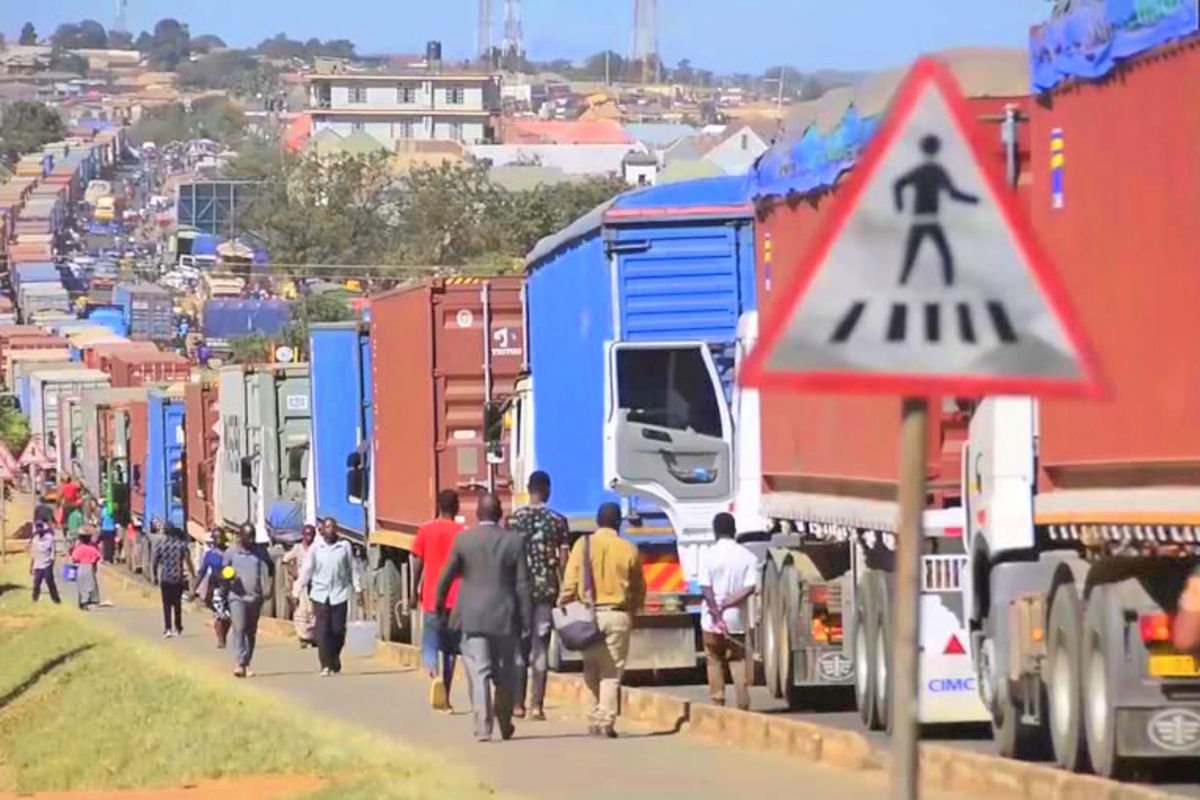
When I speak about transforming the Tunduma–Nakonde Border into an efficient trade gateway, I am not describing a hypothetical inefficiency. I am describing a mathematically observable bottleneck in a corridor that already carries approximately 700 - 1,000 trucks per day, where average clearance times range from 48 to 72 hours and, in peak periods, extend to 4 - 5 days, in a system that was designed to operate within a 6 - 10 hour clearance window under One Stop Border Post (OSBP) standards. The delay is real in the same way that a traffic jam is real: measurable, visible, and economically costly. But just like the 4.2% Africa growth figure, it describes a system that exists in aggregate inefficiency rather than in optimized execution. The trucks are moving. Trade is happening. Revenue is being generated. But the system, as currently structured, is not operating at the level of efficiency that its infrastructure, geography, and strategic position would allow.
The aggregation problem in Tanzania’s transit and logistics analysis runs deeper than the headline figure of “border delays.” It shapes how policymakers interpret corridor performance, how investors evaluate logistics infrastructure, how regional trade partners perceive reliability, and how competing corridors Beira, Durban, Walvis Bay, position themselves as alternatives to the Dar Corridor anchored by the Port of Dar es Salaam. When we describe Tunduma as “busy” or “congested,” we are using aggregated language to describe what is, in reality, a system failure across infrastructure, policy coordination, and spatial planning. The result is not just delay. It is systematic economic leakage.
What the Border Delay Conceals
The dominant narrative is that Tunduma is a high-traffic border and delays are therefore inevitable. That narrative is partially true and fundamentally misleading.
The corridor is one of the most strategic in Eastern and Southern Africa, connecting Tanzania to Zambia, the DRC Copperbelt, Malawi, and Zimbabwe. Transit cargo through this route includes fuel, mining inputs, machinery, and consumer goods, much of it originating from the Port of Dar es Salaam. The scale of this trade is real. But the implication that congestion is a natural outcome of scale is analytically incorrect.
At approximately:
- 800 trucks per day
- 2–5 days average clearance time
- Global benchmark: under 10 hours
The gap between current performance and potential efficiency is not marginal. It is structural. Each additional day a truck spends at the border carries an estimated cost of $200–$400 per truck per day. At 800 trucks:
- Daily economic loss: $160,000 – $320,000
- Annual loss: $58 million – $116 million
This is not theoretical inefficiency. It is a measurable transfer of value out of the Tanzanian logistics system.
The Corridor Reality That Replaces the Border Narrative
The economic geography that determines Tanzania’s logistics competitiveness is not defined by borders alone. It is defined by corridors.
The Dar es Salaam–Tunduma–Zambia corridor is not just a transport route. It is a value chain. Goods originate at the port, move through inland logistics networks, cross borders, and feed into regional economies. Every delay at Tunduma is not just a border issue. It is a corridor failure.
This is where my argument shifts from diagnosis to strategy.
If the corridor is the real unit of analysis, then the solution cannot be confined to the border itself. It must be spatial.
The Spatial Strategy: Songwe as a Logistics System, Not a Border Town. The current model concentrates clearance activities at the border. This is the core design flaw. My proposal is to decentralize the system by transforming Songwe Region into a distributed logistics platform anchored by:
1. Dry Ports Near Tunduma
Dry ports are not an optional infrastructure upgrade. They are the structural solution to border congestion. By establishing inland logistics terminals in Songwe:
- Cargo can be pre-cleared before reaching the border
- Trucks can be scheduled rather than queued
- Containers can be stored, consolidated, and processed away from the crossing point
This shifts Tunduma from a congestion zone into a controlled transit node.
The presence of TAZARA further strengthens this model, enabling rail-road integration that reduces truck dependency and improves throughput efficiency.
2. Opening the Isongole – Ileje - Malawi Axis
The over-reliance on a single border point is a structural vulnerability. Opening and upgrading the Isongole Border creates:
- A secondary corridor to Malawi
- Traffic redistribution away from Tunduma
- New trade ecosystems in Ileje and Songwe
This is not just about reducing congestion. It is about expanding Tanzania’s regional trade footprint.
3. Digital Integration and Pre-Clearance Systems
Current inefficiencies are amplified by system fragmentation between Tanzania and Zambia. A fully integrated digital system would:
- Enable pre-arrival clearance
- Synchronize customs data in real time
- Eliminate redundant inspections
This is where policy meets execution. Without digital integration, infrastructure investments will underperform.
What We Gain vs What We Lose
What We Gain Today
- Transit revenue
- Port dominance
- Regional trade connectivity
What We Are Losing
- Revenue leakage from delays ($58M–$116M annually)
- Cargo diversion risk to competing corridors
- Underdevelopment of Songwe as a logistics hub
- Reduced investor confidence in corridor reliability
The Obstacles That Must Be Confronted. No serious policy analysis ignores constraints.
- Institutional Fragmentation; Multiple agencies operating without full coordination
- Informal Systems and Rent-Seeking; Delays are not always accidental
- Infrastructure Gaps; Limited parking, weak feeder roads, insufficient logistics zones
- Policy Execution Gap; Strong policies, weak implementation
- Bilateral Dependency: Tanzania’s efficiency depends partly on Zambia’s alignment.
 Uchumi360
Business Intelligence
Uchumi360
Business Intelligence
Uchumi360 covers business, investment, and economic policy across East, Central, and Southern Africa.
For the serious reader
You read to the end. That places you in a small group.
Uchumi360 is built for readers who demand precision over speed, structure over sentiment, and analysis that holds uncomfortable conclusions rather than softening them. If this work sharpens how you think about Africa's economy, help us keep building the infrastructure behind it.
Institutional Partners
Commission intelligence. Shape the conversation.
Uchumi360 works with development finance institutions, investment firms, sovereign bodies, and strategic organisations across the coverage region. Institutional partnership unlocks:
- Commissioned sector and country intelligence reports
- Branded research series under your institution's authority
- Exclusive data briefings for internal strategy teams
- Speaking and editorial presence at Uchumi360 events
- Co-published investment outlooks for your markets
Support Our Work
Independent analysis has a cost. Help us bear it.
Uchumi360 does not carry advertising. It does not take editorial direction from sponsors. Every article is produced without commercial compromise. Your contribution funds the reporting, research, and editorial infrastructure that keeps this analysis free from influence.
Secure checkout: One-time and monthly support are processed securely.
Stay Connected
Keep up with every new insight.
Follow our latest analysis, policy coverage, and market intelligence as soon as it is published. If you need something specific, reach out directly and we will point you to the right research.
