
After 14 Years, Air Zimbabwe's Harare-London Route Returns as an Economic Bet
Ready
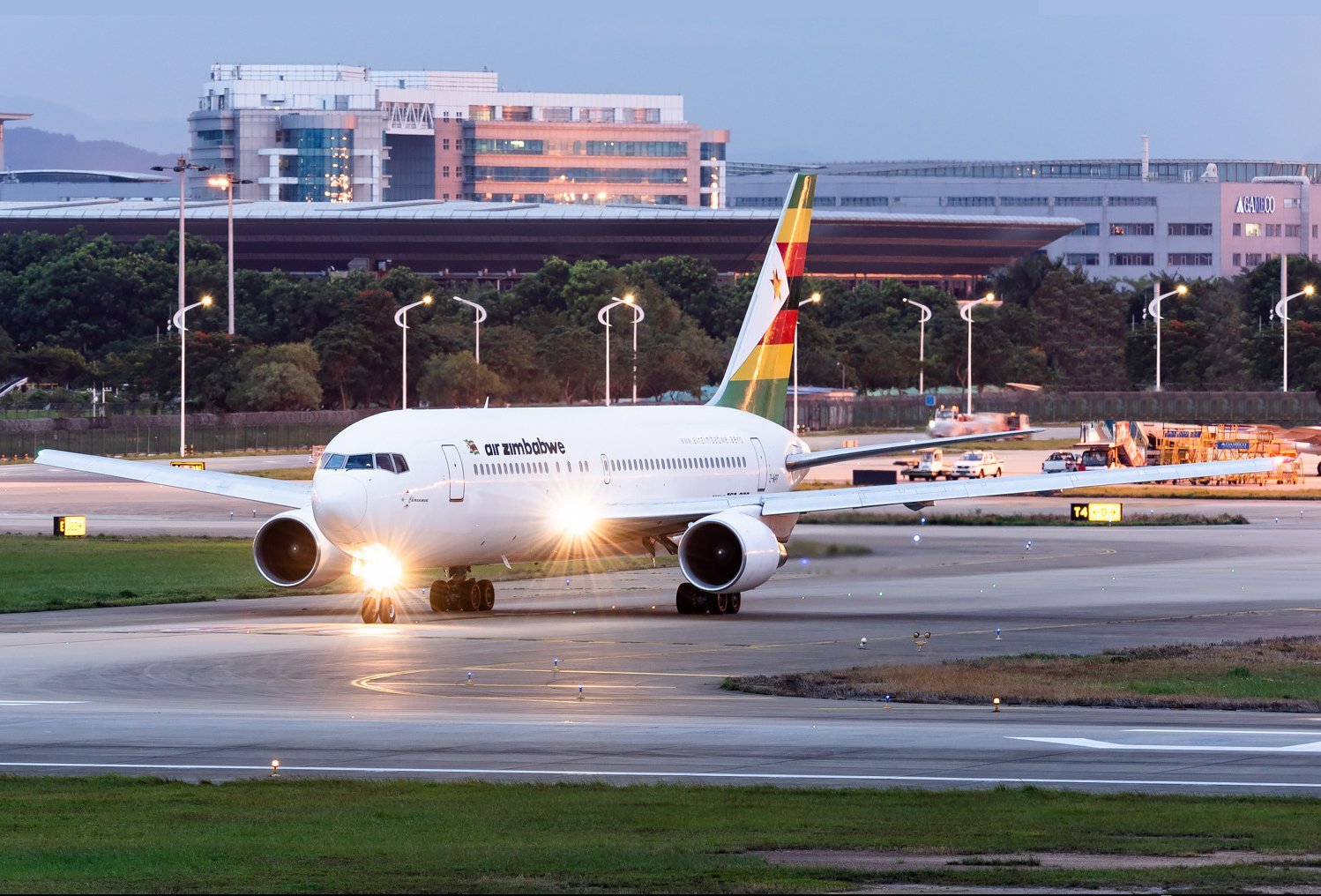
Air Zimbabwe resumes direct flights between Harare and London Gatwick on Wednesday, 22 July 2026, ending a gap that has lasted since the airline last flew the route in early 2012. The service will run three times weekly on a wet-leased Airbus A330-300, supplied under a 13-month agreement with Spain's Plus Ultra Líneas Aéreas, allowing Air Zimbabwe to re-enter long-haul operations without buying its own wide-body aircraft. The relaunch sits inside a broader revival plan run by the Mutapa Investment Fund, Zimbabwe's sovereign wealth vehicle, which now controls the national carrier. Behind the announcement is a more structural question that applies well beyond Zimbabwe: whether a single route, run on leased capacity, can function as the kind of economic infrastructure that shortens distance to capital, diaspora and trade markets, or whether it remains a fragile service that depends entirely on demand nobody has yet tested at scale.
HARARE — Air Zimbabwe will operate its first direct flight between Harare and London Gatwick in 14 years on Wednesday, 22 July 2026, restoring a route the national carrier last flew in early 2012. The airline confirmed the schedule on 9 July: three flights a week, departing Harare on Sundays, Wednesdays and Fridays, with return services from Gatwick's South Terminal on Mondays, Thursdays and Saturdays.
The route was suspended over a combination of financial pressure at the airline and evolving European regulatory requirements, which had effectively kept Air Zimbabwe out of UK and EU airspace since 2017. Its last direct London service, in 2012, ran on Boeing 767 aircraft the airline no longer operates.
A Route Rebuilt Without Buying a Plane
Air Zimbabwe is relaunching the service without acquiring its own long-haul aircraft. The airline will operate the route on an Airbus A330-300 supplied under a 13-month ACMI, Aircraft, Crew, Maintenance and Insurance, wet-lease agreement with Spain's Plus Ultra Líneas Aéreas, a deal brokered by aviation specialist Chapman Freeborn Airchartering. Under the arrangement, Plus Ultra provides the aircraft, flight crew, maintenance and insurance, while flights operate under Air Zimbabwe's own flight code and the airline retains control of ticket sales and customer relationships.
That structure matters beyond the mechanics of the deal. It lets Air Zimbabwe test long-haul demand on a route it has not flown in over a decade without the capital outlay a wide-body aircraft purchase would require, and without the compliance overhead of bringing its own fleet up to UK and European operating standards on a compressed timeline. The relaunch is part of a broader revival plan run by the Mutapa Investment Fund, Zimbabwe's sovereign wealth fund, which now oversees the national carrier. MIF chief executive John Mangudya had indicated earlier in 2026 that the route would return in the first half of the year, alongside a plan to streamline parts of the airline's existing fleet.
What a Single Route Is Actually Worth
Judged purely as a transport service, one more flight three times a week is a modest addition to global aviation capacity. Judged as economic infrastructure, the calculation looks different. A direct international route lowers the cost and time of moving investors, business travellers, exporters and returning diaspora between two markets, and those savings compound across every sector that depends on people and goods moving efficiently between Zimbabwe and one of the world's larger financial centres.
The United Kingdom remains one of Zimbabwe's more significant markets for tourism, trade, investment and diaspora remittances, and hosts one of the largest Zimbabwean diaspora communities anywhere in the world. For much of the past 14 years, that relationship has depended on connecting itineraries through regional or Middle Eastern hubs, adding cost and journey time to every trip. Promotional fares for the new service start from around US$490 one-way, with return fares from roughly £675, positioning the route to compete on price against the connecting options travellers have relied on since 2012.
The Part That Is Still Untested
None of this guarantees the route succeeds commercially. Wet-lease agreements are, by design, a way to limit downside risk while testing demand rather than a signal that demand has already been proven. The 13-month term of the Plus Ultra contract effectively puts a clock on the experiment: Air Zimbabwe and Mutapa now have a little over a year to establish whether three flights a week between Harare and London can sustain load factors and pricing that justify either extending the lease, adjusting frequency, or eventually investing in owned long-haul capacity.
That uncertainty is not a reason to discount the announcement, but it is the frame within which it should be read. A restored flag route generates attention and, for many in the diaspora, genuine relief at no longer needing a connection to get home. Whether it becomes durable economic infrastructure, the kind that lowers costs for exporters, gives investors a faster path to Harare, and makes Zimbabwe a more attractive stop for international business, will depend on factors the launch announcement itself cannot answer: sustained passenger demand, competitive pricing against connecting carriers, and operational reliability over the full 13 months of the current arrangement.
The Wider Pattern This Fits
Air Zimbabwe's approach, leasing capacity rather than buying it, reflects a broader shift in how smaller national carriers across Africa are choosing to re-enter long-haul markets. Building or restoring wide-body capability from scratch requires capital most national airlines in the region cannot easily raise, particularly carriers that have spent years managing fleet and regulatory setbacks of their own. Wet-lease and ACMI arrangements offer a lower-risk entry point, letting an airline re-establish a route's commercial viability before committing to the far larger investment of owning and maintaining long-haul aircraft outright.
Whether that model produces durable connectivity or simply a series of short-term experiments that end when lease terms expire is the open question facing not just Air Zimbabwe, but any African carrier weighing the same trade-off between capital discipline and long-term network building.
FAQ
When does Air Zimbabwe's Harare-London route actually start? The first flight under the restored schedule departs on Wednesday, 22 July 2026, with the service operating three times weekly thereafter, departing Harare on Sundays, Wednesdays and Fridays and returning from London Gatwick on Mondays, Thursdays and Saturdays.
Why did Air Zimbabwe stop flying to London in the first place? The airline last operated the route in early 2012, and financial pressure at the carrier combined with evolving European regulatory requirements effectively excluded Air Zimbabwe from UK and EU airspace from 2017 onward, keeping the route dormant for roughly 14 years.
What aircraft is Air Zimbabwe using, and does it own it? The service operates on an Airbus A330-300, but Air Zimbabwe does not own the aircraft. It is supplied under a 13-month ACMI wet-lease agreement with Spain's Plus Ultra Líneas Aéreas, which provides the aircraft, crew, maintenance and insurance while Air Zimbabwe retains the flight code and controls ticket sales.
Who is behind the airline's broader revival? The relaunch sits within a wider recovery plan run by the Mutapa Investment Fund, Zimbabwe's sovereign wealth fund, which now oversees Air Zimbabwe. MIF chief executive John Mangudya had signalled the route's return earlier in 2026 as part of a plan that also includes streamlining the airline's existing fleet.
How much will tickets cost? Air Zimbabwe has announced promotional one-way fares starting from around US$490, with return fares available from roughly £675, about US$860, positioning the new direct service to compete on price against the connecting itineraries travellers have used since 2012.
Does a route like this actually help Zimbabwe's economy, or is it mainly symbolic? Its economic value depends on sustained use rather than the launch itself. A direct route can lower travel costs and time for investors, exporters, tourists and Zimbabwe's UK-based diaspora, but whether it becomes durable economic infrastructure rather than a short-lived service will depend on passenger demand and operational reliability holding up over the 13-month term of the current leasing arrangement.
 Uchumi360
Business Intelligence
Uchumi360
Business Intelligence
Uchumi360 covers business, investment, and economic policy across East, Central, and Southern Africa.
For the serious reader
You read to the end. That places you in a small group.
Uchumi360 is built for readers who demand precision over speed, structure over sentiment, and analysis that holds uncomfortable conclusions rather than softening them. If this work sharpens how you think about Africa's economy, help us keep building the infrastructure behind it.
Institutional Partners
Commission intelligence. Shape the conversation.
Uchumi360 works with development finance institutions, investment firms, sovereign bodies, and strategic organisations across the coverage region. Institutional partnership unlocks:
- Commissioned sector and country intelligence reports
- Branded research series under your institution's authority
- Exclusive data briefings for internal strategy teams
- Speaking and editorial presence at Uchumi360 events
- Co-published investment outlooks for your markets
Support Our Work
Independent analysis has a cost. Help us bear it.
Uchumi360 does not carry advertising. It does not take editorial direction from sponsors. Every article is produced without commercial compromise. Your contribution funds the reporting, research, and editorial infrastructure that keeps this analysis free from influence.
Secure checkout: One-time and monthly support are processed securely. Add payment credentials to enable checkout here.
Stay Connected
Keep up with every new insight.
Follow our latest analysis, policy coverage, and market intelligence as soon as it is published. If you need something specific, reach out directly and we will point you to the right research.
